

220 results

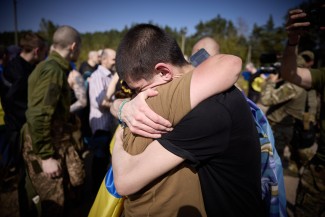
Since long before Russia’s full-scale invasion of Ukraine in 2022, Moscow has spread disinformation to justify its aggression, disguising their longstanding premises that Ukraine is, allegedly, not a sovereign nation, and its statehood is conditioned upon an alliance with Russia. Countering these narratives is not only valuable for Ukrainians, but also for buoying any democratic transformations in Russia and for establishing a more nuanced understanding of the history of Central and Eastern Europe.

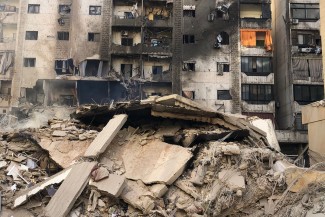
The ongoing war in the Middle East is not an isolated event; it represents a 75-year cycle of violence marked by historical grievances, geopolitical struggles, and humanitarian crises. In the latest episode of this tragic story, Lebanon has become the newest battlefield. So far, the conflict has caused widespread destruction, killed or injured thousands, and displaced over a million in Lebanon. The country now faces many daunting questions about reconstruction, reparations for victims, and the type of society that will emerge in the war’s aftermath.

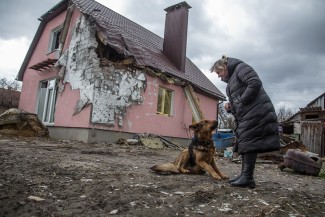
Two and a half years after Russia’s full-scale invasion of Ukraine, victims continue to demand justice for the massive violations they have suffered, which have left many of them gravely harmed. The International Criminal Court opened an investigation into alleged crimes in March 2022. It now faces a critical challenge: how to ensure that Ukrainian victims can meaningfully participate in all stages of its procedures, despite the court’s location far from the conflict.

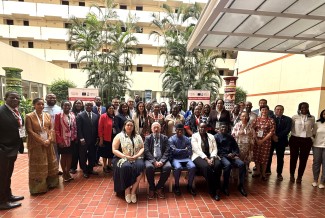
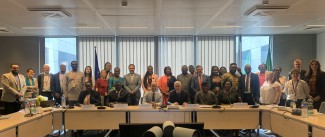
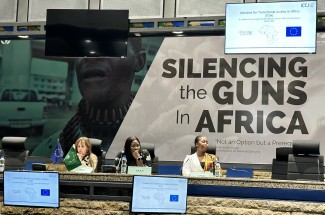
On June 5 and 6, 2024, the African Union (AU) and the European Union (EU) hosted the fourth edition of the AU-EU Experts’ Seminar on Transitional Justice in Brussels, Belgium. The consortium implementing the Initiative for Transitional Justice in Africa, led by ICTJ, helped organize the event. The seminar explored how transitional processes can transform individual lives, societal relations, and dysfunctional state institutions.

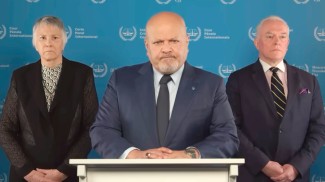
ICTJ acknowledges and welcomes the decisive action undertaken by the Office of the Prosecutor of the International Criminal Court, requesting the arrest of Israeli Prime Minister Benjamin Netanyahu, Defense Minister Yoav Gallant, and three Hamas leaders – Yahya Sinwar, Mohammed Diab Ibrahim Al-Masri, and Ismail Haniyeh – for war crimes and crimes against humanity.

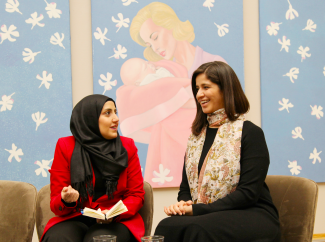
On February 8, ICTJ held an event in The Hague on the missing and disappeared in Syria, in partnership with the Dutch Ministry of Foreign Affairs. The event brought together activists, journalists, artists, and policymakers to reflect on the critical humanitarian needs of victims and their families and the role of the newly established international body on the missing in Syria, which is mandated in part to address these needs.

Throughout 2023, ICTJ’s experts have offered their unique perspective on breaking news around the globe as part of the World Report. Their insightful commentaries have brought into focus the impact these events have on victims of human right violations as well as larger struggles for peace and justice. In this edition, we look back on the past year through the Expert’s Choice column.

On October 25, the African Union (AU) and European Union officially launched their joint Initiative for Transitional Justice in Africa (ITJA) in Addis Ababa. The project will take place over a three-year period and will promote national transitional justice processes in Africa, in line with the AU Transitional Justice Policy and its roadmap. The ITJA has several unique features that, if embraced and advanced by all actors, have the potential to trailblaze a new and inspiring path to peace, justice, and sustainable development on the African continent.

On October 15, the UN Secretary-General made two strong humanitarian appeals: for Hamas to release the hostages immediately and without conditions, and for Israel to allow humanitarian aid to enter into Gaza unimpeded so it can reach the civilians desperately in need of it. The UN Security Council has heard but not listened to his words, while governments with power to persuade the actors engaged in the hostilities to respect the rule of law have failed to do so. Yet, the moral imperative is clear and simple.

On October 7, the world watched in horror as members of the militant group Hamas slaughtered over 1,400 Israelis, most of whom were civilians including children and the elderly, in a premeditated and sophisticated attack. Israel’s response has so far been no less horrific. Incessant waves of indiscriminate airstrikes on Gaza have hit residential buildings, medical facilities, and other critical civilian infrastructure, besieging the entire enclave and leaving more than 5,000 people dead including 2,000 children. Unfortunately, these unspeakable atrocities—the condemnation and rejection for which we have run out of words—are not isolated events happening in a vacuum. They are, in fact, just the latest episodes in a 75-yearlong cycle of violence.