202 results

As with most post-conflict challenges, the issues of displaced populations and weak security institutions each have profound effects on the other. A common cause of displacement in post-conflict environments is a lack of physical security, either because formal security institutions f...

As human rights advocates and state representatives increasingly acknowledge the necessity of involving children in truth-seeking processes, there is a growing need for practical tools that facilitate children’s participation while prioritizing their protection. This statement-taking ...

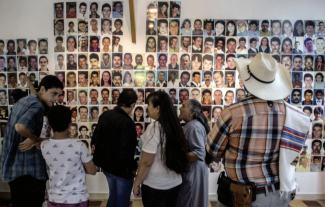
In the brutality of armed conflict or tyranny of a repressive regime, many who go missing are never found again: whether “disappeared” by agents of the state or abducted by an armed faction, the whereabouts of thousands are still unknown to this day. On this International Day of the Disappeared, ICTJ recognizes that enforced disappearances constitute crimes against humanity, and they affect women in ways unique from the impact on men.

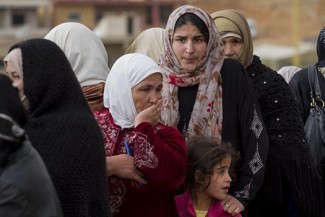
The millions of Syrians displaced by the grinding decade-long war have sought out safety far and wide, in safe havens within the country, in neighboring countries in the region, and further afield. Those who managed to reach Europe often did so against the odds and often after experiencing displacement more than once. Now, one of these countries, Denmark , is taking away from Syrians living in its borders the protection they so desperately sought and still need and, with it, the tiny bit of hope that they have worked so hard to preserve.

As subscribers, you enjoy timely commentary on what’s happening in transitional justice around the world written by one of our experts exclusively for our monthly World Report newsletter. In this month’s edition, we bid farewell to 2019 by looking back on the experts’ choices of the past year.

In this op-ed, ICTJ Vice President Paul Seils argues that the front line of justice must always be national courts and justice systems. "Citizens must see social institutions at work in their home countries, as it is there that courts can repudiate wrongdoing and reaffirm the most fundamental elements of the contract that binds a society together. It is there that having the dignity of a citizen can have its fullest meaning," writes Seils on International Justice Day.

Because transitional justice processes are complex, politically contested, and not necessarily linear, they present unique theoretical and practical challenges for measuring their results. This report seeks to improve monitoring and evaluation practices and support evidence-based proc...

Children, women, and men look at a wall covered in faces of people.

In transitional contexts, reporting does not simply present the facts, but instead shapes the parameters for interpreting divisive political issues. Coverage in such polarized contexts can mitigate or obscure the substance of transitional justice efforts to establish what happened, wh...

The taboo around sexual violence against men and boys can leave victims in the shadows, write ICTJ's Kelli Muddell and Sibley Hawkins. Without acknowledgment of these crimes, efforts to address injustices of the past will be hard-pressed to develop inclusive and effective responses.