

393 results

ICTJ is outraged by the recent massacre in Syria, where over 1,000 civilians were brutally killed in yet another wave of violence. This appalling crime underscores the urgent and undeniable need to protect civilians and provide justice and accountability.

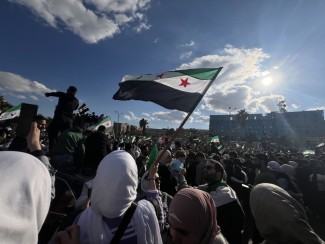
The fall of the Assad regime marks the beginning of a long-overdue transformation in Syria. For the first time in decades, space has opened to speak freely about justice, accountability, and reconciliation. It is a moment filled with uncertainty and pain, but also one of immense hope.

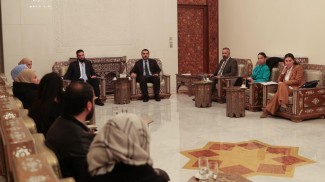
On February 1, 2025, ICTJ facilitated a meeting between family members of the missing and detainees and Syria’s transitional president, Ahmed Al-Sharaa, and the minister of foreign affairs, Asaad Al-Shaibani, at the Presidential Palace in Damascus. Attendees presented a number of specific urgent demands related to the missing and forcibly disappeared, while President Ahmed Al-Sharaa underscored the government’s commitment to the issue.

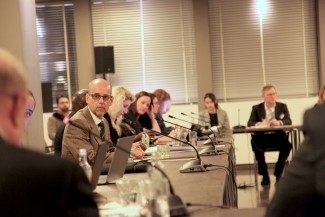
On December 2 to 6, 2024, the International Criminal Court’s (ICC) Assembly of States Parties—the court’s management oversight and legislative body—held its 23rd session in The Hague. As in previous years, ICTJ took an active part, and its experts joined many of the discussions sharing their knowledge and insight. ICTJ organized two side events, one focusing on Syrian victims and another on reparations for victims in Northern Uganda.

The fall of Bashar al-Assad’s regime after 53 years of authoritarian rule marks a significant moment in the pursuit of justice, peace, and human rights. While this transition opens the door to new possibilities, it also underscores the immense obstacles and responsibilities that lie ahead.

Drawing from data and testimonies of Syrians both inside the country and in the diaspora collected by civil society organizations, this report looks at the justice needs of Syrian victims of human rights violations in the context of ongoing debates on refugee returns. It critically ex...

Illustration depicting an elderly woman carrying an armchair on her back

The ongoing war in the Middle East is not an isolated event; it represents a 75-year cycle of violence marked by historical grievances, geopolitical struggles, and humanitarian crises. In the latest episode of this tragic story, Lebanon has become the newest battlefield. So far, the conflict has caused widespread destruction, killed or injured thousands, and displaced over a million in Lebanon. The country now faces many daunting questions about reconstruction, reparations for victims, and the type of society that will emerge in the war’s aftermath.

In this era of technological transformation, it is critically important to develop digital strategies for documenting human rights violations, analyzing data for accountability or reparations purposes, and safely advocating for human rights online. This is particularly true in contexts where victims, human rights actors, and members of the media live in fear. To this end, ICTJ has recently led trainings for human rights activists in conflict-affected countries on open-source investigation tools to help them do their work more effectively.

The field of transitional justice is increasingly recognizing the relevance of mental health and psychosocial support (MHPSS) in contexts of massive human rights violations. Despite growing advocacy and awareness at the global policy level, however, the field lacks a systematic approa...

an image of colorful painting featuring a young girl

Almost eight years since The Gambia's former President Yahya Jammeh left power, the country is still seeking justice for the human rights abuses committed during his 22-year dictatorship. In May 2023, the Ministry of Justice released a plan to implement the recommendations of the country's Truth, Reconciliation and Reparations Commission. While the plan promises to deliver justice and repair harms, for it to have its intended impact, it requires broad public participation in the process, especially that of young people. With that in mind, ICTJ has partnered with the UN Peacebuilding Fund on a project to encourage Gambian youth to take a leading role in this process and the country's future.