1533 results

Kampala, October 17, 2022—Sixteen years after the decades-long conflict between the Ugandan government and the rebel group the Lord’s Resistance Army (LRA) ended, victims continue to grapple with its persistent effects. Victims of conflict-related sexual violence (CRSV) and children born of war, in...

New York, March 10, 2021—“We want to turn the page, but not at the cost of justice”—that was a message repeated by victims of human rights abuses interviewed in a new report released today on transitional justice in the Central African Republic (CAR). Produced by the International Center for Transitional Justice and Cordaid, ‘A Drop of Water on a Hot Stone’: Justice for Victims in the Central African Republic presents findings from a study exploring victim-centered approaches to justice in CAR and their feasibility in a context of profound fragility and extreme poverty.

ICTJ’s partner Afghanistan Human Rights and Democracy Organization (AHRDO) recently opened a new virtual museum and database dedicated to Afghan victims of conflict and human rights abuses. “The Afghanistan Memory House” not only preserves the memory of these victims but helps pave the path for truth and justice. To launch the virtual museum, ICTJ and AHRDO cohosted a panel discussion on memorialization, moderated BBC journalist Lyse Doucet, in ICTJ’s office in New York this past December.

ICTJ participated in the launch of a new report on the relationship between transitional justice and development, launched by the Swedish International Development Agency (Sida).

Civil society organizations, as well as journalists’and editors’associations in Argentina, released this statement to request that the Argentinean Supreme Court ensure the observance of a resolution that allows the press to have access to trial hearings, especially in trials involving...

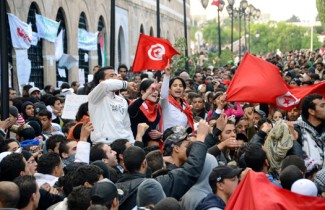
ICTJ welcomes the award of the 2015 Nobel Peace Prize to Tunisia's National Dialogue Quartet for helping the country transition to democracy. With the award, the Nobel committee acknowledges the "decisive contribution" made by the group of civil society organizations after Tunisia’s 2011 revolution.

Bring General Rios Montt and other high ranking members of the military to trial in the Guatemalan courts for genocide? In 1999 it was a noble dream for justice, but one with little apparent possibility of ever coming true. On International Justice Day, walk the long path to justice that led to this historic trial.

This research note presents preliminary population-based data on attitudes about peace and justice in northern Uganda. The survey data presented in this report were collected from April to June 2007 in eight districts of northern Uganda.

Prosecution efforts so far have exacerbated, rather than alleviated, ethnic and regional divisions. Credible prosecutions against those most responsible on all sides of the conflict would offer a clear statement to all citizens of Côte d’Ivoire that the justice system is blind to ethnicity and is there to serve and protect all its citizens.

Côte d’Ivoire descended into chaos following the October 2010 elections. One of the enduring lessons from this tragic experience could be that elections should never give a reason to set one’s country on fire. Like it or not, however, presidential elections in Côte d’Ivoire have become a malaise that grips the country every five years. And while the 2015 presidential elections were carried out peacefully, the recent October 2020 elections unfortunately were not. The tensions and violence that accompanied it, though far less devastating, brought back macabre memories of the 2010 post-election carnage that left 3,000 people dead and forced more an a million to flee their homes.