1519 results

Through its initiatives in several countries, ICTJ has learned that hip hop music can be a powerful and effective way to engage young people in transitional justice issues, such as truth, memory, and reconciliation, and encourage their participation in ongoing processes. The music, whic...

In this op-ed, David Tolbert says Spain's democratic institutions exist side by side with long-term impunity, and argues that it's time for the country to address deep wounds that linger between different sides of the conflict.

When 26-year old Tunisian street vendor Mohamed Bouazizi incinerated himself on December 17, 2010, his act resonated across an entire region and sparked what is known as the Arab Spring. His cry echoed across the world because it was a universal call for justice, basic fairness, and equal treatment. Indeed, it was a call for the rule of law. In a new op-ed, ICTJ's President David Tolbert calls upon the UN General Assembly to prove its commitment to justice and the rule of law.

The War Crimes Chamber of Bosnia’s State Court is one of the most successful undertakings to address the legacy of mass atrocities in national courts. As this important institution finds itself under serious threat, the European Union must act quickly to put a stop to attempts of the Bosnian Serb political leadership to undermine Bosnia’s capacity to prosecute war crimes at state level.

On November 28, 2023, ICTJ organized an international dialogue in Bogotá, Colombia, to share innovative strategies for advancing victims’ rights to redress for human rights abuses and for establishing more victim-centered development policies. The gathering also marked the official launch of ICTJ’s new report—Advancing Victims’ Rights and Rebuilding Just Communities Local Strategies for Achieving Reparation as a Part of Sustainable Development—which presents findings from a two-year comparative study of local efforts in Colombia, The Gambia, Tunisia, and Uganda to advance reparations.

In 2008 and 2009, the International Center for Transitional Justice (ICTJ) conducted extensive research on impunity in Myanmar (previously known as Burma). This submission is based largely on that research, as well as developments in the last six months.

Despite earlier efforts to envision a national transitional justice policy, Ukraine remains overly cautious about establishing one. This report provides a robust substantiation of why Ukraine should revive its holistic transitional justice policymaking. In the first part, it debunks t...

A women holds up an infant in the air on sunny day outdoors, surrounded by yellow and blue balloons

Natural resources are a natural connecting point for postconflict development and transitional justice. Understanding the specific role of natural resources in the maintenance of authoritarian regimes and the facilitation of armed conflicts is central to transitional justice's aim of ...

During peace negotiations, there is often a belief that providing amnesties for certain crimes will help promote national reconciliation. Nepal's Truth and Reconciliation Commission (TRC) Bill currently contains provisions on both amnesty and reconciliation. However, the Bill itself i...

As Nepal’s parliament enters the final discussions on a draft Truth and Reconciliation Commission (TRC) bill, questions remain regarding the relationship between amnesty and reconciliation provisions within the bill.

This report asserts that dealing with past abuses in Myanmar is essential to achieving genuine progress on peacebuilding and economic development in the country. Conflict and high levels of political repression have racked Myanmar for more than half a century. Both President Thein Sei...

As the United States and global audiences were informed of the death of Osama bin Laden at the hands of U.S. special forces, we are reminded how crucially important justice is in the discourse on America’s fight against terrorism. On the eve of these momentous events, ICTJ President David Tolbert spoke to an audience at American University in Washington about the need for the U.S. to ensure accountability for the conduct of its “war on terror.”

This report outlines Indonesia's international law obligations to provide remedies to the "1965 victims" of General Soeharto's persecution and stigmatization of those affiliated with the Indonesia Communist Party. It traces the history of this persecution, provides an overview of curr...

Negotiating Justice: Guidance for Mediators provides guidance on grappling with justice issues in peace negotiations. Co-published with the Centre for Humanitarian Dialogue, the report seeks in particular to provide peace process actors with basic facts of law, guidance on amnesties a...

The International Center for Transitional Justice (ICTJ) and the Barcelona International Peace Resource Center (BIPRC) are pleased to announce an Intensive Course on Transitional Justice and Peace Processes, taking place in Barcelona, Spain, June 6 - 10, 2016. It will focus on practical examples of recent or paradigmatic peace processes where the question of justice formed a significant part of the negotiating context.

ICTJ is pleased to announce an intensive course on transitional justice and peace processes to be held in Barcelona, Spain on October 9-13. Applications are now open.

Indonesia’s history is littered with episodes of mass violence, whether state-sponsored, communally driven or separatist in nature. But in recent times the Indonesian government has successfully negotiated several peace agreements and brought about an end to mass human rights violatio...

This report focuses Liberia's Comprehensive Peace Agreement (CPA) of 2003. It examines many key decisions that were made in creating the CPA, and centers on questions of justice, accountability and the rule of law. It notes developments in the four years after the CPA was signed, an...

In April 2008 historic elections to Nepal’s Constituent Assembly led to a political watershed: former Maoist guerrillas surprised everyone by coming out ahead, suggesting that a new era had come to Nepal. In its first sitting, the Constituent Assembly declared Nepal a republic and bro...

This report focuses the Lomé Accord of 1999, that ended the Sierra Leone's 10 year civil war. It examines the negotiation dynamics influencing its creation and the impact of the accord from 1999 to 2007. The peace accord is often remembered for its unconditional amnesty provisions, wh...

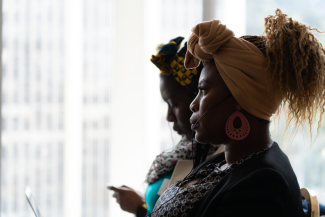
An ICTJ immersion course brought together women from Egypt, Yemen, Syria, and Libya to closely observe Tunisia’s emerging experience in transitional justice, including the ways in which issues of gender-based violence and the experiences of women are being addressed.

ICTJ welcomes the announcement of formal peace talks between the Government of Colombia and the National Liberation Army (ELN). This new process opens the possibility of achieving comprehensive peace in the country and entering a new phase in Colombian history.

A new study by ICTJ finds that victims of human rights violations committed during Nepal’s 10-year armed conflict continue to experience hardship – and calls on the government to implement a comprehensive reparations program to respond to their acute and long-term needs.

In this opinion piece, Lucia Withers argues that Nepal's elected parties and their representatives should not limit their discussions to the establishment of a truth commission or whether it will provide for amnesties and/or prosecutions. Rather, they should focus on designing policies that are more comprehensive and that would better serve the rights and needs of conflict victims and contribute to broader peace-building efforts.

Six years after a peace agreement formally ended the conflict in Nepal, the slow, painstaking process of building the country’s new democracy has yet to provide comprehensive reparation to victims. To fully acknowledge the experience of victims of the conflict, Nepal’s government should not mistake the issuance of relief through material benefits for the implementation of a comprehensive reparation program. This is one of the central recommendations of "Relief, Reparations, and the Root Causes of Conflict in Nepal," a major new report from ICTJ, and authored by Ruben Carranza.