





1519 results

A three-judge panel of Peru’s Supreme Court will announce a verdict before the end of this year in the trial of Alberto Fujimori, Peru’s president from 1990-2000, on charges of murder and kidnapping. Prosecutors hold him responsible for the deaths of 25 people at the hands of a death ...

This study examines the preventive effect of transitional justice in Peru in the aftermath of internal conflict and authoritarianism, focusing on the violence’s root causes and the differentiated impact on victims and affected communities. It contends that while transitional justice h...

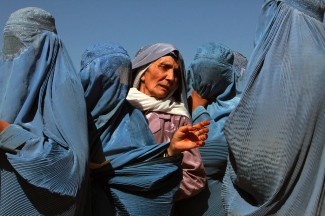
It only takes a quick skim of the daily news to see how the world has yet again failed Afghan civilians. Afghanistan has not had many good years in the past four decades of war, but the past 15 months have been decidedly fraught. The current chaos and spiking violence are proof that, despite what the US government has proclaimed, the “forever war” rages on. Peace and meaningful, victim-centered justice remain elusive.

The photography exhibition “All Our Tears” weaves together the stories of victims from the wars in the Western Balkan region in the 1990s. It consists of 34 original photographs, taken by four photographers in various locations in Kosovo, North Macedonia, and Serbia. The photographs fea...

The photography exhibition “All Our Tears” weaves together the stories of victims from the wars in the Western Balkan region in the 1990s. It consists of photographs taken by four photographers in various locations in Kosovo, North Macedonia, and Serbia, and was part of a three-year project funded by the European Union that brought together civil society organizations and victims’ groups in Kosovo, North Macedonia, and Serbia, along with the international organizations ICTJ and PAX to develop meaningful, victim-led peacebuilding and reconciliation initiatives in the region.

The allegations of war crimes and crimes against humanity committed in the final phases of the conflict in Sri Lanka, made in the Report of the Secretary-General’s Panel of Experts on Accountability in Sri Lanka released on April 25, must be thoroughly investigated. This is the first comprehensive UN report examining the events in the Vanni region between January and May of 2009 and it alleges that “tens of thousands of civilians” were killed. The Government of Sri Lanka, but also the relevant international bodies, cannot claim credibility if these findings are ignored.

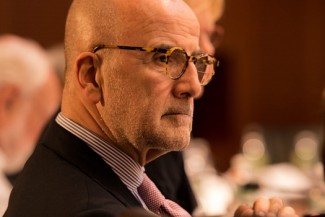
ICTJ is pleased to announce that Peruvian diplomat and renowned international peace mediator Alvaro de Soto has joined ICTJ's Advisory Board.

ICTJ filed an amicus brief in the apartheid reparations case before the Southern District Court of New York on November 25, 2009. The brief supports a decision by the South African Government not to oppose legal action against five international companies that are accused of aiding an...

Whether the government can lawfully rely on Exemption 7(F) of the Freedom of Information Act, 5 U.S.C. § 552(b)(7)(F), to withhold photographs depicting the abuse of prisoners held in U.S. custody without identifying with reasonable specificity any individuals who could reasonably be ...

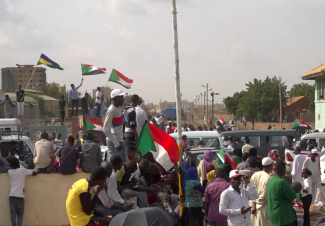
This April, Sudan marked a double anniversary: one of the 2019 revolution that toppled President Omar al Bashir’s decades-long repressive regime, the other of the 2023 outbreak of the ongoing civil war that has devastated the country. These contrasting occasions bring with them great hopes and deep pain. They also raise pressing questions: How long will Sudan have to suffer while the world’s attention seems turned the other way? How long will the voices of Sudanese who yearn for peace and justice continue to be sidelined?

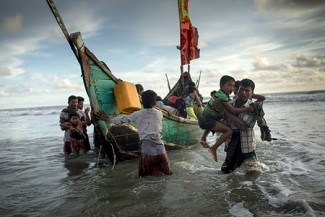
During the past month, over 400,000 members of Myanmar’s Rohingya Muslim community have been driven from their homes as part of an ethnic cleansing campaign led by the military. What lies at the root of the current violence, how is it connected to political transition, and does transitional justice have a role to play? ICTJ's Anna Myriam Roccatello answers those questions and more.

As part of its ongoing support of the Committee of the Families of the Kidnapped and Disappeared in Lebanon, ICTJ organized a three-day virtual workshop on transitional justice for university students on July 12-14, 2021. The students all served as volunteers on a project to establish an archive of the committee’s work and activism over the past four decades and participated in a previous workshop in February 2020 that introduced them to transitional justice concepts.

This paper’s principal aim is to provide a cogent analytical framework on the range of possible or ideal relationships between DDR programs and amnesties. It assesses whether and how amnesties can serve to maximize the effectiveness of a DDR program, while doing the least harm possibl...

South Africa’s Constitutional Court recently made a landmark ruling on the right to speak the truth about crimes amnestied by the Truth and Reconciliation Commission. ICTJ Truth-Seeking Consultant Howard Varney speaks about the ruling and its significance for South Africa and other countries.

In a new analysis, the ICTJ addresses one of the crucial points of the peace negotiations between the Government of Colombia and the Revolutionary Armed Forces of Colombia-People’s Army (FARC-EP): the possibility of providing recourse to the broadest amnesty possible and pardons as part of the treatment of the different crimes committed in the framework of more than fifty years of armed conflict.

Background on the role of amnesty in processes of transitional justice and the 2009 DRC Amnesty Law. Given a fragile justice system and culture of impunity, this law risks rewarding blanket amnesty for all crimes committed in the DRC. ICTJ gives suggestions to break the culture of imp...

In February 2024, the International Criminal Court (ICC) delivered its long-awaited reparations order in the case of The Prosecutor vs. Dominic Ongwen. Nearly two decades after the ICC intervened in Northern Uganda, this milestone decision both acknowledges the suffering of survivors and underscores the complexities and limitations of international justice. For victims who have waited for justice for over two decades, the order has been bittersweet.

This is the second of our Stories of Change series; in it, Tarek al-Massri, an 18-year-old from Homs now living in Germany, knows all too well the horrors of the Syrian conflict and its devastating impact on schools.

ICTJ is pleased to announce the addition of Dr. Amra Sabic-El-Rayess to its Board of Directors.

In this analysis piece, ICTJ's Cristián Correa expresses concern about a decision by the Inter-American Court of Human Rights leaving room for interpretations that condone the use of methods for combating subversion and terrorism forbidden by international human rights law.

On June 5 and 6, 2024, the African Union (AU) and the European Union (EU) hosted the fourth edition of the AU-EU Experts’ Seminar on Transitional Justice in Brussels, Belgium. The consortium implementing the Initiative for Transitional Justice in Africa, led by ICTJ, helped organize the event. The seminar explored how transitional processes can transform individual lives, societal relations, and dysfunctional state institutions.

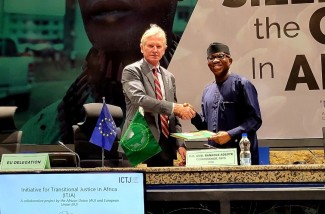
Abuja, June 19, 2025—The African Union (AU) and the European Union (EU), in collaboration with the Consortium implementing the Initiative for Transitional Justice in Africa (ITJA), led by the International Center for Transitional Justice (ICTJ) and co-implemented by the Africa Transitional Justice...

The African Union and the European Union have officially launched a three-year project to support AU member states as they incorporate the African Union Transitional Justice Policy and undertake transitional justice processes at the national level. The project, named the Initiative for Transitional Justice in Africa, will be implemented by a consortium of three organizations led by the International Center for Transitional Justice, the African Transitional Justice Legacy Fund, and the Centre for the Study of Violence and Reconciliation.

Ongoing economic and social inequality, a legacy of the dictatorship, affects Tunisians across generations, but has particularly pronounced impacts on young people. ICTJ worked with four young photographers to confront the consequences of marginalization and explore its impacts on Tunis...

ICTJ is pleased to announce that Anil Soni, Head of Global Infectious Diseases at Mylan, has joined its Advisory Board. "We are honored to welcome Anil Soni as the newest member of ICTJ’s leadership. As a respected figure in the global health community with ample experience at international NGOs, he...

Annex to the publication, "'To Walk Freely with a Wide Heart' -A Study of the Needs and Aspirations for Reparative Justice of Victims of Conflict-Related Abuses in Nepal."

Annex to the publication, "'To Walk Freely with a Wide Heart' -A Study of the Needs and Aspirations for Reparative Justice of Victims of Conflict-Related Abuses in Nepal." (Nepali)

Given the positive feedback and enormous interest in the Intensive Course on Transitional Justice and Peace Processes held in Barcelona in October 2017, ICTJ is hosting a similar course in New York in March 2018. The course will continue to focus on practical examples of current, recent, or...

ICTJ and the Barcelona International Peace Resource Center (BIPRC) are pleased to announce the 5th Intensive Course on Truth Commissions, which will focus on a practical approach to addressing the challenges of designing and implementing a truth commission.

For many victims of human rights violations and international crimes around the world, the prospects of holding perpetrators to account, especially high-level individuals, have long seemed farfetched, given current political and legal hurdles and the limitations of international criminal justice mechanisms. For this reason, the multiple ongoing investigations into international crimes committed in Syria and court cases against suspected perpetrators based on the principle of universal jurisdiction across Europe have offered a ray of hope in an otherwise bleak justice landscape.

The United Nations has proclaimed December 10 as International Human Rights Day. The date commemorates the signing of the Universal Declaration of Human Rights in 1948, which represented the reaction of the international community to the horrors of the Second World War. Today is a day for reflection more than celebration. A cursory scan of events from the last few weeks has thrown up examples that demonstrate that the belief in human rights for all - in treating all states the same - is more of a tissue-thin membrane than a robust bulwark.

ICTJ spoke with Pablo Parenti about the trial that just concluded which investigated human rights violations and crimes against humanity that occurred at the Naval Mechanics School (ESMA), used as a detention and torture center during the Argentine dictatorship.

Lebanon has yet to seriously address the issue of thousands of people who went missing or were forcibly disappeared during the country’s civil war. ICTJ spoke with Lebanese activists to discuss a recent initiative taken by the families of the missing and civil society organizations to create a draft law on the missing.

Five years ago, in August 2018, to mark his 100 days in office, Armenian Prime Minister Pashinyan addressed a large rally in Yerevan’s Republic Square to officially announce his government’s intentions to incorporate transitional justice mechanisms into Armenian post-revolution reform agenda. Since then, Armenia has been pursuing a range of transitional justice initiatives alongside other democratic reforms, and it has made some limited headway, despite setbacks and major challenges including renewed conflict with Azerbaijan.

Around the world, the COVID-19 pandemic has revealed enduring legacies of repression. Some leaders have taken advantage of emergency measures meant to protect the population and curb the spread of the disease to instead crack down on civil society or political opposition and restrict ci...

This paper makes explicit some of the connections between transitional justice and development, two sprawling fields characterized by fuzzy conceptual borders and by both internal and external dissent. Taking seriously the idea of connecting, however, also means preserving the integri...

JAKARTA, Nov. 15, 2011—Experts and stakeholders from Cambodia, the Philippines, Bangladesh, Indonesia, Burma, Timor-Leste, Thailand, and Nepal, along with international experts are gathering in Jakarta’s Hotel Atlet from November 15–16 to discuss the need for progress on prosecuting serious crimes in Asia.

Since Georgia’s independence in 1991, successive governments have struggled to deal with endemic corruption, organized crime, and various disputes along its borders, which sometimes sparked into armed conflict. Efforts to combat corruption and organized crime through its “zero-toleran...

In the wake of the April uprising, the International Center for Transitional Justice (ICTJ) undertook a weeklong mission in Kyrgyzstan to assess whether a transitional justice approach might assist the country in its transition process.

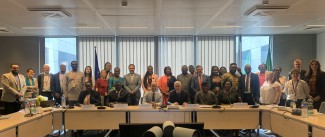
The African Union and the European Union successfully concluded the fifth AU-EU expert seminar on transitional justice, held from June 19 to 20, 2025, in Abuja, Nigeria. Hosted under the Initiative for Transitional Justice in Africa, the seminar brought together more than 50 experts, policymakers, researchers, and civil society representatives to discuss the critical role of reparations in fostering justice, reconciliation, and sustainable peace.

Last month ICTJ, with Saint Joseph University’s Modern Arab World Research Center and UMAM Documentation and Research launched the website “ Badna Naaref” (We Want to Know). This oral history project conducted by students tells the stories of suffering and survival during the war in Lebanon, serving both to commemorate and educate.

This summer, our Intensive Course on Transitional Justice and Peace Processes brought experts from around the world together in Barcelona to examine how transitional mechanisms can be integrated into peace negotiations. Read about the course and watch interviews with our experts.

From October 1 to October 5, 2018, ICTJ hosted its eleventh intensive course on transitional justice in collaboration with the International Peace Center for in Barcelona. Participants included leaders in their respective fields, including human rights law, community justice and legal services, peacebuilding, education, and humanitarian affairs.

Transitional justice practitioners and activists from 18 different countries gathered in Barcelona to attend the 6th Intensive Course on Truth Commissions, organized by the ICTJ and the Barcelona International Peace Resource Center on September 29 - October 3.

Some of the relatives’ stories start with the banging of a door at night, followed by a sudden abduction; others begin with a seemingly innocent citation to appear at a police station for a “routine procedure”. In any case, the stories always unfold in a desolate manner: as a loved one ...

Jean-Pierre Bemba's sentencing is a landmark for the International Criminal Court. Paul Seils looks at how it may reverberate into the future.

Cote d’Ivoire must prioritize effective consultations and ensure meaningful engagement with victims and civil society throughout the country in its efforts to provide reparations to victims of political violence that engulfed the country during the disputed 2010 presidential elections.

Disarmament, demobilization, and reintegration (DDR) programs and prosecutions of international crimes have become prominent features in the landscape of postconflict states. Some tension between them is inherent. Nonetheless, there is compatibility in the larger, long-term goals of D...

Based on the findings of over 450 interviews, this briefing paper looks at the socioeconomic impact of enforced disappearances on the wives of the disappeared in Nepal. More than 1,000 people remain unaccounted for after Nepal’s 10-year conflict ended in 2006. The majority were young ...

When the government of Uganda signed the Juba Agreement on Accountability and Reconciliation (AAR) with the rebel group the Lord’s Resistance Army (LRA) in 2007, it committed to establishing concrete measures that would promote accountability, reconciliation, and justice for victims of serious human rights violations stemming from two decades of armed conflict. More than ten years later, on June 17, 2019, Uganda’s Cabinet finally approved the long-awaited National Transitional Justice (TJ) Policy.