1526 results

Understanding education as a form of both reconstruction and reparations is essential for societies in their efforts to address victims’ rights and help victims and their families overcome the consequences of a painful past.

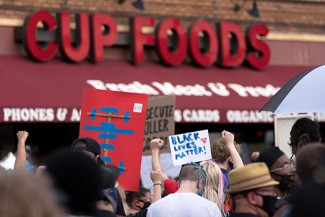
It happened again. George Floyd’s name is now added to the tragic list—already far too long—of other people of color whose lives have been cut short as a direct result of the United States’ long history of racism and white supremacy. We at ICTJ are outraged by the cruel and senseless murder of an unarmed Black man by police officers in Minneapolis, Minnesota. As we try to process this horrific act and grieve the tragic loss of another human life, we must also grapple with the hard truth that it is frankly unsurprising that this list of names continues to grow.

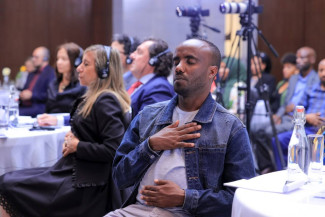
Victims, civil society advocates, policymakers, and development partners recently met for a high-level policy roundtable on integrating mental health and psychosocial support (MHPSS) in Ethiopia’s transitional justice process. Organized by ICTJ and the Advocacy Center for Democracy and Development, the convening offered a space for participants to discuss the need for MHPSS and how to improve access to it across the country.

As plans to build a massive Wegmans distribution center forge ahead, residents of the historic Black community of Brown Grove, Virginia, demand acknowledgment and redress.

After decades of repressive rules, military coups, and conflicts in the country’s marginalized peripheries, the Sudanese people have come together and proven their resolve to break with the past and begin a new chapter of their nation’s history. Undeterred by a brutal crackdown, thousands of...

On November 20 — on the 80th anniversary of the opening of the main Nuremberg trial, which prosecuted Nazi leadership for aggression and mass atrocities of World War II — details of the allegedly proposed new “peace” plan for Ukraine emerged. The initiative has surfaced one of the Kremlin’s recurrent demands: full amnesty for wartime atrocities — the very acts Nuremberg sought to punish and prevent.

Within education, history may be the discipline that is most inherently conservative, as it has traditionally been the venue in which group cohesion and patriotism have been inculcated. In deeply divided societies, particularly after identity-based conflicts, history is a particularly...

Young people in Kenya now have a new tool to help them learn about difficult periods in Kenyan history and discuss justice, democracy, leadership, and their role as Kenyan citizens.

Indigenous peoples are still some of the most marginalized and vulnerable communities around the world. In a conflict, they are often some of the most affected as their resource-rich territories are coveted by powerful and violent groups, their identity and loyalty perceived with mistrust, and their...

ICTJ and its partners in the Bridges of Truth project presented in Damascus the findings from their recent report on the first community dialogues held in Syria since the fall of the al-Assad regime in December 2024. On October 7, victims and family members, civil society actors, representatives from the country’s nascent transitional justice commissions, government officials, and international partners gathered to reflect on the lessons learned from the dialogues and the path forward for truth, justice, and accountability in Syria.