1538 results

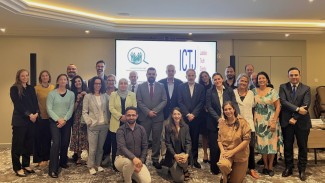
ICTJ, in collaboration with the Dutch Ministry of Foreign Affairs, recently convened the first international dialogue in Geneva in support of Syria’s two new justice commissions. From July 10 to 11, members of the National Commissions for Transitional Justice and for the Missing joined representatives of Syrian victim groups and experts and practitioners from around the world to discuss the present opportunities and challenges for peace and justice in Syria and how best to support the nascent institutions in fulfilling their mandates and advancing acknowledgment, truth, accountability, and repair.

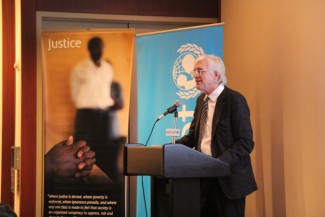
On January 21, ICTJ and UNICEF held a special event to launch an important new report on the links between education and transitional justice. The launch was accompanied by a panel discussion moderated by ICTJ President David Tolbert.

In many societies, histories of exclusion, racism, and nationalist violence often create divisions so deep that finding a way to deal with the atrocities of the past seems nearly impossible. These societies face difficult practical questions about how to devise new state and civil soc...

This report provides guidance to policymakers and practitioners on the ways in which transitional justice initiatives may function better in divided societies. If transitional justice can find ways to act as a means of political learning across communities, foster trust and recognitio...

To encourage public engagement in truth-telling and memorialization in Colombia, ICTJ and the Center for Historic Memory (Centro de Memoria Histórica) are pleased to announce a photography contest for non-professionals.

The Extraordinary Chambers of the Courts of Cambodia's reparations mandate may seem narrow and restrictive. Yet there are several potential ways in which the Court can make the right to reparations meaningful for civil parties and for many other Cambodians. It has the ability to inf...

View the live broadcast of tonight's panel discussion with Richard Goldstone, David Tolbert, Hassan Jallow and Diane Orentlicher from 6:30pm–8:30pm.

ICTJ and the Center for Global Affairs of New York University (NYU) co-hosted a panel discussion on the impact of international ad hoc tribunals in the former Yugoslavia and Rwanda, and the possible lessons these courts’ experiences hold for the International Criminal Court (ICC). In a discussion...

Ten years have passed since Tunisians took the streets to demand “Employment, Freedom, and National Dignity.” The revolution’s loud, courageous voice against corruption, extreme inequality, and repression echoed around the globe and inspired the “Arab Spring.” Today, Tunisians are still proud of their revolution. However, they continue to strive for goals, yet unattained, that the political class does not even seem to understand. It was thus not surprising to see large protests on the 10th anniversary, demanding concrete action and new public policies to advance social justice and better integrate marginalized regions and populations.

In August 2006 the Security Council created the UN Serious Crimes Investigation Team, as an extension of the previous investigation under the UN Integrated Mission Timor-Leste.