The "Cristinas of Conflict" Keep the Memory of Disappeared Women Alive in Colombia

A woman with a photograph in her hands.

A Garden of Disappeared Women

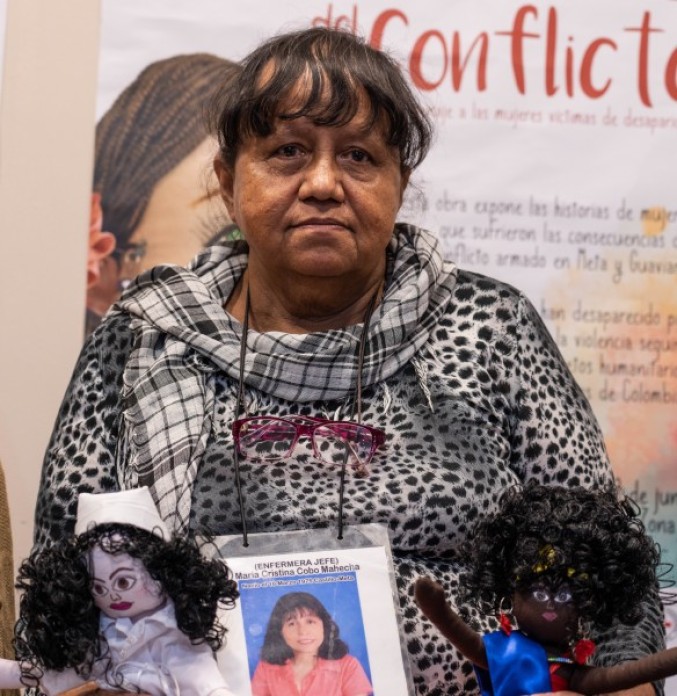
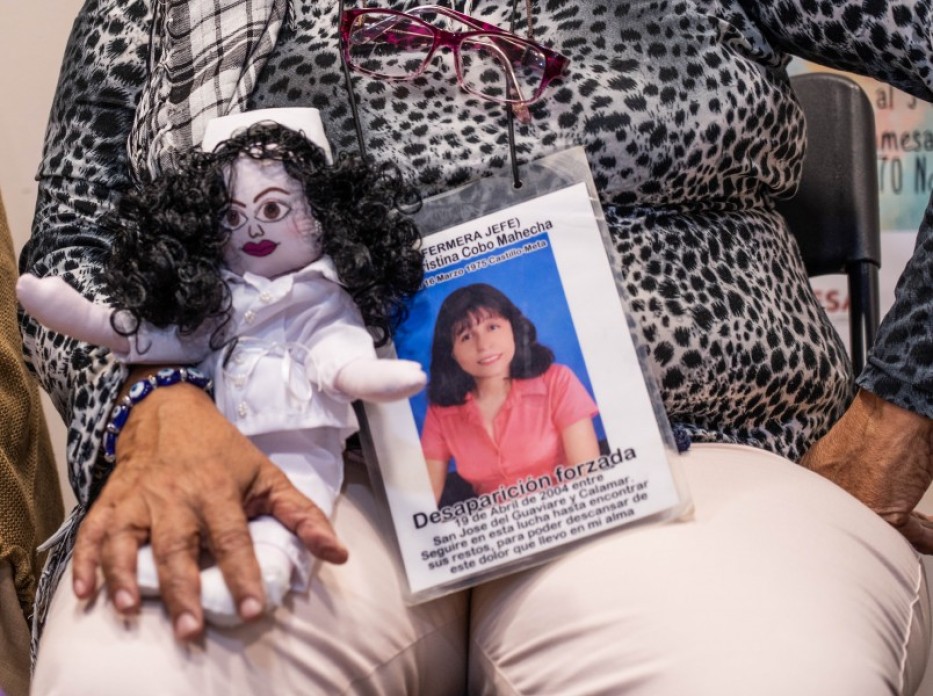
Paulina Mahecha is a 65-year-old woman who lives in Villavicencio, Meta, in the eastern plains of Colombia. Her daughter, María Cristina Cobo Mahecha, disappeared between the municipalities of San José and Calamar, in the department of Guaviare, on her way to her job as a nurse. Paulina used to lead a simple life as a housewife, but the sudden disappearance of her daughter turned her into a human rights activist. About a year ago, she made a doll of her daughter as a way to keep her memory alive. Soon after, other mothers, whose daughters were also disappeared, reached out to her and asked her to craft dolls of their children as well. Paulina named all the dolls after flowers, saying, "Rural Colombian women are so beautiful, I could only name them like something else that was beautiful even when what happened to them was so awful." (Photo credit: María Margarita Rivera/ICTJ)

A handwritten sign.

The Rebirth of Colombia's Disappeared Daughters

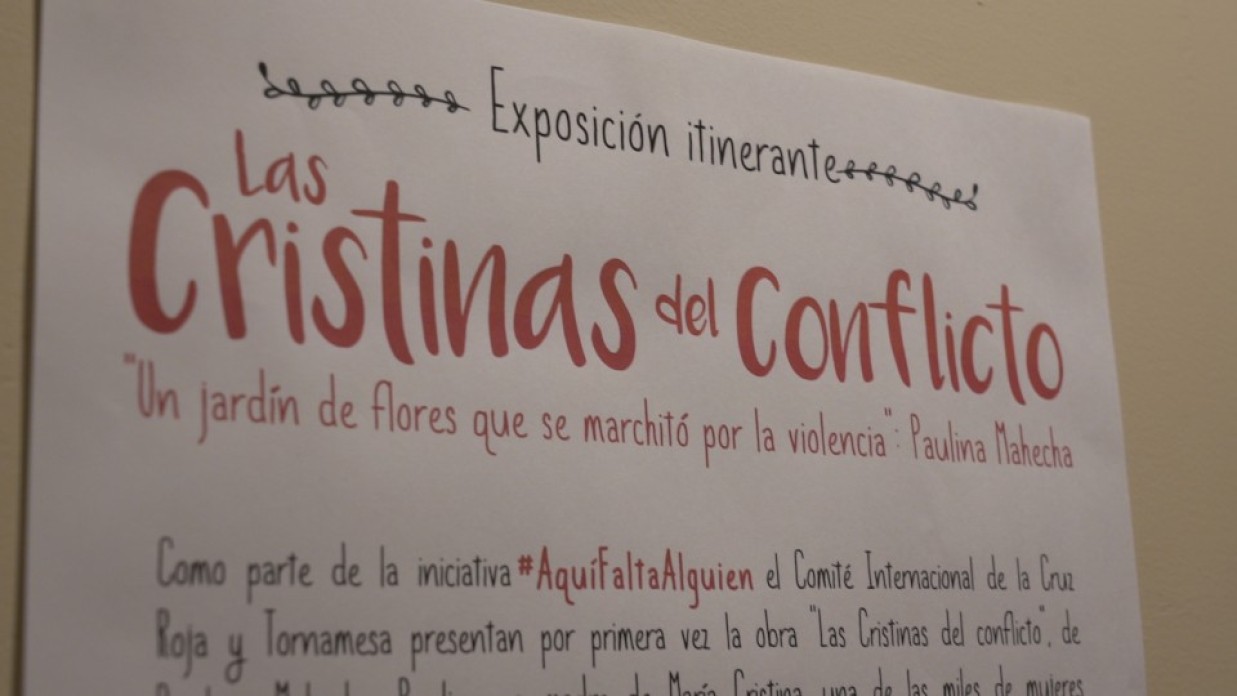
"Cristinas of the Conflict" is the name of the exhibition, which includes over 10 dolls that Paulina Mahecha has made so far. With the support of the International Committee of the Red Cross, the dolls are currently on tour, being exhibited at bookstores and cultural centers in the main cities of Colombia. Paulina never expected her story to reach so many people. "The event where we presented the dolls was very big, and very beautiful. I felt like I was being heard, like I was giving birth to the dolls and showing them to Colombia," she said. (Photo credit: María Margarita Rivera/ICTJ)

Open notebook filled with handwriting and photos.

Cristina's Notebook of Memories

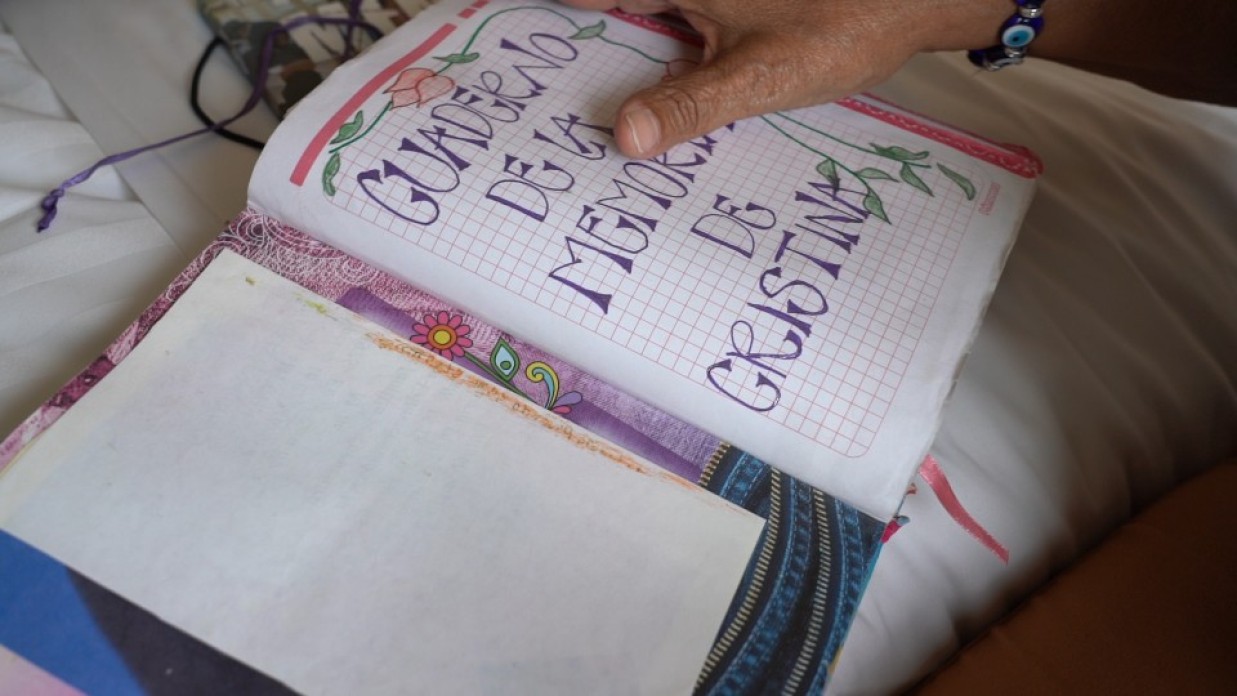
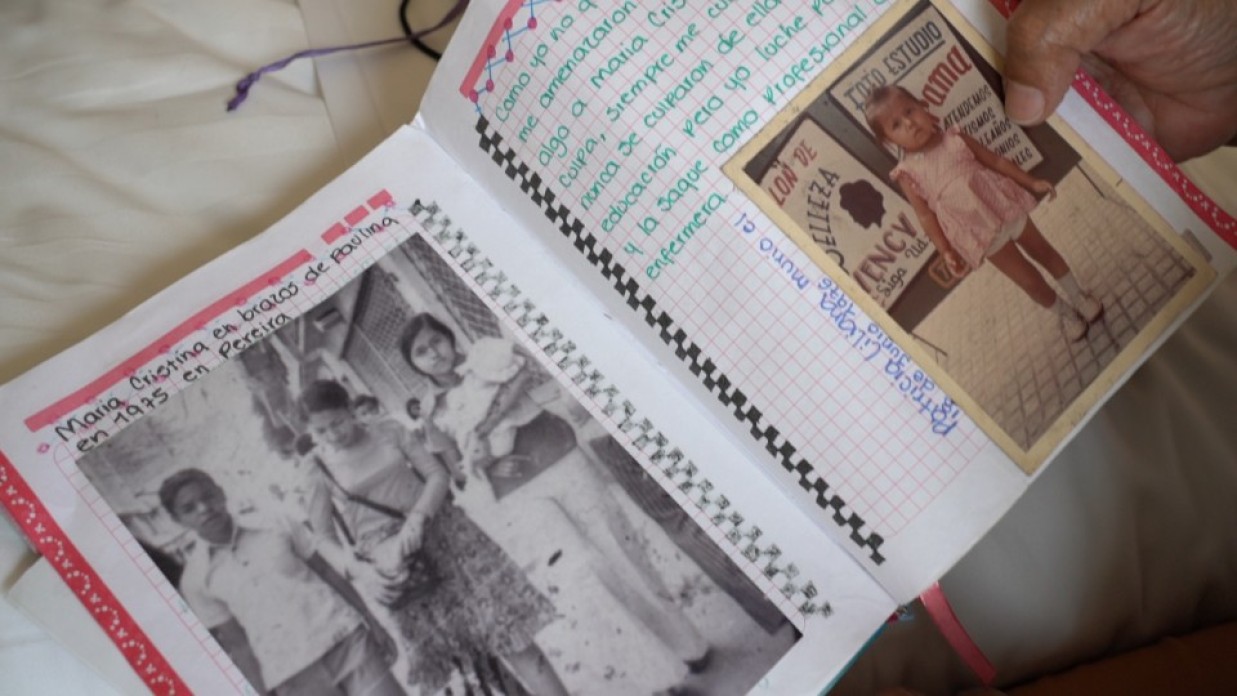
Paulina carries with her a tattered notebook, which she calls "Cristina's Notebook of Memories." It is overflowing with memorabilia of her daughter — photographs from her childhood and high school and college graduations, and letters that Cristina wrote to her mother when she was working in Guaviare. She also has letters and poems she herself has written to her daughter, as well as press clippings that describe the death of her first husband, Cristina's disappearance, and the prosecution of the paramilitary member responsible for her disappearance, aka "Cuchillo," who was sentenced to 31 years in prison. (Photo credit: María Margarita Rivera/ICTJ)

A photograph of a group.

"El Tente:" A Play for the Forcibly Disappeared

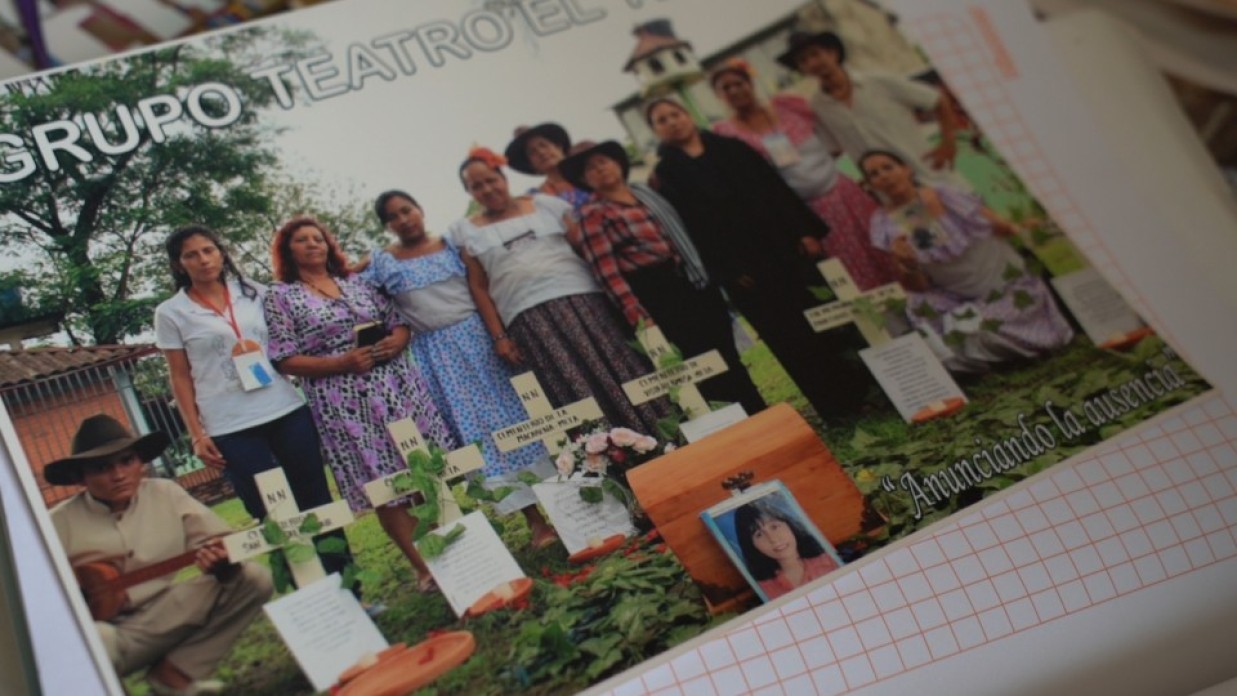
In addition to dollmaking, Paulina has founded a theater company, along with other mothers of the disappeared in Guaviare and Meta. All but three of these women have developed cancer or some other disease, which she thinks are a result of the stress of losing a loved one. (Photo credit: María Margarita Rivera/ICTJ)

A notebook filled with writing and photos.

A Nurse Since the Age of 12

One of Paulina's most traumatic memories is the third-degree burns that Cristina suffered as a child when the family home caught fire. Cristina was covered with severe burns on 80 percent of her body and lost a great deal of her hair, and as a result was constantly bullied by other children. But, Paulina remembers most how her daughter would always wear a smile, and how from a young age she displayed a passion for medicine. (Photo credit: María Margarita Rivera/ICTJ)

A woman with a doll in her lap.

Caught in the Crossfire

For Paulina, the dark-haired, fair-skinned doll that she carries with her helps fill the void left by the disappearance and gruesome murder of her daughter, whose remains have yet to be found. She remembers her daughter as a dedicated nurse who cared for everyone. Paulina believes that Cristina was taken by paramilitaries for having given medical attention to a rival guerrilla member. (Photo credit: María Margarita Rivera/ICTJ)

Dolls with photographs of young women beneath.

The Dolls Tell the Story of Colombian Women

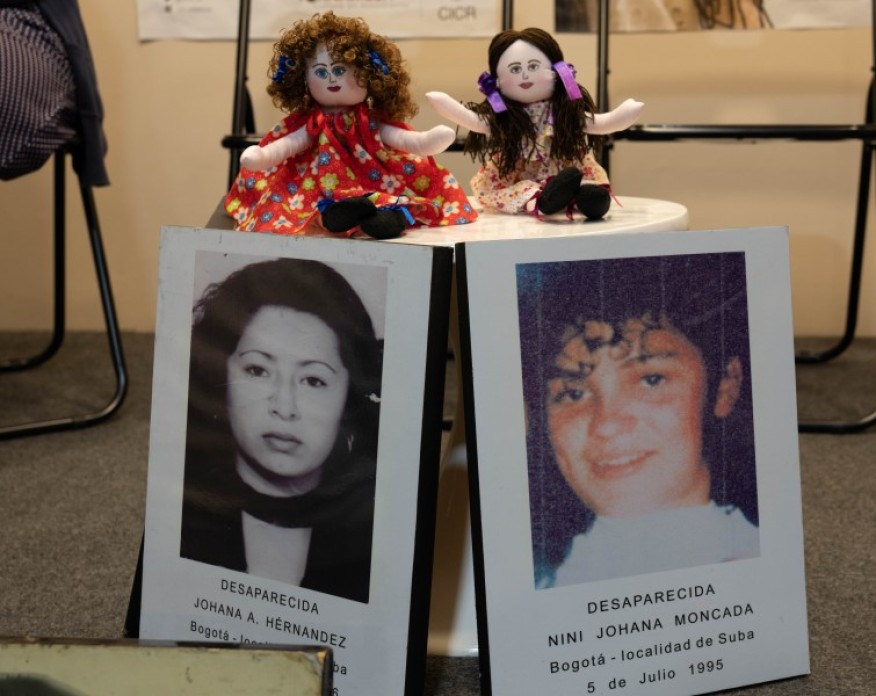
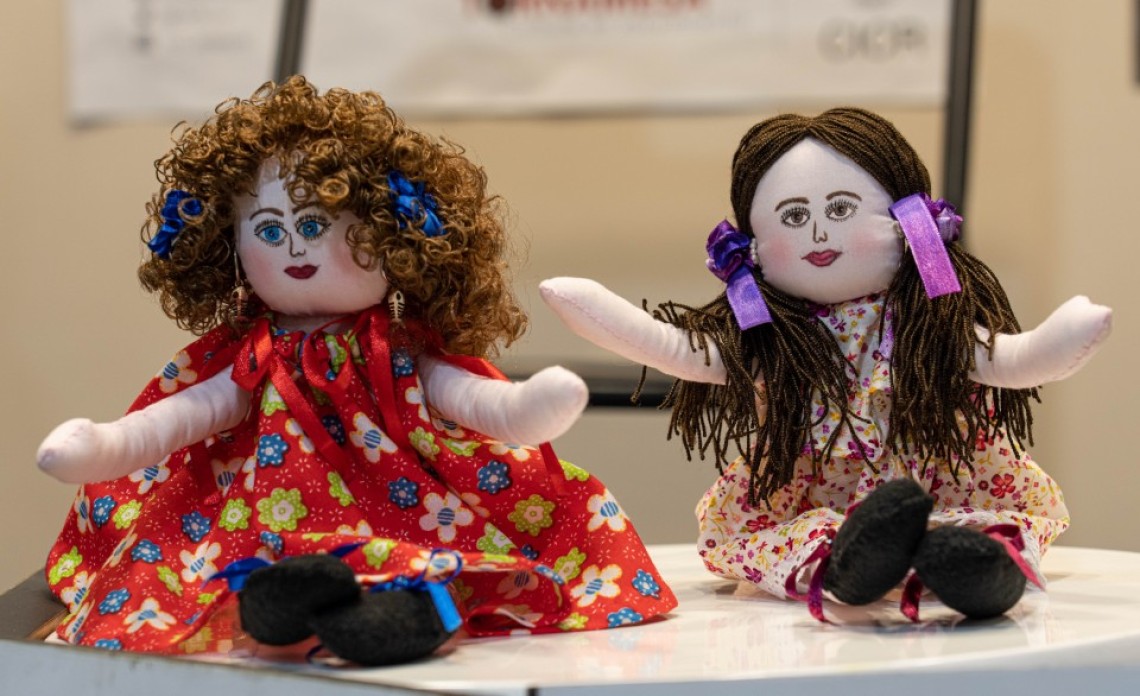
According to the National Center of Historical Memory, 12 percent of the disappeared in Colombia are women. Through dollmaking, Paulina has told the story of 10 of these women. Each doll features the specific hair type and eye color of the woman it represents, as well as her clothing based on what she did for a living. Later this year, Paulina plans on making a doll of an indigenous woman to tell the story of the violence indigenous women have silently suffered during years of armed conflict. (Photo credit: María Margarita Rivera/ICTJ)

Two dolls.

A Homage to the Disappeared Women

The process of building a doll is very involved. Paulina spends from two to three weeks on each one. Some of the most healing moments for her are when she threads the hair on a doll's head, strand by strand, and makes its undergarments. It is her way of showing respect for the woman. (Photo credit: María Margarita Rivera/ICTJ)

A handwritten biography of a doll.

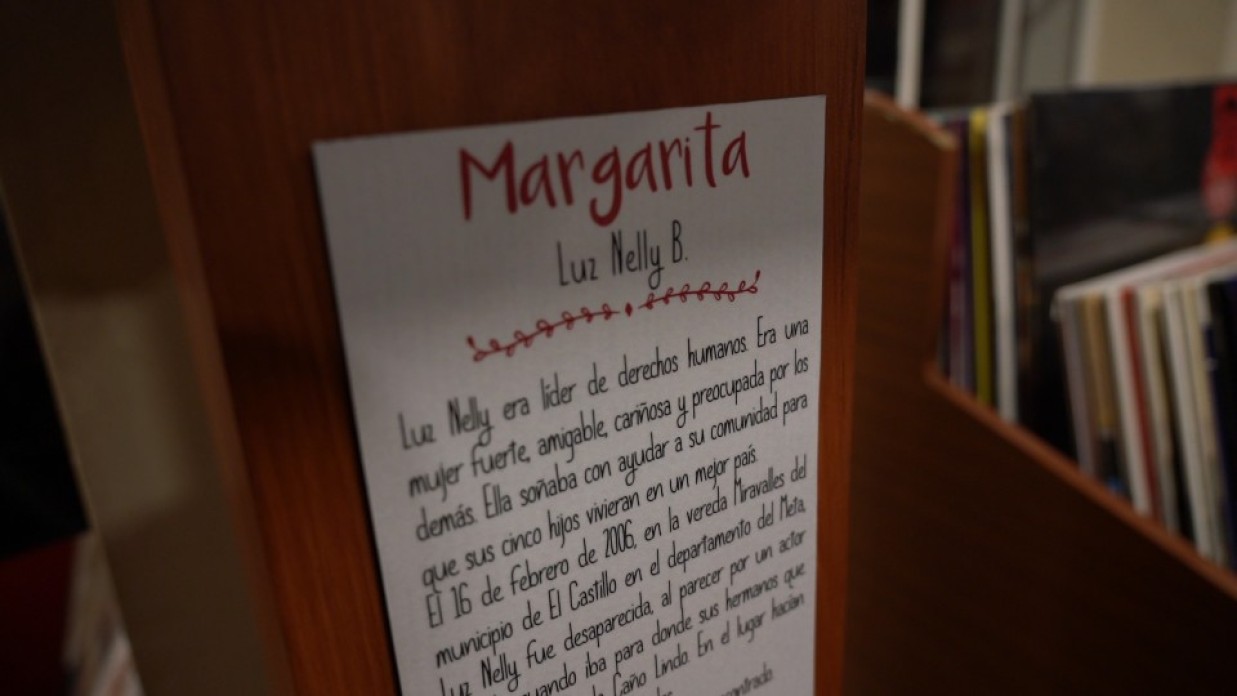
"Daisy"

The story that Paulina is able to tell through a doll dignifies the life of the woman it represents. Each doll is placed on a pedestal inside a transparent box. Brief text explains what happened to the woman and describes the flower after which she is named. (Photo credit: María Margarita Rivera/ICTJ)

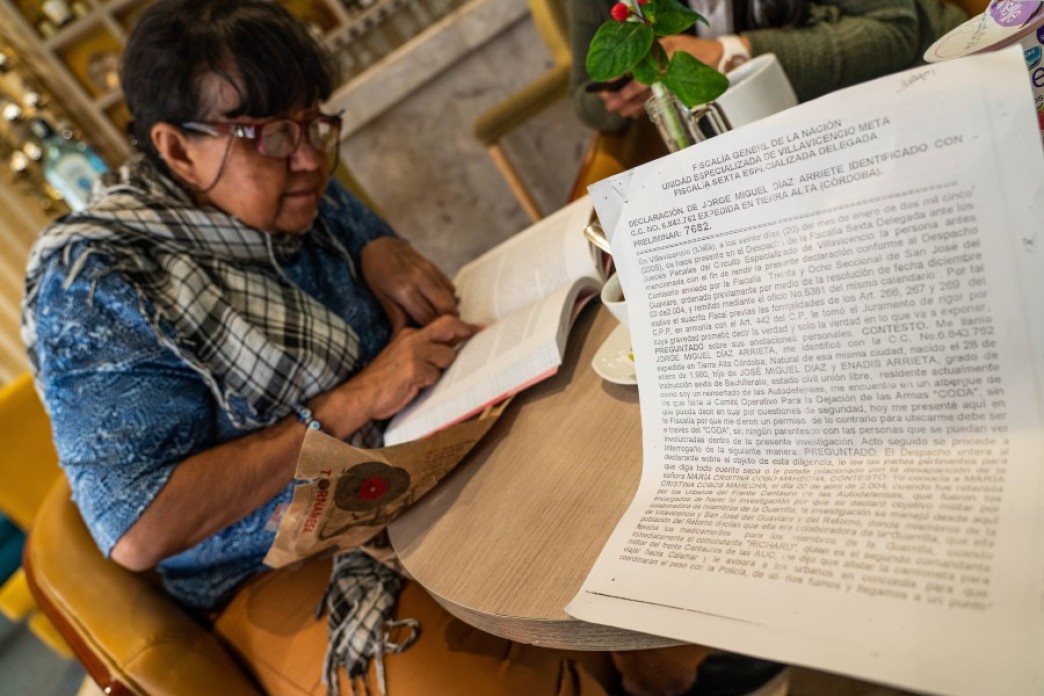
A woman reading documents.

The Search Unit's Daunting Task Is Underway

Paulina already knows what happened to Cristina. The prosecutor's office gave her a copy of an interview in which the paramilitary member named "Richard" confessed to knowing the circumstances. She knows her daughter was raped and her body dismembered. Even with establishment of the Search Unit for the Disappeared, borne out of the 2016 peace accords, she holds no hope of ever being able to properly bury her daughter. Hundreds of women all over Colombia are in this same situation. The unit, which recently submitted its one-year performance report, faces many challenges gaining the trust of victims and fulfilling its mandate, including limited funding and the dwindling legitimacy of the peace process. The unit was given 20 years to accomplish the monumental task of accounting for the country's roughly 40,000 disappeared persons. For these mothers, who wait for their loved ones to return every day of their lives, this time period could not be longer. (Photo credit: María Margarita Rivera/ICTJ)

Fifteen years ago, a young nurse named Cristina Cobo was forcibly disappeared by members of the paramilitary group United Self-Defense Forces of Colombia. Paulina Mahecha, her mother, preserves her memory and that of over 20 other disappeared women from the departments of Meta and Guaviare by creating rag dolls. The "Cristinas of the Conflict," as Paulina calls them, are now part of a traveling exhibition that aims to raise awareness in Colombia about what happened in the south of the country.