



The Future of the Past: 10th Annual Emilio Mignone Lecture

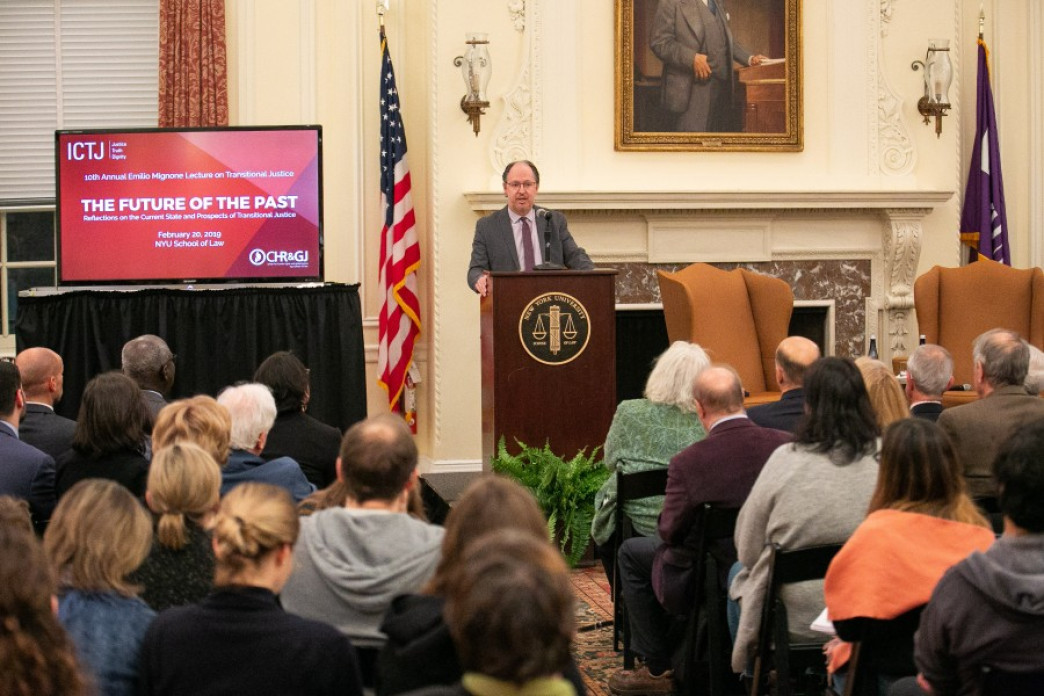
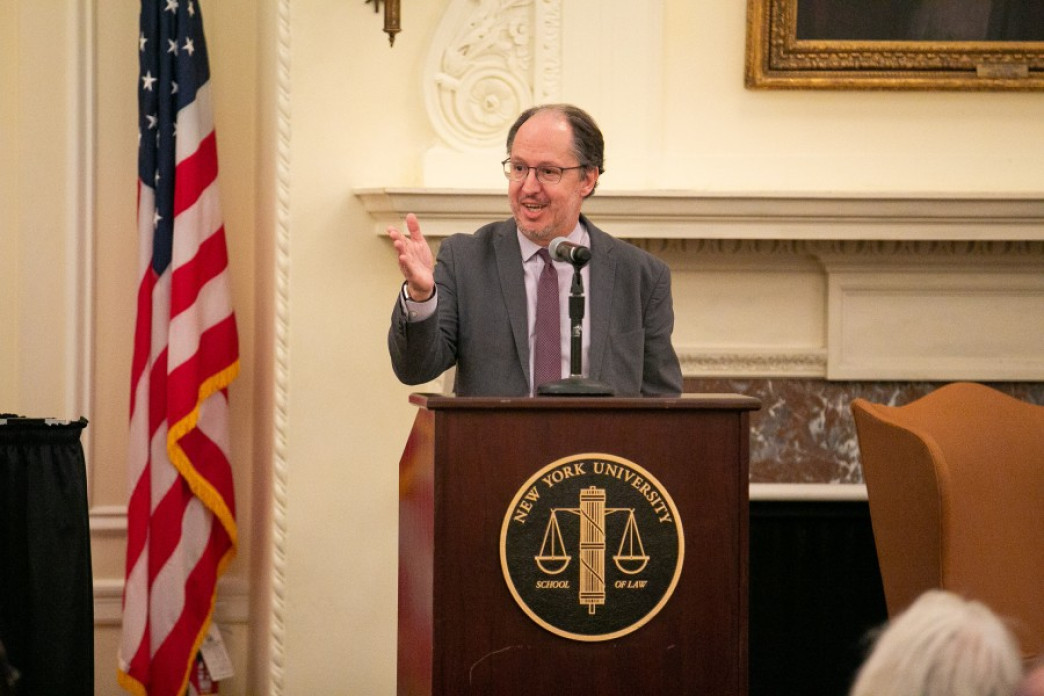
A man delivering a lecture.

For the 10th annual Emilio Mignone lecture, ICTJ and New York University School of Law’s Center for Human Rights and Global Justice (CHRGJ) welcomed as speaker Pablo de Greiff, former UN Special Rapporteur on the promotion of truth, justice, reparation and guarantees of non-recurrence. (Photo credit: ©Slezak: Courtesy of NYU Photo Bureau)

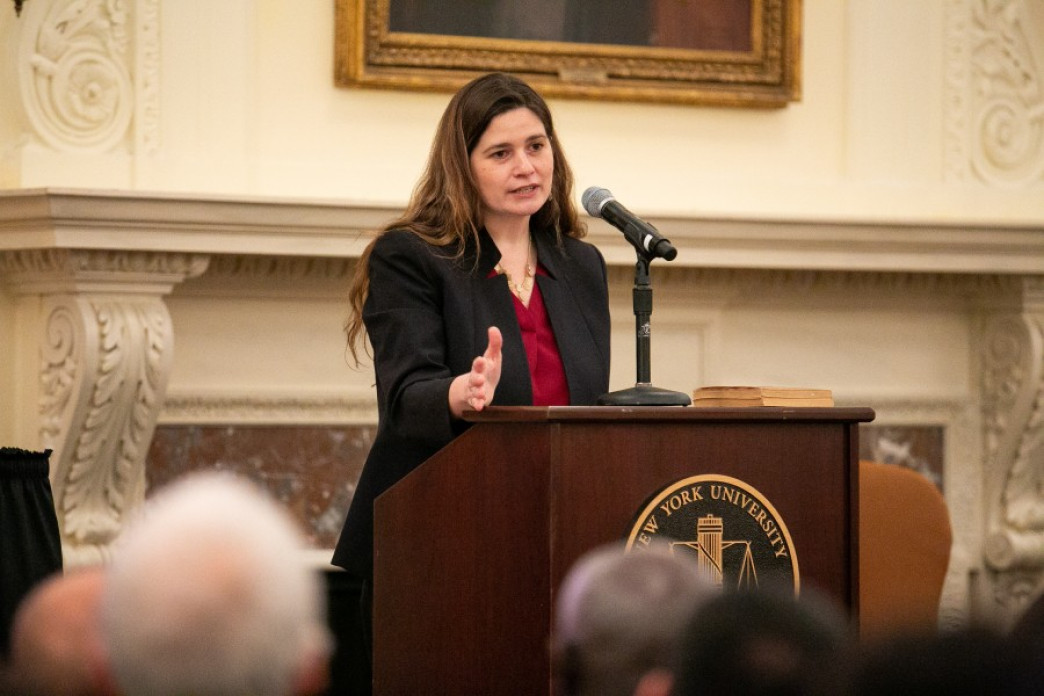
A woman presenting.

Deborah Alejandra Popowski, Executive Director of CHRGJ, opened the Emilio Mignone lecture. The lecture series was named after the renowned Argentine human rights lawyer and early transitional justice architect. (Photo credit: ©Slezak: Courtesy of NYU Photo Bureau)

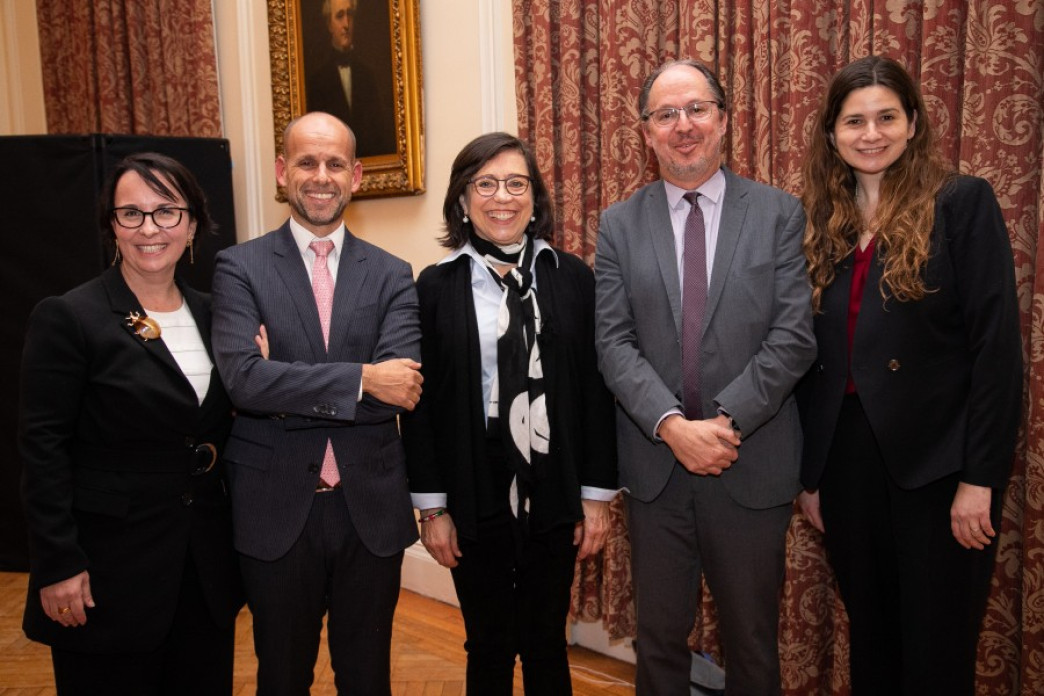
A group of people smiling.

Isabel Mignone-del Carril (center), daughter of Emilio Mignone, stands with (from left to right), Anna Myriam Roccatello, Fernando Travesí, Pablo de Greiff, and Deborah Alejandra Popowski. (Photo credit: ©Slezak: Courtesy of NYU Photo Bureau)

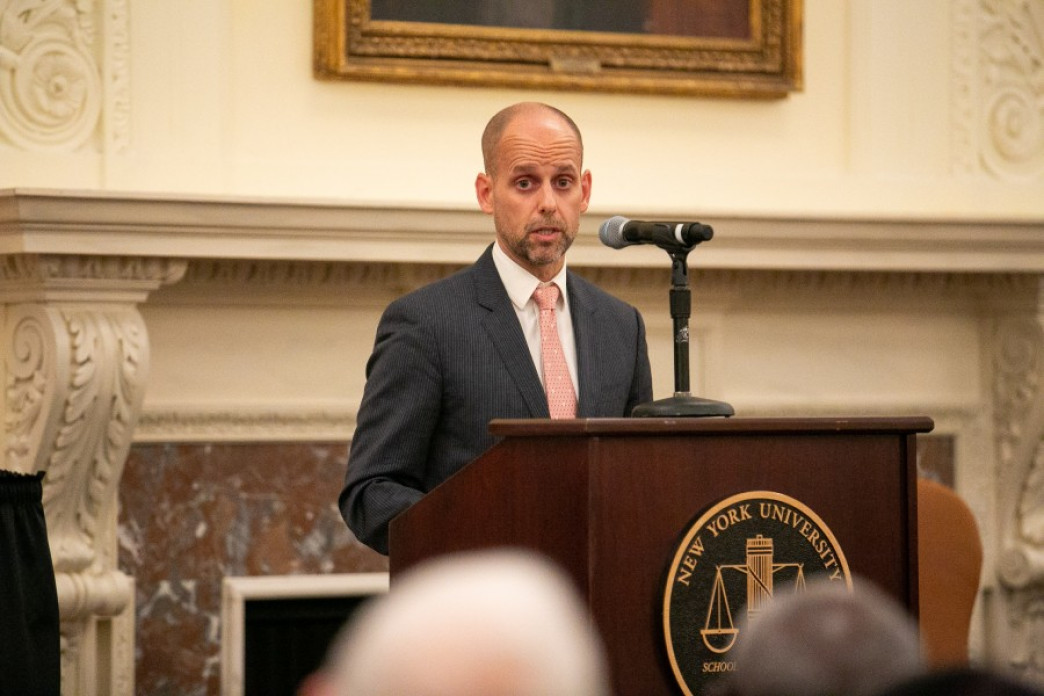
A man presenting.

Fernando Travesí, Executive Director of ICTJ, introduced the evening's speaker Pablo de Greiff. (Photo credit: ©Slezak: Courtesy of NYU Photo Bureau)

A man presenting.

In his address, titled “The Future of the Past: Reflections on the Current State and Prospects of Transitional Justice,” Pablo de Greiff took stock of the field, its accomplishments in the past 30 years and the challenges it faces today and in the years to come. (Photo credit: ©Slezak: Courtesy of NYU Photo Bureau)

A woman watching a presentation.

Caroline Kronley, President of the Tinker Foundation, was among the many distinguished guests. (Photo credit: ©Slezak: Courtesy of NYU Photo Bureau)

A man presenting.

"Transitional justice has helped to entrench rights to justice, truth, and reparations that 30 years ago were largely fictions for the overwhelming majority of victims of human rights violations and abuses," Pablo de Greiff said. “And it has done it not only doctrinally but also importantly practically.” (Photo credit: ©Slezak: Courtesy of NYU Photo Bureau)

People watching a lecture.

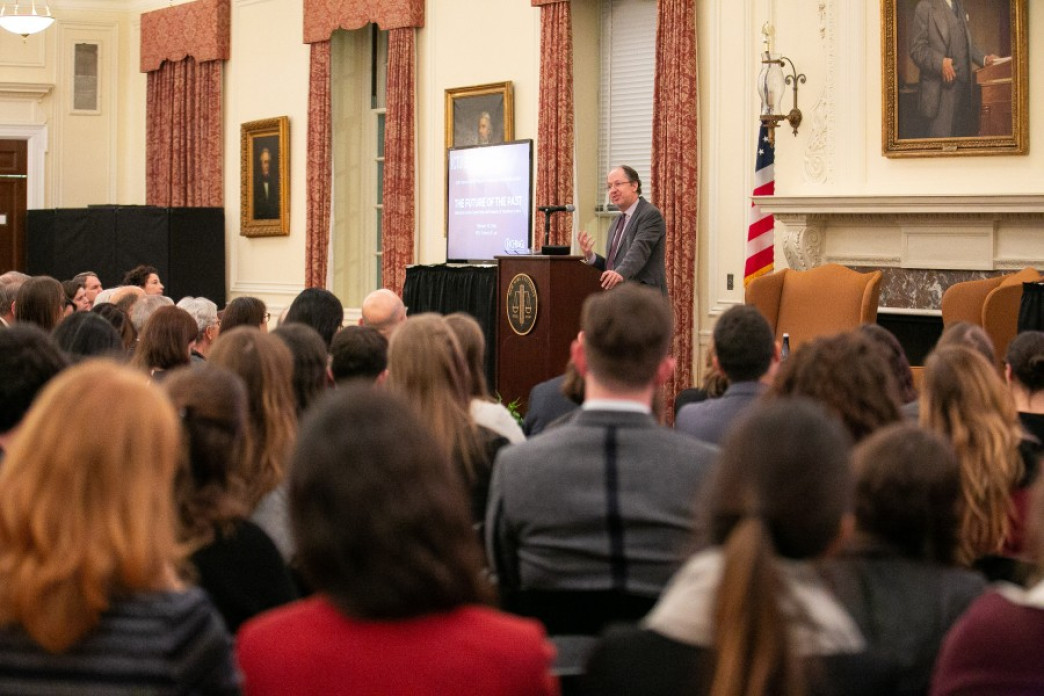
Close to 200 people attended the public event, filling to capacity the lecure hall at New York University Law School in New York City, where it was held. (Photo credit: ©Slezak: Courtesy of NYU Photo Bureau)

People watching a lecture.

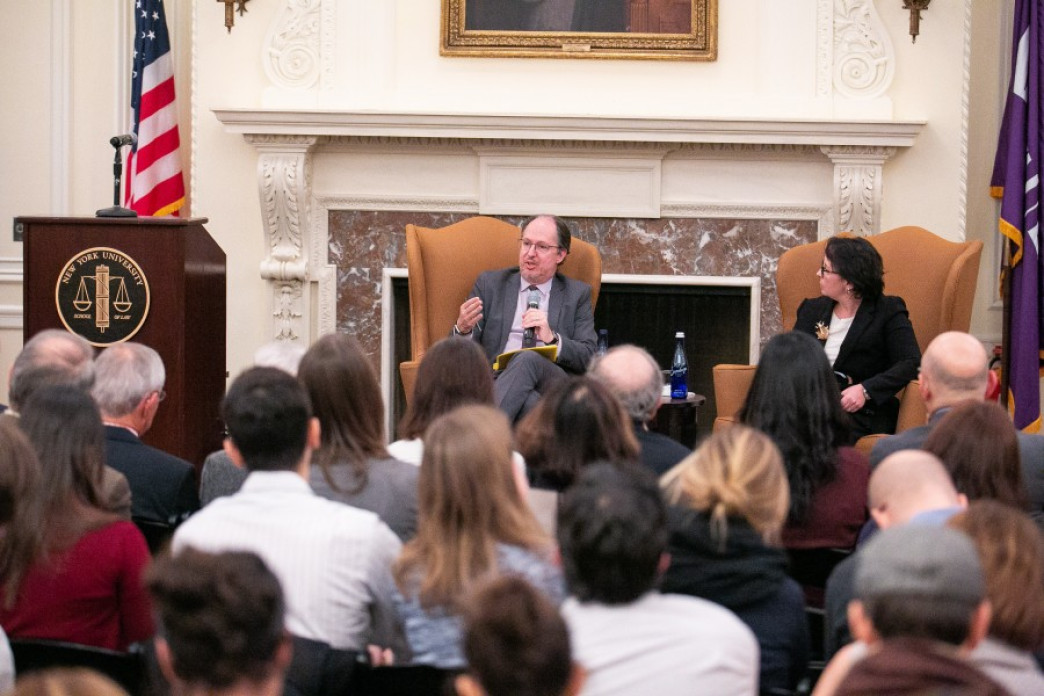
A robust question and answer session followed the lecture, moderated by ICTJ’s Deputy Executive Director Anna Myriam Roccatello. (Photo credit: ©Slezak: Courtesy of NYU Photo Bureau)

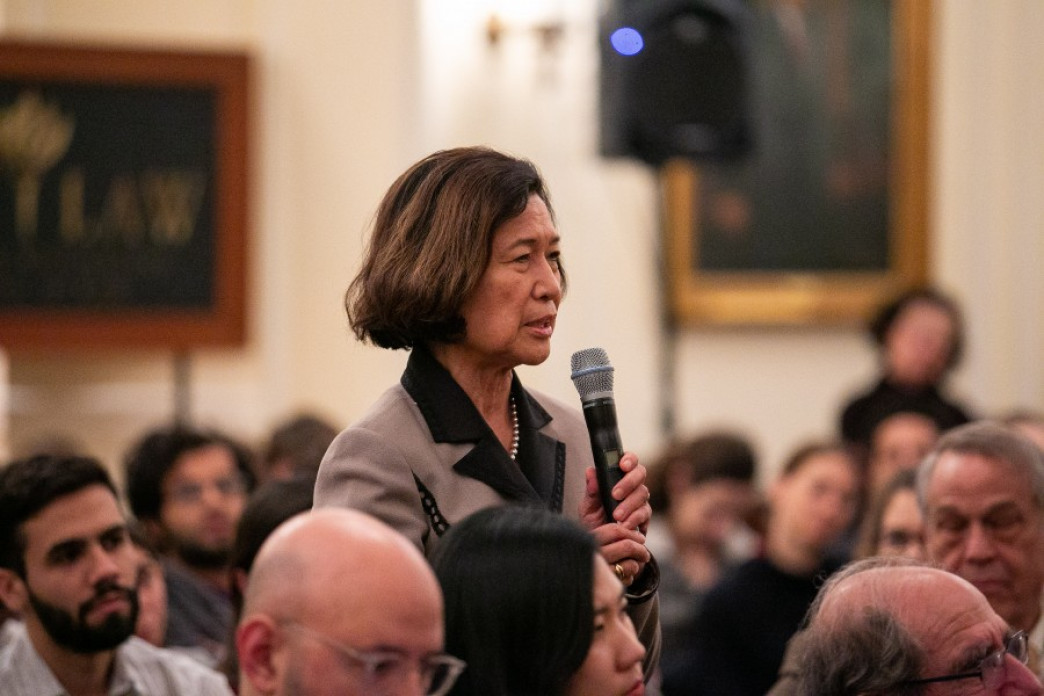
A woman asking a question.

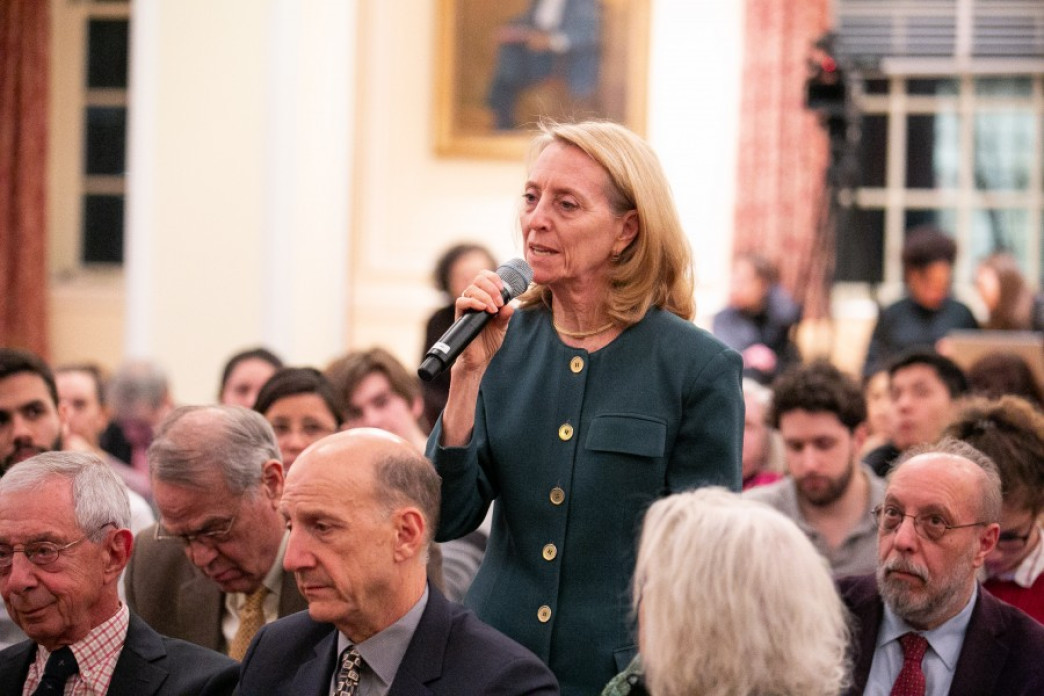
Donna Katzin, Executive Director of Shared Interest, was among the the guests who participated in the question and answer session. (Photo credit: ©Slezak: Courtesy of NYU Photo Bureau)

A woman asking a question.

Loida Lewis of Reginald Lewis Foundation posed questions about the role of transitional justice in contexts characterized by racial discrimination and injustice such as the United States. (Photo credit: ©Slezak: Courtesy of NYU Photo Bureau)

A man asking a question.

Jamie Metzl, a member of ICTJ's board, shared thoughtful comments and questions related to human rights issues in Asia. (Photo credit: ©Slezak: Courtesy of NYU Photo Bureau)

People applauding at a lecture.

The public lecture attracted leaders from the transitional justice and human rights fields, members of the philanthropic community, and students. (Photo credit: ©Slezak: Courtesy of NYU Photo Bureau)

On February 20, ICTJ and New York University School of Law’s Center for Human Rights and Global Justice (CHRGJ) proudly presented the 10th annual Emilio Mignone lecture. For this milestone in the lecture series, ICTJ and CHRGJ welcomed as speaker former UN Special Rapporteur on the promotion of truth, justice, reparation and guarantees of non-recurrence, Pablo de Greiff.


Close to 200 people attended the public event, held at the law school’s campus in New York City. Among the distinguished guests was Isabel Mignone, the daughter of Emilio Mignone, the renowned Argentine human rights lawyer and early transitional justice architect after whom the lecture series is named. A robust question and answer session followed the lecture, moderated by ICTJ’s Deputy Executive Director Anna Myriam Roccatello.

In his address, titled “The Future of the Past: Reflections on the Current State and Prospects of Transitional Justice,” de Greiff took stock of the field, its accomplishments in the past 30 years and the challenges it faces today and in the years to come. He also reflected on the lasting legacy of the past, particularly for victims of massive human rights abuses, their families, and their societies.

“The future of dealing with the past,” de Greiff said in his opening remarks, “is another way of referring to transitional justice.” “The question remains about the amazing endurance of the past, the fact that is does not go away. That, for example, efforts to bribe people by offering them economic development instead of justice may work for awhile but only that, for awhile,” he continued. “There are things that we cannot reasonably expect our fellow citizens to forget…. In many ways, [not] dealing with the past is not an option.”

De Greiff pointed to the field’s many triumphs in its relatively brief history, especially its normative impact on both human rights discourse and practice. “Transitional justice has unpacked and, in that sense, helped to give richer content to the notion of justice that is relevant in the wake of massive and systematic violations and abuses,” he said. “Transitional justice has helped to entrench rights to justice, truth, and reparations that 30 years ago were largely fictions for the overwhelming majority of victims of human rights violations and abuses. And it has done it not only doctrinally but also importantly practically.”

The Special Rapporteur, however, insisted on modesty in his overall assessment of the field and its capacity for transformative change. “As it has been said of peace agreements, I think transitional justice is not meant to take people to heaven; it is meant to take people out of hell,” he said. “Transitional justice, I want to insist, is not is a universal policy tool, a cure for all sorts of maladies. It is a small, albeit important, part of a broader transformative agenda.”


إنجليزية