265 results

The relationship between violent conflict and the environment has been increasingly recognized in the past few decades. War can cause severe damage to ecological systems, and resource scarcity can act as a driver of conflict. While the current outlook for incorporating environmental issues into peacebuilding efforts may seem dire, there is reason for hope.

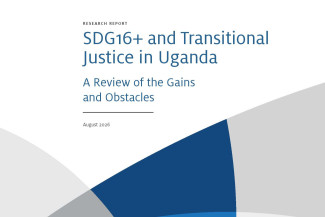
This report examines the gender sensitivity of Uganda’s National Transitional Justice Policy (NTJP) and its potential to deliver inclusive justice for victims of conflict. While the NTJP represents a significant policy achievement, gaps in implementation, participation, and gender inc...

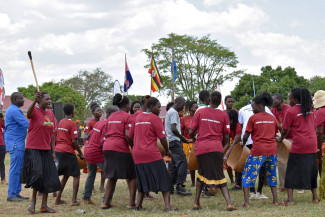
A large group of women dance in circle formation outdoors

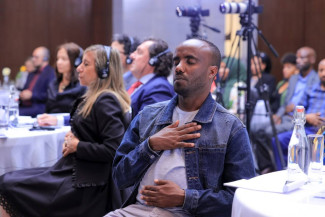
Victims, civil society advocates, policymakers, and development partners recently met for a high-level policy roundtable on integrating mental health and psychosocial support (MHPSS) in Ethiopia’s transitional justice process. Organized by ICTJ and the Advocacy Center for Democracy and Development, the convening offered a space for participants to discuss the need for MHPSS and how to improve access to it across the country.

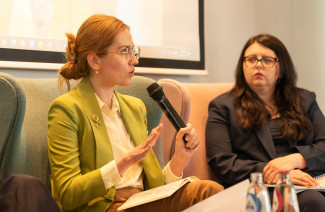
ICTJ strongly advocates for a holistic transitional justice vision for Ukraine as part of its programmatic activities. Leading this work is the head of ICTJ’s Ukraine program, Kateryna Busol. She is the author of the new report, “Myths and Ways Forward: Transitional Justice for Ukraine." In this interview, Busol discusses the path toward holistic justice for the country.

The AU–EU 2025 Experts’ Seminar on Transitional Justice convened African and European practitioners to advance reparations as a central pillar of transitional justice. Discussions highlighted legal obligations, victim-centered and transformative approaches, and persistent challenges i...

Cover featuring an abstract design for the report "Approaches to Reparations from Africa and Europe: The AU–EU Experts’ Seminar on Transitional Justice, Abuja, Nigeria, June 2025"

A new ICTJ report urges the revitalization of Ukraine’s holistic transitional justice policymaking. Debunking the most common myths about transitional justice in Ukraine, the report presents the key legal, policy, and victim-centered arguments in favor of advancing a comprehensive transitional justice framework.

Despite earlier efforts to envision a national transitional justice policy, Ukraine remains overly cautious about establishing one. This report provides a robust substantiation of why Ukraine should revive its holistic transitional justice policymaking. In the first part, it debunks t...

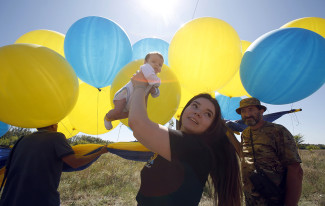
A women holds up an infant in the air on sunny day outdoors, surrounded by yellow and blue balloons

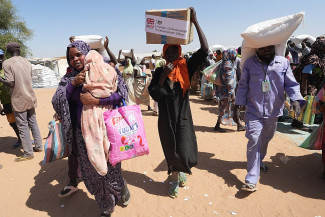
As the world marks the third anniversary of the brutal war in Sudan, it is a moment to reflect on a conflict that rarely receives the media attention it deserves and to consider the millions of Sudanese caught in cycles of violence.

On January 28, 2026, ICTJ held its annual January for Justice Leaders benefit dinner in New York City, an event celebrating leaders advancing justice around the world. This edition also marked the beginning of ICTJ’s 25th anniversary year and served as an opportunity to look back on a quarter century spent standing alongside victims, civil society, and institutions in the pursuit of truth, accountability, and lasting peace after mass atrocities.

This report assesses the gender sensitivity of the African Union Transitional Justice Policy (AUTJP). Drawing on continental practice and scholarship, it identifies opportunities for AU member states, civil society, and donors to strengthen the policy’s implementation and its responsi...

A woman stands in the profile position in a field of green plants on a sunny day with a clear blue sky