269 results

Civil society actors involved in transitional justice processes use narrative communication in strategic and agile ways. This work is vitally important, and yet it does not receive the attention and support it should.

Long before ICTJ existed, societies everywhere wrestled with the justice-related dilemmas caused by violent conflict, and victims, communities, and courageous leaders found answers of their own. What was missing was a place where people who took part in those different experiences could meet, share knowledge and lessons, and build a community to respond together to the evolving challenges to justice and peace. In 2001, ICTJ was created to be that place and to catalyze a collective effort to address massive human rights violations and build a peaceful, inclusive, and just future.

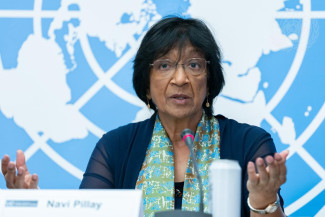
ICTJ welcomes the recognition of Navi Pillay as the 2026 Nobel Peace Prize Laureate and expresses its deep appreciation for her lifelong commitment to human rights, international law, and justice for victims of international crimes.

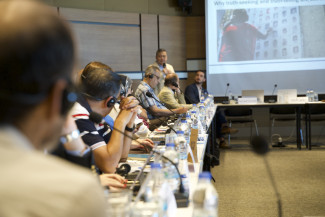
At an ICTJ-organized symposium in Istanbul, artists, civil society leaders, journalists, academics, and transitional justice practitioners from around the world discussed the ways art can serve as a catalyst for change in societies emerging from conflict or repression as well as explored local non-state-led approaches to truth seeking and truth telling.

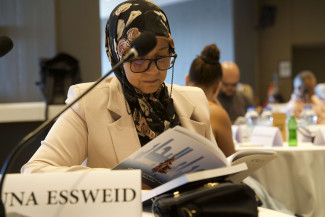
This research report examines how civil society actors involved in transitional justice processes narrate and communicate their role, impact, and value. The study focuses on actors in Colombia, The Gambia, and Kenya, describing the content, form, and audiences of their communication w...

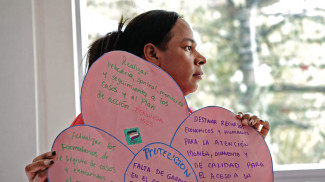
A person holds up a poater collage made up of pink paper with text in Spanish

Even though young people were driving forces behind the revolutions in Tunisia, Libya, and Lebanon, their lives have not significantly improved since then. Many have been pushed to leave their home countries for socioeconomic or political reasons. A new ICTJ book features the testimonies of 18 young migrants who made this difficult choice.

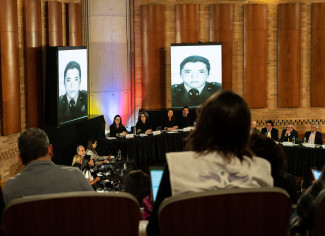
In an interview first published in "El Espectador," ICTJ’s María Camila Moreno discusses the first rulings of Colombia’s Special Jurisdiction for Peace, the state’s obligations to implement them, and why restorative justice is vital to lasting peace.

In the United States, reparations efforts at the municipal level have demonstrated momentum, innovation, and progress in recent years. However, for many of these initiatives, how to make them sustainable and impactful remains a challenge. Drawing on domestic and international experien...

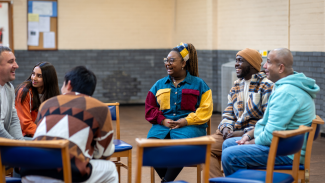
People seated in a circle speak and laugh

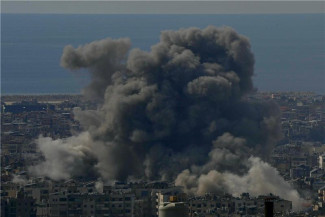
Recent Israeli strikes in Beirut and other populated areas in Lebanon, among the conflict's most intense so far, have destroyed critical infrastructure and devastated civilian communities. ICTJ stands unequivocally with the Lebanese people and all victims across the region and calls for an immediate end to all attacks on and threats to civilian communities and infrastructure.

ICTJ is watching with grave concern the unfolding war launched by the United States and Israel against Iran and its devastating ripple effects across the wider region. Over a month into the conflict, the human cost is staggering. We at ICTJ reaffirm the international principles that govern our shared world and stand unequivocally with all victims across the region.