643 results

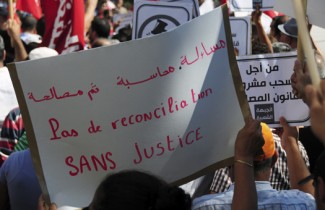
In this op-ed, Rim El Gantri, head of ICTJ's Tunisian office, discusses the challenges facing Tunisia's transitional justice process and argues that the government's failure to provide accountability for crimes committed under past regimes threatens the country's transition to democracy.

This paper provides an initial summary of the work of the Sierra Leone Truth and Reconciliation Commission (TRC) and points to some of the key difficulties it has encountered. The Commission's first year was challenging: it effectively lost its full preparatory period and the first tw...

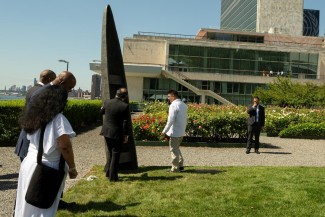
In July, Colombian President Gustavo Petro traveled to New York to address the UN Security Council on the status of the implementation of the 2016 peace agreement between the Colombian government and the guerrilla group Revolutionary Armed Forces of Colombia. During his visit, Petro also inaugurated a monument commemorating the country's enduring pursuit of peace.

This paper summarizes the results of a mapping survey on transitional justice initiatives in Indonesia undertaken by ICTJ from August 2002 to May 2003. While the Indonesian government has created several state agencies and laws to address past cases of violence, it is still plagued by...

This briefing paper examines the Tunisian Truth and Dignity Commission’s approach to investigating Ben Ali dictatorship-era corruption crimes and identifying responsible institutions and individuals, and whether it laid the foundation for accountability and reparation. While it fell s...

First page of the briefing paper The Truth About Corruption

A significant portion of Colombian society has been indifferent to the pain of those who lived through the war in the flesh. Some have even denied the existence of an internal armed conflict. This is why it is necessary for us to recount our early and recent history. A new, more comprehensive and nuanced narrative must emerge from the testimonies of victims, responsible parties, and even spectators of this unending war.

Fania Davis thinks the time has come for a truth-telling process about racial injustice in the United States, and she is working to make it a reality. We sat down with her and her colleague, Jodie Geddes, to discuss their vision for a national process, what they hope it would achieve, and what they have learned from their conversations with local leaders so far.

In commemoration of the 25th anniversary of the end of the Lebanese civil war, ICTJ is holding a youth photo contest to raise awareness about the importance of truth seeking and truth telling about people’s experiences of the war and post-war violence.

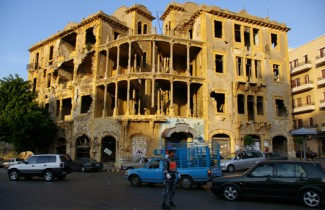
Lebanon’s civil war continues to impact the Lebanese people, both those who lived through the war and those born after it. While the widespread harms it caused are still visible today, the official denial of both the war and its lasting consequences has left a hole in Lebanon’s histor...

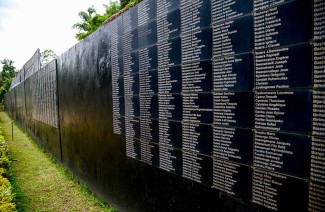
Thirty years after the 1994 genocide against the Tutsi in Rwanda, painful memories of those gruesome 100 days, during which almost one million Rwandan citizens lost their lives, still haunt the people of Rwanda, the rest of Africa, and the world. It is a solemn occasion to remember and honor the victims and survivors of the genocide and to acknowledge the tremendous strength and resilience they have shown in the wake of unspeakable tragedy. However, it is also a time for candid introspection on the African continent, and around the world, about the policies and mechanisms in place to prevent such atrocities.