605 results

ICTJ and the Center for Global Affairs of New York University (NYU) co-hosted a panel discussion on the impact of international ad hoc tribunals in the former Yugoslavia and Rwanda, and the possible lessons these courts’ experiences hold for the International Criminal Court (ICC). In a discussion...

View the live broadcast of tonight's panel discussion with Richard Goldstone, David Tolbert, Hassan Jallow and Diane Orentlicher from 6:30pm–8:30pm.

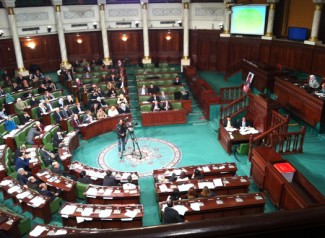
Ten years have passed since Tunisians took the streets to demand “Employment, Freedom, and National Dignity.” The revolution’s loud, courageous voice against corruption, extreme inequality, and repression echoed around the globe and inspired the “Arab Spring.” Today, Tunisians are still proud of their revolution. However, they continue to strive for goals, yet unattained, that the political class does not even seem to understand. It was thus not surprising to see large protests on the 10th anniversary, demanding concrete action and new public policies to advance social justice and better integrate marginalized regions and populations.


In August 2006 the Security Council created the UN Serious Crimes Investigation Team, as an extension of the previous investigation under the UN Integrated Mission Timor-Leste.

The military rulers of Burma (also known as Myanmar) convened a National Convention to draft a new constitution. After many delays, the convention completed the draft on September 3, 2007. An analysis of the constitution’s provisions suggests that instead of being a true catalyst for ...

Indonesia has initiated transitional justice mechanisms to address human rights abuses that occurred during and after the New Order regime, but insufficient political will has rendered these efforts inadequate in achieving justice and reconciliation for victims.

Following a restive year, Indonesia's human rights record is one of the situations under review during the 13th session of the UN Human Rights Council Universal Periodic Review (UPR) process in May–June 2012.

This report focuses on 12 trials that took place before the Indonesian Ad Hoc Human Rights Court between March 2002 and August 2003. It analyzes the prosecution efforts and quality of the judgments, and assesses the political and institutional context in which these trials took place....

It has been nearly 30 years since one of the darkest episodes in Colombia’s recent history: the siege of the Justice Palace. Late last year, the families of those disappeared managed to take a step forward in their long struggle to obtain some measure of justice when the Inter-American Court of Human Rights issued a ruling condemning the Colombian state for responsibility in the disappearance of 12 individuals.

As UN member states convene virtually this week for the annual General Assembly, they will likely focus on a narrow list of agenda items, topped by issues related to the deadly coronavirus pandemic and a global economic downturn. For this reason, ICTJ would like to recall the vital importance of justice for global peace, security, health, and development by sharing findings from an analysis of the open debate on transitional justice that the UN Security Council held on February 13, 2020, as part of its peacebuilding and sustaining peace agenda.