390 results

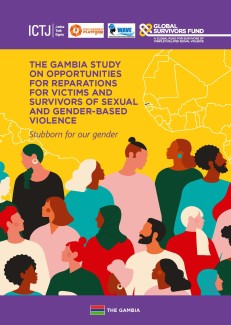
This report presents findings from research on the needs and expectations of survivors of sexual and gender-based violence in The Gambia. Based on focus group discussions with survivors and other stakeholders, it analyses obstacles to, as well as opportunities to improve, survivors’ a...

Cover of the report on SGBV in The Gambia.

Providing the Minister for Social Solidarity with the unfettered discretion to dismiss and appoint members of the institute’s Governing Board renders the institute vulnerable to politicization and undermines the institute’s ‘technical, administrative and financial autonomy.

Constitutional reforms can be valuable in a transitional justice process, but their effectiveness depends on the degree to which they are woven into the social and cultural understanding of the country's legal framework.

On February 8, at the Peace Palace in The Hague, the high-level international Task Force on Justice will meet to finalize its report on increasing access to justice for people and communities around the world—or reducing the “justice gap”—as an integral element of the Sustainable Development Goals (SDGs).

Across Syria today, we continue to witness human rights violations and abuses that run counter to the very principles upon which the revolution was built. In particular, recent violence in the coast and Sweida has deepened the sense of fear and mistrust already felt by many communities. Meanwhile, Syria's new transitional justice commissions have been working hard to lay the foundations of their mandates. Now, at this critical juncture, they must show that they are ready to lead and first and foremost to serve victims.

Drawing from data and testimonies of Syrians both inside the country and in the diaspora collected by civil society organizations, this report looks at the justice needs of Syrian victims of human rights violations in the context of ongoing debates on refugee returns. It critically ex...

Illustration depicting an elderly woman carrying an armchair on her back

The purpose of Resolution 1325 is to highlight the particular way in which women and girls suffer in situations of conflict, as well as the critical role they play in peacebuilding. To commemorate the 20-year anniversary of the resolution, ICTJ would like celebrate the life and work of one its own women peacebuilders: María Camila Moreno Múnera, head of ICTJ’s Colombia office. She exemplifies what a woman leader can achieve in advancing truth, justice, reparation, and peace.

On February 19, 2026, Venezuela’s National Assembly passed the Amnesty Law for Democratic Coexistence, which seeks to extinguish criminal liability for certain acts committed in the country over the past 26 years. While the law has sparked debate, it undeniably represents a significant development in the country's political landscape.

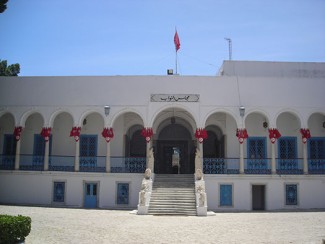
Recently, Tunisia held its third parliamentary elections since the revolution and the second presidential elections since late President Béji Caid Essebssi passed away on July 25, 2019. It remains to be seen if the election’s results will usher in a new era of dignity, for which Tunisians took the streets in 2010 and 2011.

On August 4th, former President Alvaro Uribe surprised the country with a tweet announcing that he would be placed under house arrest for suspected witness tampering and obstruction of justice by the Special Instruction Chamber of the Supreme Court of Justice as part of an investigation that has been underway since 2018. According to the court, this decision was made out of a concern for possible obstruction of justice, which appears to be consistent with the ongoing investigation into these same charges. This is undoubtedly an unprecedented situation.