

16 results

Throughout 2025, ICTJ’s experts offered thoughtful analysis on conflicts and major political developments in more than 10 countries as part of the World Report newsletter. Their insightful commentaries shed light on the obstacles that victims, civil society, and their partners must navigate as they pursue sustainable peace and justice. In this edition, we look back on the past year through the Expert’s Choice column.

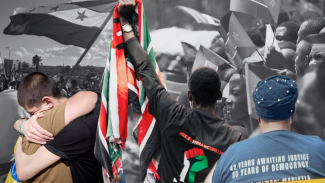
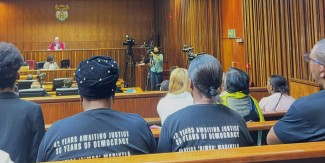
On April 14, 2025, the Johannesburg High Court handed down a landmark judgment. From his bench in courtroom 4D, Judge Dario Dosio dismissed the defense team’s objections to the inclusion of murder and apartheid as crimes against humanity charges in the indictment against two individuals accused of a deadly 1982 attack on anti-apartheid student activists. In so doing, the court cleared the way for crimes against humanity charges to be pursued in a South African domestic court for the first time. It also opened the door to the first ever prosecution of apartheid as a crime against humanity anywhere in the world.

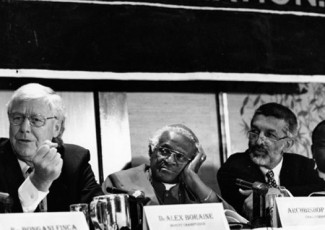
Regardless of how the world remembers Alex Boraine's legacy—or the success and shortcomings of the truth and reconciliation process in South Africa—history will recall that Boraine withstood his own, and his nation’s, transitions to cement his legacy as an architect for truth and reconciliation and a champion for justice for victims.

In December 2018, we mourned the loss of ICTJ's founder, Alex Boraine. On December 12, Fernando Travesí sat down for an intimate conversation with Vincent Mai—ICTJ’s first chairman—to learn more about a life that we will continue to commemorate in the months and years to come.

Alex Boraine, founder of the ICTJ and soldier in the struggle for human rights around the world, will be laid to rest in Cape Town today. He has been called the “Prince of Peace” for his lifelong commitment to transforming South Africa’s society through truth, reconciliation, justice, following the horrors of apartheid.

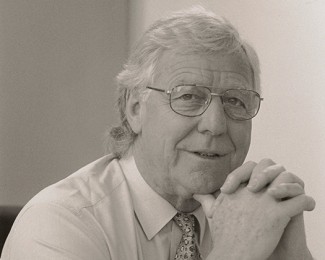
Dr. Alex Boraine, founder of the ICTJ, was larger than life. In his long career, he touched the lives of thousands in his beloved South Africa and around the world.

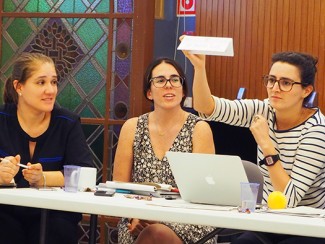
From October 1 to October 5, 2018, ICTJ hosted its eleventh intensive course on transitional justice in collaboration with the International Peace Center for in Barcelona. Participants included leaders in their respective fields, including human rights law, community justice and legal services, peacebuilding, education, and humanitarian affairs.

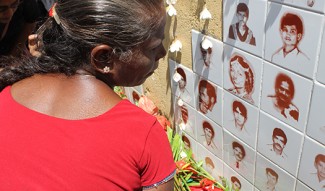
Enforced disappearances continue to affect hundreds of thousands of people around the world. The hopes of Sri Lankan victims reached a peak in 2015, when President Maithripala Sirisena was elected on a centrist platform and a commitment to truth, justice, and reconciliation. Later that year, the Sri Lankan government agreed to a UN Human Rights Council resolution that offered a roadmap for the search for the missing and forcibly disappeared. To the dismay of many, however, the government has done little since to implement these commitments and to take the opinions of victims seriously.

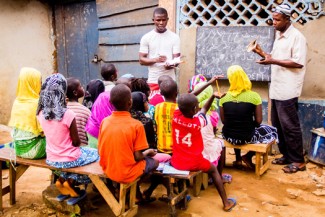
Can education help right the wrongs of the past, especially when the majority of the population was affected by those wrongs? Teboho Moja examines that question in the context of South Africa, where efforts to reform a discriminatory educational system and redress its consequences have been met with mixed results.

Understanding education as a form of both reconstruction and reparations is essential for societies in their efforts to address victims’ rights and help victims and their families overcome the consequences of a painful past.