13 results

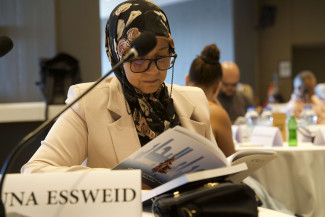
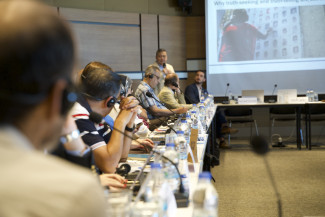
At an ICTJ-organized symposium in Istanbul, artists, civil society leaders, journalists, academics, and transitional justice practitioners from around the world discussed the ways art can serve as a catalyst for change in societies emerging from conflict or repression as well as explored local non-state-led approaches to truth seeking and truth telling.

This book features testimonies of young migrants originally from or currently residing in Lebanon, Libya, or Tunisia who left their home countries for political or socioeconomic reasons. The authors all took part in ICTJ’s 2023 writing contest titled “Overseas.” The contest aimed to e...

An illustration of people rowing in canoes

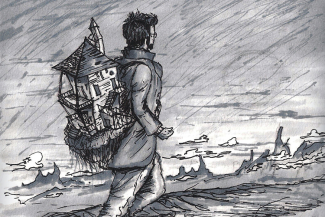
Even though young people were driving forces behind the revolutions in Tunisia, Libya, and Lebanon, their lives have not significantly improved since then. Many have been pushed to leave their home countries for socioeconomic or political reasons. A new ICTJ book features the testimonies of 18 young migrants who made this difficult choice.

The field of transitional justice is increasingly recognizing the relevance of mental health and psychosocial support (MHPSS) in contexts of massive human rights violations. Despite growing advocacy and awareness at the global policy level, however, the field lacks a systematic approa...

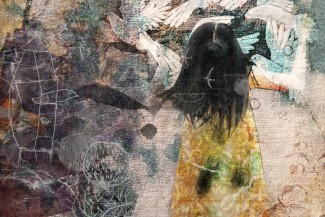
an image of colorful painting featuring a young girl

ICTJ is pleased to announce the winners of its “Overseas” writing contest. In it, young people originally from or currently residing in Lebanon, Libya, or Tunisia who have left their home countries for political or socioeconomic reasons were asked to share their personal experiences of migration in the form of a short, written testimony.

ICTJ is pleased to announce the “Overseas: Writing Contest,” an open call for young migrants originally from or currently residing in Lebanon, Libya, or Tunisia to share their personal experiences of migration in the form of a short, written testimony.

In what UN Women describes as the “shadow pandemic,” rates of violence against women have soared since the public health and economic crises brought about by COVID-19. With stay-at-home orders in place in countries around the world, women are more susceptible than ever to domestic violence. In countries affected by conflict or repressive rule, all forms of sexual and gender-based violence are on the rise. The ICTJ Gender Modules offer a timely tool to raise awareness about these issues and help develop gender-sensitive responses to them.

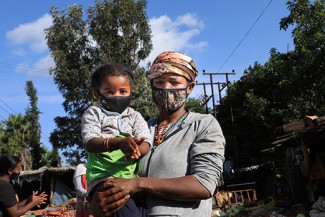
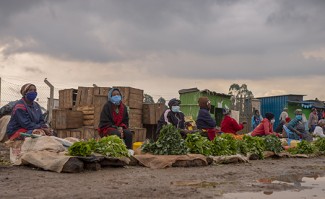
Sparing almost no corner of the world from its wrath, the COVID-19 pandemic has now spread to every country. In an effort to slow the contagion, governments in most countries have been taking drastic measures requiring all residents other than essential workers to confine themselves in their homes, and shutting down vast sectors of their economies. The impact has been crushing. COVID-19 has profoundly affected every country where ICTJ currently works: Armenia, Colombia, Cote d’Ivoire, Ethiopia, Gambia, Kenya, Lebanon, Libya, Sudan, Syria, Tunisia, and Uganda. We recently caught up with ICTJ’s heads of country programs to learn more about the impact the pandemic is having on transitional justice and society more broadly.

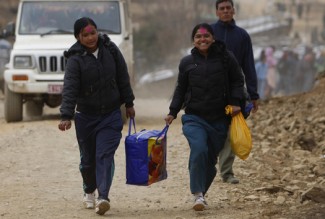
Victims in Nepal have been calling on the government for public consultation to ensure wider discussion, a process that would allow them to share their expectations, help them to comprehend the dense language of the proposed amendments and its many gaps. They needed to understand the dubious phrasing especially on issues of criminal accountability that created suspicion, instead of trust and legitimacy in the process.

In this op-ed marking Universal Children’s Day, ICTJ's Virginie Ladisch explains why within transitional justice, the capacity to make positive choices and demonstrate moral agency are attributes that need to be encouraged and fostered in children, especially former child soldiers.