65 results

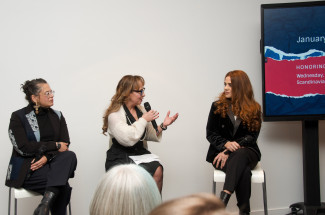
On January 28, 2026, ICTJ held its annual January for Justice Leaders benefit dinner in New York City, an event celebrating leaders advancing justice around the world. This edition also marked the beginning of ICTJ’s 25th anniversary year and served as an opportunity to look back on a quarter century spent standing alongside victims, civil society, and institutions in the pursuit of truth, accountability, and lasting peace after mass atrocities.

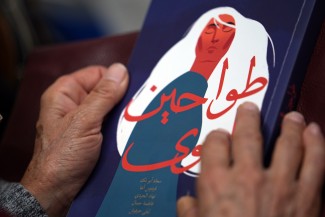
In an article first published in El Periodico, journalist Andrea López-Tomas paints an intimate portrait of the Lebanese women who against the odds continue to search for their missing loved ones half a century after the civil war began.

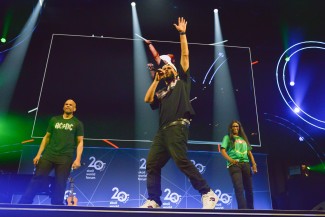
This year marks the 50th anniversary of the hip hop movement. To honor its contributions to the struggle for justice, truth, and equality, the Skoll Foundation hosted a panel discussion and concert event featuring hip hop artists, including cofounder of the legendary rap group Run-DMC Darryl McDaniels and Colombian rapper and producer Ali aka Mind, as part of its 20th World Forum held in April in Oxford, United Kingdom. ICTJ, which received the Skoll Award for Social Innovation in 2009 and has partnered with the Skoll Foundation since, invited Ali aka Mind as a representative of Rexistencia Hip Hop, an artistic mentorship and creation lab led by ICTJ’s office in Colombia and the Latin American media outlet and foundation Cartel Urbano.

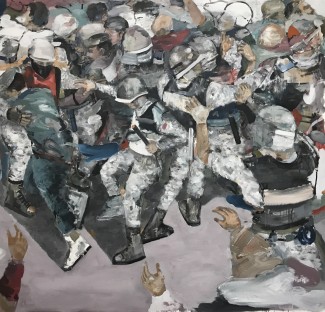
In Lebanon, in the absence of an overarching curriculum, young people are growing up with scant knowledge of the country’s history. Young people want to understand the war so that they can address its legacy of violence and divisions and face the continuing violence and ever-present danger of...

For many years now, the International Center for Transitional Justice and other organizations have supported young activists and artists as they harness the power of art, culture, and new media to advance truth, justice, reform, and redress, not only where they live, but across borders and in collaboration with others. This innovative and inspiring work offers lessons about how to increase civic engagement and help societies know the truth about their country’s past and actively shape the national narrative.

As part of its ongoing support of the Committee of the Families of the Kidnapped and Disappeared in Lebanon, ICTJ organized a three-day virtual workshop on transitional justice for university students on July 12-14, 2021. The students all served as volunteers on a project to establish an archive of the committee’s work and activism over the past four decades and participated in a previous workshop in February 2020 that introduced them to transitional justice concepts.

On March 31, 2021, the Appeals Chamber of the International Criminal Court upheld the Trial Chamber I’s acquittal of former Ivorian President Laurent Gbagbo and Charles Blé Goudé of all charges relating to crimes against humanity they allegedly committed during Côte d’Ivoire’s 2010-2011 post-election crisis. While the acquittal may be frustrating to many pursuing justice and accountability in Côte d’Ivoire, a silver lining is that it could mean tangible benefits for victims.

On February 4, 2021, the prominent activist, intellectual, writer, and filmmaker Lokman Slim joined the long list of victims of violence and impunity in Lebanon. The courageous human rights and political activist was found shot to death in his car in southern Lebanon.

Following the recent closure of ICTJ's office in Côte d’Ivoire, we caught up with Head of the Office Mohamed Suma and Senior Expert Cristián Correa to reflect on ICTJ’s work in the country and with victims, women, and youth, as well as the reasons why ICTJ has chosen to scale down its activities.

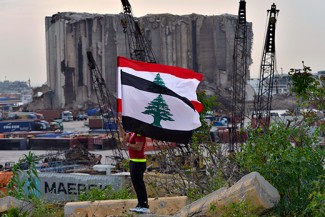
On August 18, nearly two decades after Lebanon’s former Prime Minister Rafik Hariri was brutally assassinated in a car bombing, the Special Tribunal for Lebanon delivered a long-awaited conviction. The judgment found Salim Ayyash guilty of conspiracy to commit a terrorist act, committing a terrorist act, the intentional homicide of Hariri and 21 others, and attempted homicide of the 226 injured. However, the tribunal did not find enough evidence that the three other defendants were aware in advance of the conspiracy and thus acquitted them of all charges. This split verdict makes an uncertain situation in Lebanon even more tenuous.