

87 results

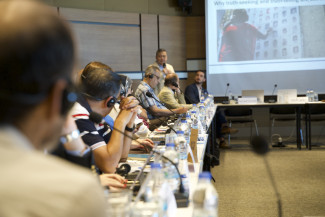
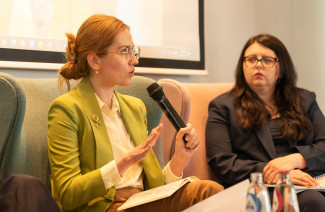
At an ICTJ-organized symposium in Istanbul, artists, civil society leaders, journalists, academics, and transitional justice practitioners from around the world discussed the ways art can serve as a catalyst for change in societies emerging from conflict or repression as well as explored local non-state-led approaches to truth seeking and truth telling.

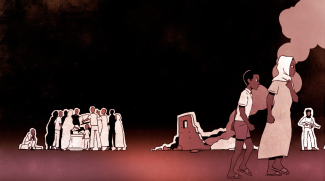
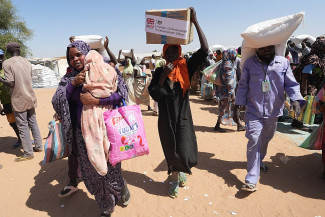
As Sudan’s devastating conflict enters its fourth year, the priorities of victims and Sudanese civilians must be central to efforts to end the violence and build sustainable peace. Against this backdrop, ICTJ and the Government of the Netherlands convened a policy roundtable in The Hague on advancing victim-centered justice for durable peace in Sudan.

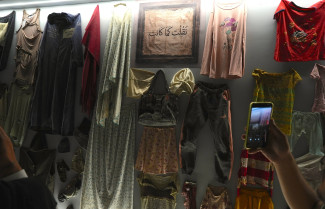
On August 30, the International Day of the Victims of Enforced Disappearances, I sat beside the president of Syria’s National Commission for Missing Persons at its headquarters in Damascus for a historic moment: the launch of a platform through which families will be able to report their missing loved ones. For Syrian families, August 30 has long been a day to remember those they lost to the unknown and renew their demand for truth. This year, marking it inside a Syrian institution created to search for them had a very different significance.

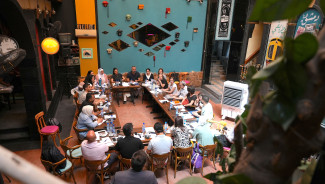
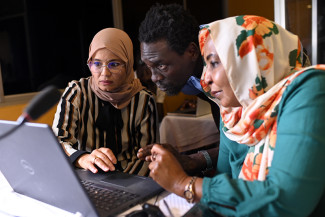
ICTJ recently convened Syrian civil society partners, members of Syria’s newly established transitional justice commissions, and government representatives to support the country’s nascent transitional justice process.

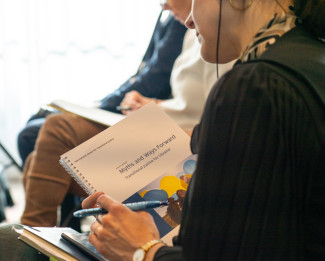
ICTJ strongly advocates for a holistic transitional justice vision for Ukraine as part of its programmatic activities. Leading this work is the head of ICTJ’s Ukraine program, Kateryna Busol. She is the author of the new report, “Myths and Ways Forward: Transitional Justice for Ukraine." In this interview, Busol discusses the path toward holistic justice for the country.

A new ICTJ report urges the revitalization of Ukraine’s holistic transitional justice policymaking. Debunking the most common myths about transitional justice in Ukraine, the report presents the key legal, policy, and victim-centered arguments in favor of advancing a comprehensive transitional justice framework.

Despite earlier efforts to envision a national transitional justice policy, Ukraine remains overly cautious about establishing one. This report provides a robust substantiation of why Ukraine should revive its holistic transitional justice policymaking. In the first part, it debunks t...

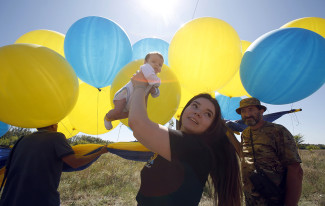
A women holds up an infant in the air on sunny day outdoors, surrounded by yellow and blue balloons

Fourteen members of Syrian civil society recently gathered for a five-day workshop on community facilitation and transitional justice organized by ICTJ and its partners in the Bridges of Truth project. The workshop marked a major step in the preparation for extensive community dialogues that will take place across Syria in the months ahead.

As the world marks the third anniversary of the brutal war in Sudan, it is a moment to reflect on a conflict that rarely receives the media attention it deserves and to consider the millions of Sudanese caught in cycles of violence.

ICTJ recently convened human rights defenders, journalists, and lawyers from Libya, Sudan, Syria, Tunisia, and Yemen for a workshop on digital, open-source investigations. Held on November 3-8 in Kampala, Uganda, the course trained participants on open-source tools with a view to strengthening their work investigating, documenting, and monitoring human rights violations.