194 results

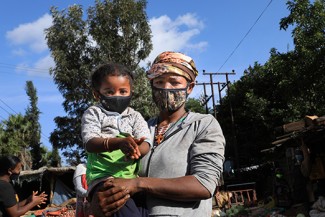
The global COVID-19 pandemic forced many countries to impose emergency measures, such as curfews and community lockdowns, to stem the spread of the virus. To enforce these measures, some societies have given regular police forces increased power to enforce the measures, while others h...

As part of its ongoing support of the Committee of the Families of the Kidnapped and Disappeared in Lebanon, ICTJ organized a three-day virtual workshop on transitional justice for university students on July 12-14, 2021. The students all served as volunteers on a project to establish an archive of the committee’s work and activism over the past four decades and participated in a previous workshop in February 2020 that introduced them to transitional justice concepts.

Hailed as one of the only success stories to emerge out of the Arab Spring, Tunisia is now facing a significant challenge to its democratic progress. On July 25, Tunisia’s president, Kais Saied, enacted Article 80 of the Tunisia Constitution giving him emergency powers to protect the country from imminent threats. He then used these powers to suspend parliament, lift parliamentary immunity, and fire the prime minister as well as the ministers of justice and defense.

Ten years have passed since Tunisians took the streets to demand “Employment, Freedom, and National Dignity.” The revolution’s loud, courageous voice against corruption, extreme inequality, and repression echoed around the globe and inspired the “Arab Spring.” Today, Tunisians are still proud of their revolution. However, they continue to strive for goals, yet unattained, that the political class does not even seem to understand. It was thus not surprising to see large protests on the 10th anniversary, demanding concrete action and new public policies to advance social justice and better integrate marginalized regions and populations.

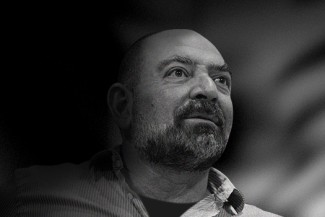
On February 4, 2021, the prominent activist, intellectual, writer, and filmmaker Lokman Slim joined the long list of victims of violence and impunity in Lebanon. The courageous human rights and political activist was found shot to death in his car in southern Lebanon.

In what UN Women describes as the “shadow pandemic,” rates of violence against women have soared since the public health and economic crises brought about by COVID-19. With stay-at-home orders in place in countries around the world, women are more susceptible than ever to domestic violence. In countries affected by conflict or repressive rule, all forms of sexual and gender-based violence are on the rise. The ICTJ Gender Modules offer a timely tool to raise awareness about these issues and help develop gender-sensitive responses to them.

Lebanon has long been afflicted by a combination of political deadlock and a lack of accountability that has resulted in ongoing human rights violations and overall systemic rot. Comprehensive reforms, along with an inclusive truth-seeking process, broad public dialogue, and other way...

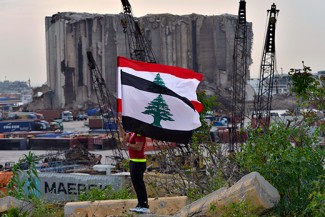
In response to the recent tragic explosion in Beirut on August 4, 2020, ICTJ and 14 prominent nongovernmental organizations recently issued a joint statement, demanding immediate action to promote accountability and a new non-sectarian political system in Lebanon. The likely preventable explosion represents another appalling consequence of a dysfunctional sectarian political system that has been in place since the end of the country’s 15-yearlong civil war in 1990 and that has afforded impunity to perpetrators of human rights abuses for decades and entrenched a culture of cronyism and corruption in the country.

On March 2 and 3, 2020, transitional justice and anti-corruption policymakers, experts, and activists from the Gambia, Kenya, South Africa, Armenia, and Tunisia met in Tunis for a two-day conference to share solutions to a common problem: How can countries eme...

On August 18, nearly two decades after Lebanon’s former Prime Minister Rafik Hariri was brutally assassinated in a car bombing, the Special Tribunal for Lebanon delivered a long-awaited conviction. The judgment found Salim Ayyash guilty of conspiracy to commit a terrorist act, committing a terrorist act, the intentional homicide of Hariri and 21 others, and attempted homicide of the 226 injured. However, the tribunal did not find enough evidence that the three other defendants were aware in advance of the conspiracy and thus acquitted them of all charges. This split verdict makes an uncertain situation in Lebanon even more tenuous.