

491 results

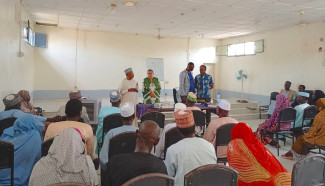
In Chad, the 2022 Doha Peace Agreement and the subsequent national discussions on reconciliation have created a rare opportunity for Chadians to confront the legacies of past human rights violations. Over the past several months, ICTJ has been assessing whether this opening could provide a viable entry point for transitional justice in the country.

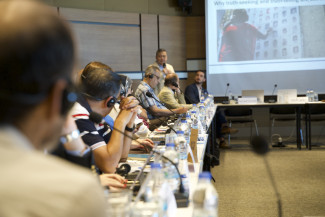
At an ICTJ-organized symposium in Istanbul, artists, civil society leaders, journalists, academics, and transitional justice practitioners from around the world discussed the ways art can serve as a catalyst for change in societies emerging from conflict or repression as well as explored local non-state-led approaches to truth seeking and truth telling.

As Sudan’s devastating conflict enters its fourth year, the priorities of victims and Sudanese civilians must be central to efforts to end the violence and build sustainable peace. Against this backdrop, ICTJ and the Government of the Netherlands convened a policy roundtable in The Hague on advancing victim-centered justice for durable peace in Sudan.

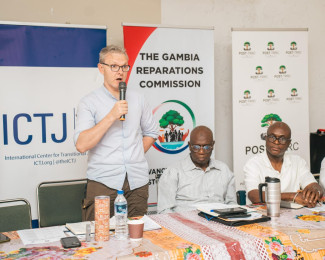
The establishment of the Reparations Commission in April 2025 and the recent appointment of British barrister Martin Hackett in April 2026 as The Gambia’s first special prosecutor represent crucial and long-awaited steps in the country’s transitional justice process. But to succeed, both require sustained public, political, and financial support.

This research report examines how civil society actors involved in transitional justice processes narrate and communicate their role, impact, and value. The study focuses on actors in Colombia, The Gambia, and Kenya, describing the content, form, and audiences of their communication w...

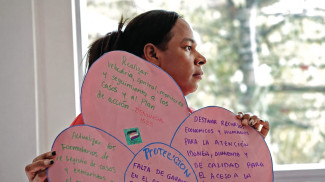
A person holds up a poater collage made up of pink paper with text in Spanish

This report examines the gender sensitivity of Uganda’s National Transitional Justice Policy (NTJP) and its potential to deliver inclusive justice for victims of conflict. While the NTJP represents a significant policy achievement, gaps in implementation, participation, and gender inc...

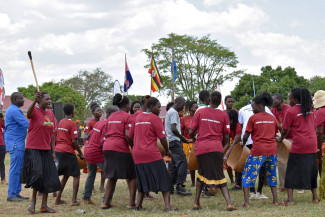
A large group of women dance in circle formation outdoors

The AU–EU 2025 Experts’ Seminar on Transitional Justice convened African and European practitioners to advance reparations as a central pillar of transitional justice. Discussions highlighted legal obligations, victim-centered and transformative approaches, and persistent challenges i...

Cover featuring an abstract design for the report "Approaches to Reparations from Africa and Europe: The AU–EU Experts’ Seminar on Transitional Justice, Abuja, Nigeria, June 2025"

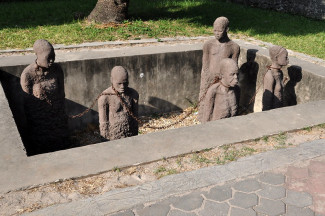
On March 25, 2026, the UN General Assembly adopted a resolution recognizing the enslavement of Africans as the gravest crime against humanity. The resolution is an integral part, if not the culmination, of a wider push by African states for reparations for historical injustices, including the transatlantic slave trade, colonialism, apartheid, and genocide.

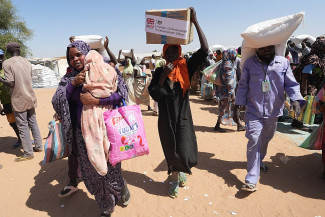
As the world marks the third anniversary of the brutal war in Sudan, it is a moment to reflect on a conflict that rarely receives the media attention it deserves and to consider the millions of Sudanese caught in cycles of violence.

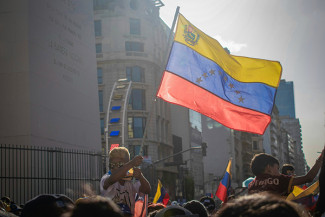
On February 19, 2026, Venezuela’s National Assembly passed the Amnesty Law for Democratic Coexistence, which seeks to extinguish criminal liability for certain acts committed in the country over the past 26 years. While the law has sparked debate, it undeniably represents a significant development in the country's political landscape.