

473 results

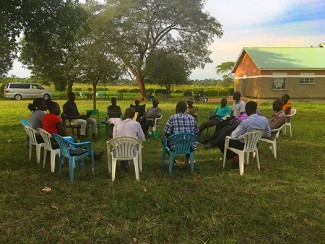
Over the last 15 years, the Ugandan government has implemented a series of recovery and reconstruction programs in Northern Uganda to address the social and economic devastation caused by the two-decade armed conflict in the region and set it on the path to sustainable peace. While these development programs alone cannot fulfill the state’s obligation to provide reparations to victims of human rights violations, if designed well, they can form a foundation upon which future reparations initiatives can be built.

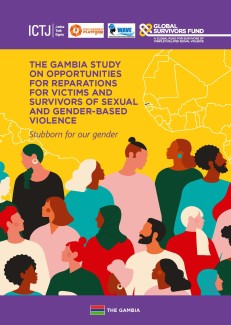
This report presents findings from research on the needs and expectations of survivors of sexual and gender-based violence in The Gambia. Based on focus group discussions with survivors and other stakeholders, it analyses obstacles to, as well as opportunities to improve, survivors’ a...

Cover of the report on SGBV in The Gambia.

Few conflicts have garnered as much attention as the recent one in Darfur. Widespread atrocities reported by several organizations including an International Commission of Investigation compelled the United Nations (UN) Security Council to refer the situation in the western region of ...

Cote d’Ivoire has embarked on a process of addressing the legacy of internal strife that culminated in the post-election violence of 2010. On June 12, 2013, ICTJ will co-host high-level talks on strengthening Cote d’Ivoire’s judicial capacity to prosecute serious crimes proscribed by the Rome Statute of the International Criminal Court (ICC).

Evelyn Amony tells the harrowing story of her years in captivity with the LRA, and experience of grinding poverty and stigma after returning home with two children, in her new memoir, I Am Evelyn Amony: Reclaiming my Life from the Lord's Resistance Army. The autobiography, which tells the difficult truths of women and girls in wartime as only a firsthand witness can, will be launched today in New York, at the Japan Society.

The International Center for Transitional Justice (ICTJ), in cooperation with the United Nations Development Programme (UNDP), with support from the Governments of Denmark and South Africa, and in close consultation with the Assembly of States Parties to the Rome Statute (ASP), held a...

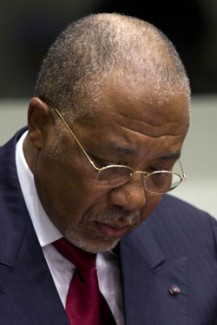
The significance of Charles Taylor’s judgment rendered few days ago in The Hague goes far beyond Taylor himself, or even the Special Court for Sierra Leone. This decision will be an unavoidable legal precedent in any future deliberation of the role played by leaders and states in crimes committed by forces they support in other countries, writes ICTJ's president David Tolbert in this op-ed.

This briefing paper reviews the Kenyan government’s response to sexual and gender-based violence committed against women, men, and children during the 2007/2008 post-election crisis. It draws on interviews with over 40 survivors about their experience and analyzes the laws and transit...

This report analyzes the response of Congolese judicial authorities to international crimes committed in the territory of the Democratic Republic of the Congo from 2009 to 2014, with a particular focus on the war-torn East (North Kivu, South Kivu, and Ituri). It finds that the number ...

This briefing paper summarizes the findings of an ICTJ report (by the same name) on the judicial response to international crimes in the Democratic Republic of the Congo. It makes substantive recommendations to justice stakeholders in the DRC on how to advance prosecutions of internat...