



48 results

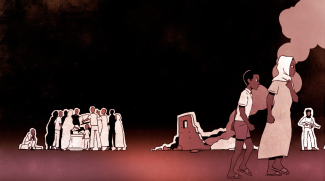
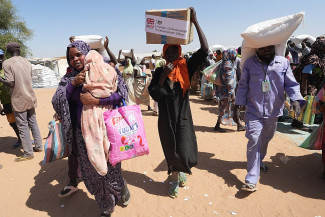
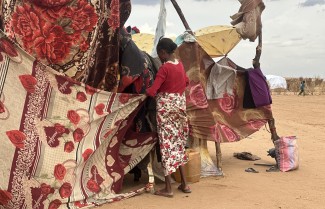
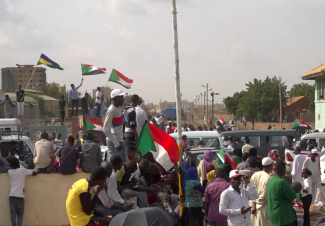
As the world marks the third anniversary of the brutal war in Sudan, it is a moment to reflect on a conflict that rarely receives the media attention it deserves and to consider the millions of Sudanese caught in cycles of violence.

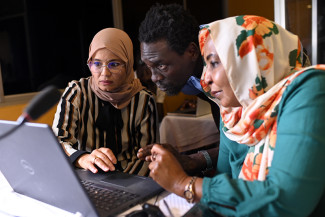
ICTJ recently convened human rights defenders, journalists, and lawyers from Libya, Sudan, Syria, Tunisia, and Yemen for a workshop on digital, open-source investigations. Held on November 3-8 in Kampala, Uganda, the course trained participants on open-source tools with a view to strengthening their work investigating, documenting, and monitoring human rights violations.

Throughout 2025, ICTJ’s experts offered thoughtful analysis on conflicts and major political developments in more than 10 countries as part of the World Report newsletter. Their insightful commentaries shed light on the obstacles that victims, civil society, and their partners must navigate as they pursue sustainable peace and justice. In this edition, we look back on the past year through the Expert’s Choice column.

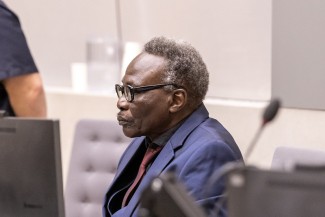
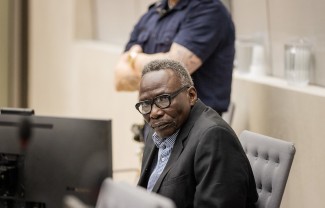
On October 6, the International Criminal Court (ICC) found former Janjaweed militia leader Ali Muhammad Ali Abd-Al-Rahman (also known as Ali Kushayb) guilty of 27 counts of crimes against humanity and war crimes committed in Darfur between August 2003 and March 2004. This landmark verdict counters cycles of impunity in Sudan and sends a powerful message that these crimes are not tolerated.

Despite the enormous challenges, Sudanese civil society and other stakeholders are prioritizing transitional justice, acknowledging the need to address past injustices to end the cycle of conflict in their country. ICTJ continues to support them as they envision and design victim-centered, gender-sensitive, and inclusive strategies. Leading these efforts is ICTJ's Ilaria Martorelli. In this interview, she discusses the prospects for lasting peace, accountability, and repair in Sudan.

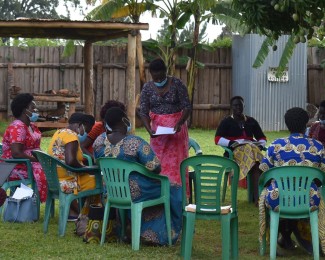
From May 25 to June 1, 2025, ICTJ held a series of community dialogues in three rural regions of the Gambia on sexual and gender-based violence, including crimes committed during the Yahya Jammeh dictatorship. The dialogues brought together 122 individuals, including community leaders, victims, and young people, to share their experiences and discuss pathways for justice.

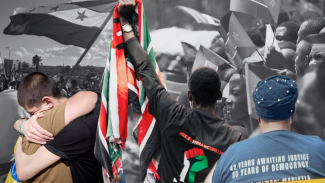
This April, Sudan marked a double anniversary: one of the 2019 revolution that toppled President Omar al Bashir’s decades-long repressive regime, the other of the 2023 outbreak of the ongoing civil war that has devastated the country. These contrasting occasions bring with them great hopes and deep pain. They also raise pressing questions: How long will Sudan have to suffer while the world’s attention seems turned the other way? How long will the voices of Sudanese who yearn for peace and justice continue to be sidelined?

ICTJ accompanied more than 10 Sudanese victim stakeholders to the International Criminal Court (ICC) in The Hague to attend the closing statements in the case of The Prosecutor v. Ali Muhammad Ali Abd-Al-Rahman ("Ali Kushayb"). The statements took place on December 11 to 13. ICTJ supported the ICC in the selection of the stakeholders, who were chosen for their strong ties with affected communities.

The field of transitional justice is increasingly recognizing the relevance of mental health and psychosocial support (MHPSS) in contexts of massive human rights violations. Despite growing advocacy and awareness at the global policy level, however, the field lacks a systematic approa...

an image of colorful painting featuring a young girl

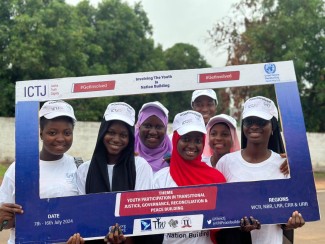
Almost eight years since The Gambia's former President Yahya Jammeh left power, the country is still seeking justice for the human rights abuses committed during his 22-year dictatorship. In May 2023, the Ministry of Justice released a plan to implement the recommendations of the country's Truth, Reconciliation and Reparations Commission. While the plan promises to deliver justice and repair harms, for it to have its intended impact, it requires broad public participation in the process, especially that of young people. With that in mind, ICTJ has partnered with the UN Peacebuilding Fund on a project to encourage Gambian youth to take a leading role in this process and the country's future.

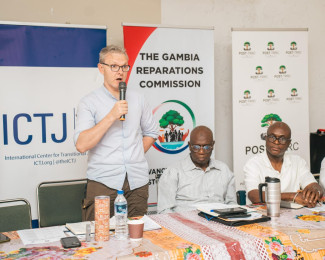
On February 29, 2024, The Gambia-Economic Community of West African States Joint Technical Committee held its inaugural meeting on the establishment of a hybrid court to hold to account those responsible for gross human rights violations committed in the country between July 1994 and January 2017 during the dictatorship of former President Yahya Jammeh. Such an internationalized court presents an opportunity to deliver criminal accountability to the victims and Gambian society as whole. It is also just the latest step in The Gambia’s transitional justice journey.

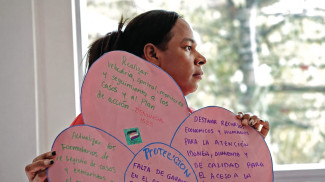
On November 28, 2023, ICTJ organized an international dialogue in Bogotá, Colombia, to share innovative strategies for advancing victims’ rights to redress for human rights abuses and for establishing more victim-centered development policies. The gathering also marked the official launch of ICTJ’s new report—Advancing Victims’ Rights and Rebuilding Just Communities Local Strategies for Achieving Reparation as a Part of Sustainable Development—which presents findings from a two-year comparative study of local efforts in Colombia, The Gambia, Tunisia, and Uganda to advance reparations.

This comparative study examines strategies used by local actors to help operationalize reparations for victims of widespread human rights violations, while highlighting the synergies between these efforts and sustainable development. It is based on the fieldwork of ICTJ and its partne...

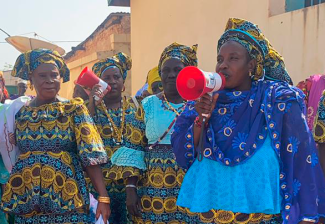
A women in colorful African dress holds a megaphone to her mouth

On November 28, ICTJ hosted an international conference to explore the synergies between reparations and sustainable development in Bogotá, Colombia. The event, titled “Advancing Victims’ Rights and Rebuilding Just Communities: An International Dialogue on Reparations and Sustainable Development,” brought together ICTJ partners from The Gambia, Tunisia, and Uganda along with civil society and government representatives from Colombia to discuss local strategies for advancing reparations for human rights abuses and how repairing victims and affected communities can contribute to local and national development. On the occasion, ICTJ also launched a new research report on the topic.

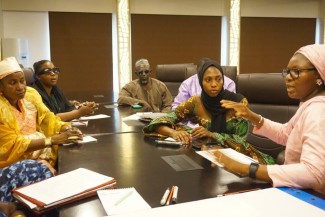
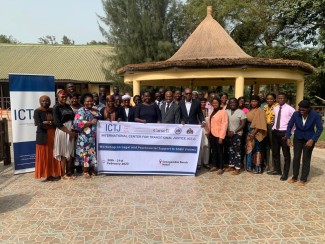
“Despite laws already in place, the number of sexual and gender-based violence [SGBV] cases is still rising, including cases of rape, female genital mutilation, sexual assault, and harassment. This means there is the need for enforcement of such laws,” asserted Didier Gbery, ICTJ’s head of program for The Gambia, at the opening of a workshop this past March on increasing SGBV victims’ access to justice. The workshop was one of two that ICTJ organized in early 2023 to strengthen the capacity of stakeholders in The Gambia to defend SGBV victims and provide them with vital gender-sensitive support.

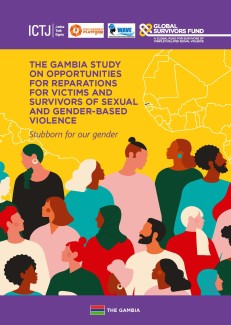
This report presents findings from research on the needs and expectations of survivors of sexual and gender-based violence in The Gambia. Based on focus group discussions with survivors and other stakeholders, it analyses obstacles to, as well as opportunities to improve, survivors’ a...

Cover of the report on SGBV in The Gambia.

Reparations for victims of sexual and gender-based violations (SGBV) raise a series of complicated questions and implementation challenges around how to acknowledge this category of victims and deliver reparations without exposing victims to stigma and rejection. Victims must weigh the risk of...

In 2021, there were significant developments, some hopeful and some devastating, in the struggle for truth, accountability, and redress in countries around the world. ICTJ experts covered these events in commentaries and feature stories published on our website and in our newsletters. While 2022 is already underway and we at ICTJ are hard at work, we would like to pause a moment to take stock and reflect on the year that was.

On November 25, 2021, The Gambia’s Truth, Reconciliation and Reparations Commission (TRRC) presented its 17-volume final report and recommendations to President Adama Barrow, after multiple delays. The final report includes a record of serious human rights violations committed under Jammeh’s repressive regime and recommendations for pursuing justice. Despite the challenges, steps have already been taken that offer hope that the TRRC’s recommendations will take effect.

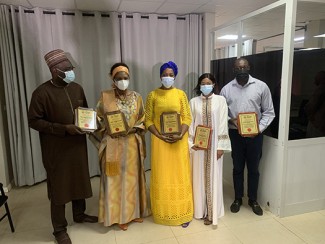
On July 13, 2021, the Gambia’s Truth, Reconciliation and Reparations Commission (TRRC) presented an award to ICTJ for its sustained support of the commission and its commitment to the country’s transitional justice process. The award comes as the TRRC concludes its work and prepares to submit its final report to the country’s president by September 30, 2021.

Bogotá, November 20, 2020—ICTJ and the Movement of Latin American Hip Hop Expressions have joined forces to cohost the third International Hip Hop Encounter, which will take place virtually this week from November 25 to November 28. The four-day online event will bring together artists and musicians from across Latin America and Africa along with activists, social leaders, and civil society representatives. The festival’s theme is the role of hip hop music and culture in uncovering truth, preserving memory, and resisting violence and oppression.

On March 2 and 3, 2020, transitional justice and anti-corruption policymakers, experts, and activists from the Gambia, Kenya, South Africa, Armenia, and Tunisia met in Tunis for a two-day conference to share solutions to a common problem: How can countries eme...

Sparing almost no corner of the world from its wrath, the COVID-19 pandemic has now spread to every country. In an effort to slow the contagion, governments in most countries have been taking drastic measures requiring all residents other than essential workers to confine themselves in their homes, and shutting down vast sectors of their economies. The impact has been crushing. COVID-19 has profoundly affected every country where ICTJ currently works: Armenia, Colombia, Cote d’Ivoire, Ethiopia, Gambia, Kenya, Lebanon, Libya, Sudan, Syria, Tunisia, and Uganda. We recently caught up with ICTJ’s heads of country programs to learn more about the impact the pandemic is having on transitional justice and society more broadly.

Tunis—On March 2-3, 2020, ICTJ is holding a conference in Tunis, Tunisia, on the fight against corruption and the recovery of ill-gotten assets as a critical element of transitional justice processes. The conference will bring together activists, policymakers, and experts from Tunisia and other countries in the global South emerging from conflict or authoritarian rule, including Armenia, The Gambia, Kenya, the Philippines, and South Africa.

Since the Gambia's Truth, Reconciliation, and Reparation Commission (TRRC) began public hearings in January 2019, an important part of the country’s narrative has not yet come to light or been publicly acknowledged: the experiences of women. This report brings forward the voices of wo...