

32 results

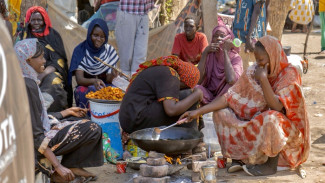
South Sudanese refugees and displaced persons currently comprise 40 percent of the country’s total population. Yet, these groups have been largely excluded from ongoing policy discussions related to South Sudan's transitional justice process in South Sudan. A new ICTJ report aims to amplify the perspectives and expectations of these groups and ensure they are included in the process's design and implementation.

This study aims to communicate the perspectives, expectations, and needs of South Sudanese displaced persons to relevant policymakers and thereby inform the ongoing transitional justice efforts emanating from South Sudan’s 2018 revitalized peace agreement. It also provides lessons lea...

several women in colorful dresses crouch around an open fire pit, cooking food in a large pan.

Throughout 2025, ICTJ’s experts offered thoughtful analysis on conflicts and major political developments in more than 10 countries as part of the World Report newsletter. Their insightful commentaries shed light on the obstacles that victims, civil society, and their partners must navigate as they pursue sustainable peace and justice. In this edition, we look back on the past year through the Expert’s Choice column.

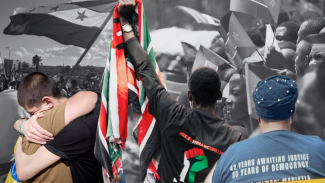
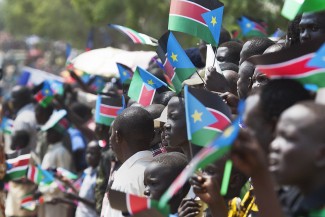
South Sudan’s transition to democratic governance through a highly anticipated, first-ever post-independence general election has to wait once again for another two years. Despite this latest extension, the country has achieved notable milestones in its transitional justice process.

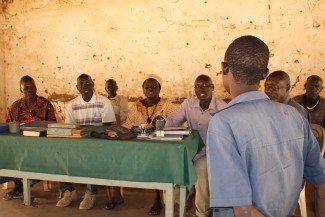
Customary justice is the primary way in which most communities in South Sudan resolve disputes. Its ability, however, to deal with massive human rights violations is limited due to the complexity of intercommunal violence and a lack of clarity on its proper role. This report contends ...

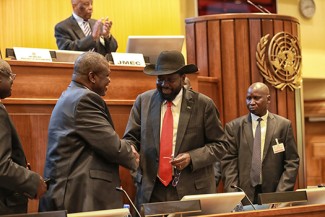
A man stands facing a table around which several men are seated.

In countries where state institutions have limited reach, customary and informal justice is often the most common way in which people resolve disputes and seek justice. Given its prominence, it is considered to be an important element of a people-centered approach to building peaceful, just, and inclusive societies. An understanding of the relationship between customary justice and transitional justice, however, remains underdeveloped. A new ICTJ report provides valuable empirical, qualitative research on the topic, in the context of South Sudan.

The recent move by the signatories to the Revitalized Agreement on the Resolution of Conflict in South Sudan (R-ARCSS) to extend the peace agreement’s life for another 24 months has not come as a surprise. While there have been some positive, though sporadic steps toward fulfilling the R-ARCSS, its...

This study explores specialized units established in 23 countries to investigate and prosecute serious international crimes. Notwithstanding the challenges faced by these units, the study concludes that countries with a specialized institutional approach are considerably more successf...

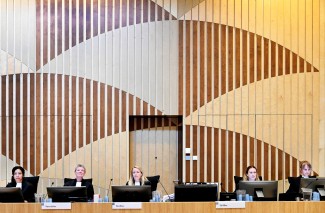
several judges dressed in black gowns sit on a judicial bench.

Why pursue transitional justice in the aftermath of massive human rights violations? This video provides a window into the debate about the relevance of transitional justice in today’s world.

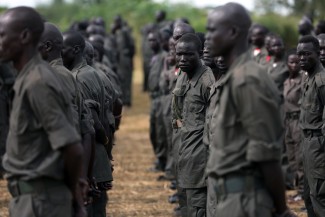
The signing of the Revitalized Agreement on the Resolution of the Conflict in the Republic of South Sudan on September 12, 2018, has been lauded as the best opportunity for peace in the country. However, the continued delays in implementing it, including the establishment of stipulated transitional justice mechanisms, have raised growing concerns within the international community. One essential part of the agreement that has not been executed is the consolidation of the military and the opposition and rebel forces into one army.

This report aims to help practitioners in the transitional justice field to understand the experience of establishing and operating hybrid courts and to address some common assumptions about these entities. To do so, it looks at hybrid or mixed courts in practice, drawing on experienc...

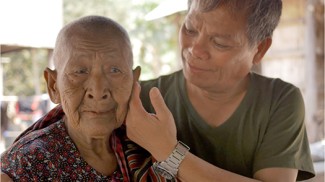
Angkar, screened on June 16 at the New York Human Rights Watch Film Festival, follows Khonsaly, a victim of the Khmer Rouge, on his journey to the village he fled almost 30 years ago. The film, produced by Neary Adeline Hay about her father's experience with torture and repression, is an intergenerational offering to truth and memorialization work that dances between the inheritance of abuse and its painful recollection by a survivor.

The new film "Don't Think I've Forgotten: Cambodia’s Lost Rock and Roll" explains the events of 1960s and 70s through the eyes of the musicians and artists who ushered in a new era of sound, only to be silenced too soon. As the world commemorates the 40th anniversary of the genocide in Cambodia, the new documentary presents the untold story of how their music managed to survive.

Transitional justice practitioners and activists from 18 different countries gathered in Barcelona to attend the 6th Intensive Course on Truth Commissions, organized by the ICTJ and the Barcelona International Peace Resource Center on September 29 - October 3.

On August 7, the Extraordinary Chambers in the Courts of Cambodia (ECCC) found two senior leaders of the Khmer Rouge, Nuon Chea and Khieu Samphan, guilty of crimes against humanity. For many victims who have been waiting for 35 years, the judgment still felt like bittersweet justice.

About the Project There are few crimes with such devastating and far-reaching impacts as enforced disappearance. Innocents taken from their homes vanish to secret locations known only to the perpetrators. Imprisoned, tortured, and often killed for dubious reasons, their disappearance l...

Reparations seek to recognize and address the harms suffered by victims of systematic human rights violations. ICTJ’s Reparative Justice program provides knowledge and comparative experience on reparations to victims' groups, civil society and policymakers worldwide. In this edition of the ICTJ Program Report, we look at ICTJ's work on reparations in dynamic transitional contexts such as Nepal, Colombia, Peru, DRC, and Uganda.

Why pursue transitional justice in the aftermath of massive human rights violations? “The Case for Justice” provides a window into the debate about the relevance of transitional justice in today’s world.

JAKARTA, Nov. 15, 2011—Experts and stakeholders from Cambodia, the Philippines, Bangladesh, Indonesia, Burma, Timor-Leste, Thailand, and Nepal, along with international experts are gathering in Jakarta’s Hotel Atlet from November 15–16 to discuss the need for progress on prosecuting serious crimes in Asia.

This paper explores the challenges to uncovering the truth about the atrocities committed under the Khmer Rouge and achieving justice for victims in Cambodia. It discusses which transitional justice mechanisms are applicable and what opportunities to achieve truth and accountability e...

The Extraordinary Chambers of the Courts of Cambodia's reparations mandate may seem narrow and restrictive. Yet there are several potential ways in which the Court can make the right to reparations meaningful for civil parties and for many other Cambodians. It has the ability to inf...

ICTJ provides constructive comments on the draft Internal Rules for the Extraordinary Chambers in the Courts of Cambodia (ECCC). While the draft Internal Rules provide greater procedural clarity for the ECCC proceedings, ICTJ lists several concerns in five areas that must be focused o...

Demobilization was first initiated in Cambodia in 1992, but there have been few attempts to link disarmament, demobilization and reintegration (DDR) processes to transitional justice measures. The government's overriding consideration has been the preservation of stability, narrowly i...

The Cambodian diaspora in France and Belgium has been actively following the development of efforts to prosecute Khmer Rouge officials responsible for crimes committed in Cambodia between 1975 and 1979. Diasporas have assumed a new and important role in the judicial and political aren...

The three conference organizers stressed the importance of bringing the stakeholders of victim participation in the ECCC together to encourage a dialogue to identify and address the various opportunities and challenges presented by victim participation, particularly as Civil Parties, ...

The Documentation Affinity Group (DAG) was established in 2005 by ICTJ and five partner organizations as a peer-to-peer network with a primary focus on human rights documentation. Documenting Truth collects the best practices derived from the work of the DAG organizations in Cambodia,...

This paper is meant to help the Extraordinary Chambers in the Courts of Cambodia (ECCC), the civil parties before the court and other Khmer Rouge period survivors and their families deal with practical and legal issues in the course of fulfilling the reparations mandate of the ECCC. ...

This transitional justice review of Cambodia addresses both the achievements of the Extraordinary Chambers in the Courts of Cambodia (ECCC) and the persisting concerns of political influence, corruption and delays that have the potential to undermine the judicial process. The review c...

Transforming a Legacy of Genocide presents the findings of a November 2007 survey of visitors to Choeung Ek, a public memorial of one of Cambodia's notorious "killing fields" during the Khmer Rouge regime, where approximately 20,000 people were killed between 1975 and 1979. The survey...

Overview of the proceedings of the ECCC, the hybrid tribunal created in 2006 to try senior leaders of the Khmer Rouge and those "most responsible" for the crimes that took place. The court has five suspects in custody and has almost completed its first trial which began in March of 20...

This document presents a non‐exhaustive summary of some of the topics discussed at a workshop on outreach organized by the ICTJ in collaboration with the ECCC from March 3-5, 2010. It first provides a general overview of the ECCC functions and outreach activities. Thereafter, it highl...

Demobilization was first initiated in Cambodia in 1992, but there have been few attempts to link disarmament, demobilization and reintegration (DDR) processes to transitional justice measures. The government's overriding consideration has been the preservation of stability, narrowly i...