


256 results

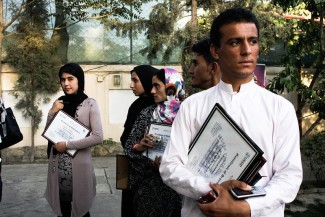
In the lead up to Afghanistan's second cycle of elections in 2009 and 2010, this report aims to analyze the legal and operational framework for vetting candidates in the upcoming elections; describe and assess the challenges to the vetting process in the previous elections; map out po...

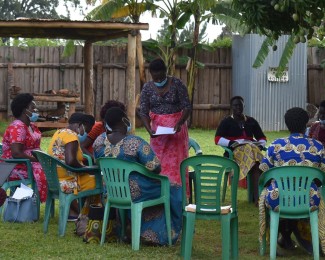
Reparations for victims of sexual and gender-based violations (SGBV) raise a series of complicated questions and implementation challenges around how to acknowledge this category of victims and deliver reparations without exposing victims to stigma and rejection. Victims must weigh the risk of...

A new report from the International Center for Transitional Justice and the Martin Chautari Institute highlights the continued need for truth about the human rights abuses committed during the country’s 10-year civil war. The report is aimed at helping those working on truth seeking in Nepal to better understand the gaps that currently exist between victims’ needs and rights, public policy and the current transitional justice process.

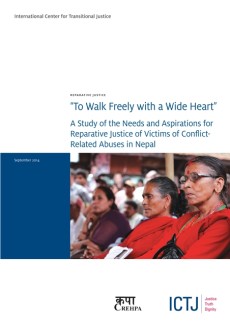
This report presents the findings of an in-depth survey of more than 400 conflict victims in 10 districts of Nepal, researching their immediate and long-term needs and aspirations. Participants included those who had received benefits through the government’s Interim Relief Program an...

In a fast-changing world, ICTJ regularly reexamines and adapts its methodology to develop innovative solutions to emerging problems, advance its mission, and achieve justice for victims of human rights violations. In that spirit, ICTJ recently launched an exciting new website and newsletter design. After over a year of research, planning, surveying stakeholders, designing, and testing, we unveiled a site that better aligns with what ICTJ and transitional justice are today.

Afghanistan is a tragic example of how a country in transition can dramatically reverse course on the arduous path toward peace and democracy and return to an abyss of violence and repression at breakneck speed. In the span of a few short weeks, the Taliban regained control over the country. When they finally entered Kabul, the internationally backed Afghan government collapsed. Now in charge, the Taliban has lost no time in demonstrating their goal to re-impose the same extremist and oppressive rule, despite initial declarations affirming a commitment to peace and human rights.

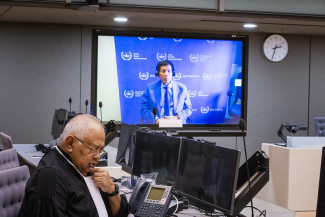
On February 27, 2026, the International Criminal Court concluded its confirmation of charges hearing in the case against former Philippines President Rodrigo Duterte, who stands accused of committing crimes against humanity. ICTJ Senior Expert Ruben Carranza, who is Filipino-American, reflects on this case in connection with his recent lecture on transitional justice and Duterte's war on drugs at Georgetown University.

Sexual violence against men and boys in times of conflict or repression is alarmingly common— and takes a markedly consistent form across contexts in terms of how it affects victims and societies as a human rights violation that is taboo to talk about. It has been committed in all cul...

Sexual violence against men and boys is alarmingly common amidst conflict or repression, but these crimes are often mishandled. A new ICTJ report examines how transitional justice efforts in South Africa, Kenya, Cambodia, and beyond have responded to the needs of male victims of sexual violence. What lessons can be drawn from these approaches?

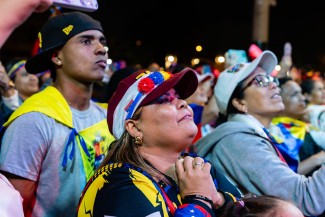
In the wake of the recent contentious presidential elections, Venezuelans from all walks of life took to the streets to express their collective distrust of the official results, outrage over their country's dire economic and political crisis, and demand for transformative change. For a brief moment, their sheer numbers and the of unity of their voices gave hope that a window of opportunity had opened for real change. In countries grappling with massive human rights violations, from time to time, a window of opportunity does in fact open for society to come together and a forge path toward peace and justice. Unfortunately, such windows do not remain open indefinitely.