


1519 results

The fall of the Assad regime marks the beginning of a long-overdue transformation in Syria. For the first time in decades, space has opened to speak freely about justice, accountability, and reconciliation. It is a moment filled with uncertainty and pain, but also one of immense hope.

As a tool of foreign policy, sanctions have historically been deployed by one or more states to coerce a change of behavior or policy. In recent years, however, states have increasingly imposed sanctions on actors responsible for human rights violations, which has expanded their potential to advance transitional justice goals. Now, ICTJ is releasing a new report that considers this potential as well as the obstacles to justice sanctions may engender.

This report provides an analysis of international economic sanctions from a transitional justice perspective. It considers the role that sanctions may play in advancing or hindering accountability, redress, and prevention in response to massive and serious human rights violations. The...

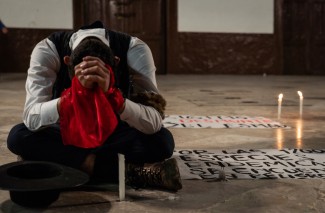
in two different photos, people hold signs for and against sanctions
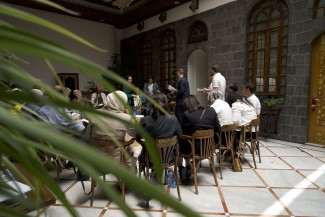
On February 1, 2025, ICTJ facilitated a meeting between family members of the missing and detainees and Syria’s transitional president, Ahmed Al-Sharaa, and the minister of foreign affairs, Asaad Al-Shaibani, at the Presidential Palace in Damascus. Attendees presented a number of specific urgent demands related to the missing and forcibly disappeared, while President Ahmed Al-Sharaa underscored the government’s commitment to the issue.

South Sudan’s transition to democratic governance through a highly anticipated, first-ever post-independence general election has to wait once again for another two years. Despite this latest extension, the country has achieved notable milestones in its transitional justice process.

As part of the new digital campaign "Reparations Build Justice," the ICTJ team would like to share the keynote address given by ICTJ Director of Programs and Deputy Executive Director Anna Myriam Roccatello at a recent conference on issues related to providing reparations through international criminal courts. In her remarks, Roccatello describes the inextricable link between accountability and reparation as well as ICTJ’s unwavering commitment to victims of massive human rights abuses.

On January 22, 2025, ICTJ launched its digital campaign, “Reparations Build Justice”, aiming to raise awareness about reparations and their vital contribution to sustainable peace and justice, particularly in countries grappling with legacies of mass atrocities.
Throughout 2024, ICTJ’s experts offered their unique insight on breaking news and critical developments in more than 11 countries as part of the ICTJ’s World Report newsletter. Their incisive analyses shed light on the political and socioeconomic forces at work and what it all means for victims and the pursuit of peace and justice.

On December 2 to 6, 2024, the International Criminal Court’s (ICC) Assembly of States Parties—the court’s management oversight and legislative body—held its 23rd session in The Hague. As in previous years, ICTJ took an active part, and its experts joined many of the discussions sharing their knowledge and insight. ICTJ organized two side events, one focusing on Syrian victims and another on reparations for victims in Northern Uganda.

The fall of Bashar al-Assad’s regime after 53 years of authoritarian rule marks a significant moment in the pursuit of justice, peace, and human rights. While this transition opens the door to new possibilities, it also underscores the immense obstacles and responsibilities that lie ahead.