


1519 results

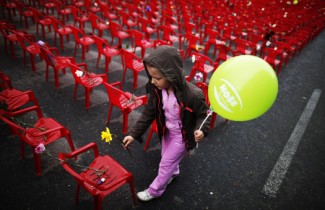
Children and youth are especially vulnerable to the effects of conflict and gross human rights violations. In this edition of the ICTJ Program Report, ICTJ's Children and Youth Program Director Virginie Ladisch talks with us about the importance of integrating child and youth sensitivity into transitional justice mechanisms.

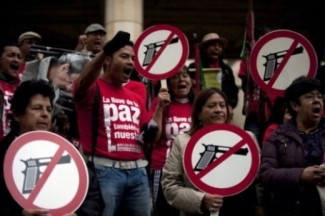
The latest ICTJ Program Report explores transitional justice issues in Colombia and charts our work in the country with the longest running armed conflict in the world. In this interview, head of ICTJ's Colombia office Maria Camila Moreno answers questions on the ongoing transitional justice mechanisms in the country, and describes ICTJ's work with the government and civil society groups on issues of criminal justice, reparations and memory. She provides a look ahead to the new peace negotiations between the Colombian government and the FARC, and identifies key transitional justice issues at stake for the talks.

In this edition of ICTJ's Program report, Kelli Muddell, director of ICTJ's Gender Justice program, reflects on ICTJ’s vision of gender justice, the challenges facing survivors of sexual and gender-based violence in times of transition, and how ICTJ is working to address inequality in countries like Colombia, Nepal, and Tunisia.

The ICTJ Program Report is a new online feature that presents ICTJ’s work and impact around the globe. Through monthly in-depth interviews with our experts, the ICTJ Program Report will offer a view of ICTJ’s work on reparations, criminal justice, truth and memory and other transitional justice developments in countries where we work. To launch the series, we speak with Paul Seils, ICTJ's vice president and the head of our Program Office.

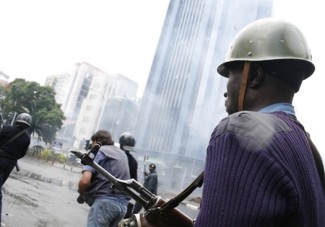
Kenya continues to deal with the repercussions of violence stemming from its disputed 2007 presidential elections, when political protests and targeted ethnic violence rocked the country, leaving thousands dead and hundreds of thousands displaced. Head of our Kenya office Chris Gitari gives an update on how Kenya is moving forward, and explains ICTJ's work in the country.

The latest ICTJ Program Report explores transitional justice issues in the Middle East and North Africa (MENA) and charts our work in this important and dynamic region. Claudio Cordone, ICTJ’s program director covering the MENA region, discusses individual country scenarios, prospects for transitional justice processes and explains ICTJ’s involvement and impact. Cordone speaks about transitional justice principles being at the root of popular uprisings referred to as “Arab Spring” and the challenges facing societies in their efforts to reckon with legacies of dictatorships and recent violence. He describes ICTJ’s efforts to address the impact of violence on women and promote their participation in transitional justice initiatives. The interview provides a thorough overview of ongoing initiatives and future prospects in Tunisia, Libya, Egypt, Syria, Yemen, Lebanon and Israel and Occupied Palestinian Territory.

In the latest ICTJ program report, we speak with Patrick Pierce, head of ICTJ’s Myanmar program, who analyzes the state of transitional justice in the country. Pierce provides a look into the kind of technical assistance ICTJ is providing to civil society groups in Myanmar working to strengthen democratic institutions and increase confidence in the peace process.

During Nepal's armed conflict, more than 13,000 people were killed and 1,300 forcibly disappeared. Today, a new government has voted to create a Truth and Reconciliation Commission, as well as a Commission of Inquiry on the Disappearance of Persons. Many victims have protested the flaws in the proposals; meanwhile, no comprehensive reparations have been provided for those left most vulnerable by conflict. In this interview with ICTJ's Santosh Sigdel, we discuss developments related to ICTJ's work in Nepal.

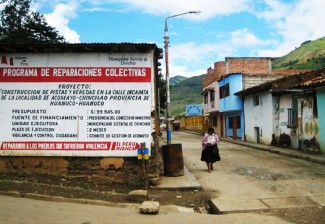
Reparations seek to recognize and address the harms suffered by victims of systematic human rights violations. ICTJ’s Reparative Justice program provides knowledge and comparative experience on reparations to victims' groups, civil society and policymakers worldwide. In this edition of the ICTJ Program Report, we look at ICTJ's work on reparations in dynamic transitional contexts such as Nepal, Colombia, Peru, DRC, and Uganda.

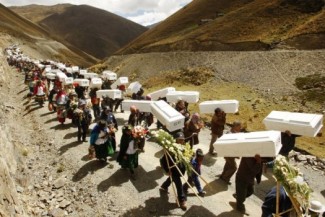
In this edition of the ICTJ Program Report, ICTJ Senior Associate Felix Reátegui discusses the principles behind the Truth and Memory program, and explains the imperatives of uncovering, acknowledging, and memorializing the past.

Since the uprising that sparked the "Arab Spring," Tunisians have demonstrated unwavering commitment to transitional justice. In this interview, ICTJ's Head of Office Rim El Gantri gives an overview of the country's efforts to address the truth about the past, seek justice for abuses committed under decades of repression, and provide reparations for harm suffered under the former regime.

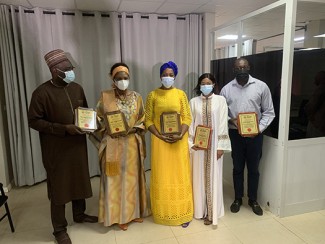
On July 13, 2021, the Gambia’s Truth, Reconciliation and Reparations Commission (TRRC) presented an award to ICTJ for its sustained support of the commission and its commitment to the country’s transitional justice process. The award comes as the TRRC concludes its work and prepares to submit its final report to the country’s president by September 30, 2021.

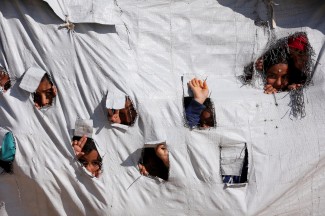
New York, December 10, 2021—In contexts such as Afghanistan, Bosnia, Chechnya, Iraq, Somalia, and Syria, hundreds, sometimes thousands, of individuals have crossed national borders to engage in violent conflicts in which serious human rights violations and mass atrocities have been committed...

The first of its kind and the culmination of three years of planning and development, Gender Modules is a comprehensive curriculum that uses case studies to illustrate topics such as gender and reparations and the prosecution of gender-based crimes. It provides concrete guidance to those seeking to implement gender-sensitive processes – informed by successes and failures in contexts around the world.

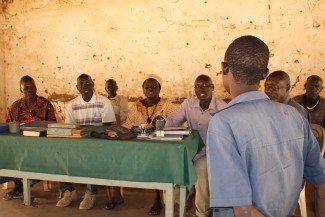
In countries where state institutions have limited reach, customary and informal justice is often the most common way in which people resolve disputes and seek justice. Given its prominence, it is considered to be an important element of a people-centered approach to building peaceful, just, and inclusive societies. An understanding of the relationship between customary justice and transitional justice, however, remains underdeveloped. A new ICTJ report provides valuable empirical, qualitative research on the topic, in the context of South Sudan.

In the aftermath of armed conflict or repression, communities often struggle to rebuild social relations that have been damaged or destroyed by violence and abuse. Restorative justice can potentially play a valuable role in such societies, bringing together the people who have been harmed by crimes and the individuals responsible for those harms, often in the form of a dialogue, to address the offense and its consequences. A new ICTJ research report offers insight and guidance on the use of a restorative justice framework in responding to massive and grave human rights violations, drawing primarily from experiences in Colombia, Sierra Leone, Tunisia, and the Philippines’ Bangsamoro region.

A new paper from the International Center for Transitional Justice (ICTJ) offers clear, concrete proposals for a new reparations policy in Côte d’Ivoire for victims of serious human rights violations. The recommendations, informed by extensive work in the affected communities, consider a range of options, including compensation (cash payments), rehabilitation, and symbolic measures.

A new ICTJ report urges the revitalization of Ukraine’s holistic transitional justice policymaking. Debunking the most common myths about transitional justice in Ukraine, the report presents the key legal, policy, and victim-centered arguments in favor of advancing a comprehensive transitional justice framework.

South Sudanese refugees and displaced persons currently comprise 40 percent of the country’s total population. Yet, these groups have been largely excluded from ongoing policy discussions related to South Sudan's transitional justice process in South Sudan. A new ICTJ report aims to amplify the perspectives and expectations of these groups and ensure they are included in the process's design and implementation.

This article focuses on the results of an ICTJ nation-wide survey: Colombian Perceptions and Opinions on Justice, Truth, Reparations, and Reconciliation. Colombians expressed a strong demand for accountability and reparations and low support for lenient sentences. ICTJ demands the Co...

A complex law and ongoing violence are complicating efforts by the Colombian government to provide reparations to millions of victims of the country’s internal armed conflict, according to a new report by ICTJ.

As a tool of foreign policy, sanctions have historically been deployed by one or more states to coerce a change of behavior or policy. In recent years, however, states have increasingly imposed sanctions on actors responsible for human rights violations, which has expanded their potential to advance transitional justice goals. Now, ICTJ is releasing a new report that considers this potential as well as the obstacles to justice sanctions may engender.

A new report by the International Center for Transitional Justice analyzes the Congolese judicial authorities’ response to international crimes committed in the territory of the Democratic Republic of the Congo from 2009 to 2014, with a particular focus on the war-torn east (North Kivu, South Kivu, and Ituri). It finds that the number of open investigations into international crimes is very low compared to the large number of atrocities being committed.

The International Center for Transitional Justice (ICTJ) released a new report today providing detailed information and analysis on how Iraq dismantled Saddam Hussein’s Baath Party and purged state institutions of party members. The report, titled “A Bitter Legacy: Lessons of De-Baathification in Iraq,” carries valuable lessons for countries in the Middle East and North Africa (MENA) as they consider how to deal with legacies of abuse by the security and political apparatuses of former regimes.

A new ICTJ report finds that the time is ripe for Georgia to take meaningful steps to reckon with the dark chapters of its recent past and ensure that abuses never happen again. The report warns that while political conditions in the country may not be perfect, waiting longer to acknowledge victims and deal with the past may lead to more abuses and a possible conflict in the long run.