1519 results

ICTJ welcomes the announcement the government of Colombia and the FARC-EP have agreed on a series of modifications to the peace accords, after the original version was narrowly rejected in the October plebiscite vote.

New York, January 25, 2021—"You cannot deliver 500 kilograms of transitional justice,” explains a high-level UN official in a new ICTJ report released today that explores the theoretical and practical challenges of measuring the results of transitional justice processes. These processes are complex and politically contested and are thus notoriously difficult to evaluate. The report offers key insights related to and tools for evaluating and monitoring transitional justice processes and assessing their impact.

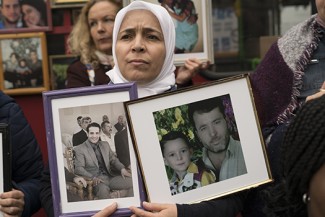
New York, May 29, 2020 — Time is of the essence for breaking the deadlock over the release of detainees, abductees, and the forcibly disappeared in Syria, says a policy paper released today by ICTJ and the New York University’s Center on International Cooperation (CIC). Coordinated action by the Syrian regime and other parties to the conflict, as well as the international community, must begin now, particularly as the spread of the coronavirus accelerates in Syria. The consequences of delay and a failure to act — for the detainees and their families — are likely to be calamitous.

In societies grappling with the legacies of mass atrocities, truth-seeking bodies and the reports they produce can be instrumental in exposing culpability, revealing root causes, and preventing a recurrence of violence or repression. A new ICTJ research report serves as a practical guide for those working in truth commissions and fact-finding bodies on how to convert large amounts of data and information into credible reports.

The United States has never collectively confronted its history of colonialism, slavery, and racism in an effort to reform the systems that perpetuate harms to Black communities and other marginalized groups, or to redress these wrongs. Events in recent years, however, have amplified calls for meaningful action to reckon with the past. Given that truth seeking is integral to the investigation of past wrongs, ICTJ and a coalition of practitioners from multiple law firms has released a new report that examines the experiences of official truth commissions from around the world to identify relevant considerations for US stakeholders.

In advance of the 2023 SDG Summit, the Working Group on Transitional Justice and SDG16+ has released a new report underscoring the contribution of transitional justice to the advancement of sustainable peace and development and offering stakeholders strategies to better incorporate it into relevant agendas and action plans. The SDG Summit marks the halfway point of the 2030 Agenda for Sustainable Development and offers the global community an opportunity to take stock of the progress it has made and the challenges it still faces in achieving the Sustainable Development Goals.

Kampala, October 17, 2022—Sixteen years after the decades-long conflict between the Ugandan government and the rebel group the Lord’s Resistance Army (LRA) ended, victims continue to grapple with its persistent effects. Victims of conflict-related sexual violence (CRSV) and children born of war, in...

New York, March 10, 2021—“We want to turn the page, but not at the cost of justice”—that was a message repeated by victims of human rights abuses interviewed in a new report released today on transitional justice in the Central African Republic (CAR). Produced by the International Center for Transitional Justice and Cordaid, ‘A Drop of Water on a Hot Stone’: Justice for Victims in the Central African Republic presents findings from a study exploring victim-centered approaches to justice in CAR and their feasibility in a context of profound fragility and extreme poverty.

ICTJ’s partner Afghanistan Human Rights and Democracy Organization (AHRDO) recently opened a new virtual museum and database dedicated to Afghan victims of conflict and human rights abuses. “The Afghanistan Memory House” not only preserves the memory of these victims but helps pave the path for truth and justice. To launch the virtual museum, ICTJ and AHRDO cohosted a panel discussion on memorialization, moderated BBC journalist Lyse Doucet, in ICTJ’s office in New York this past December.

ICTJ participated in the launch of a new report on the relationship between transitional justice and development, launched by the Swedish International Development Agency (Sida).

Civil society organizations, as well as journalists’and editors’associations in Argentina, released this statement to request that the Argentinean Supreme Court ensure the observance of a resolution that allows the press to have access to trial hearings, especially in trials involving...

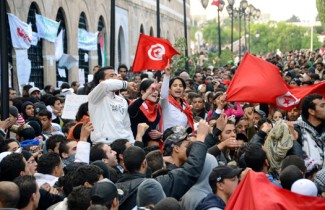
ICTJ welcomes the award of the 2015 Nobel Peace Prize to Tunisia's National Dialogue Quartet for helping the country transition to democracy. With the award, the Nobel committee acknowledges the "decisive contribution" made by the group of civil society organizations after Tunisia’s 2011 revolution.

Bring General Rios Montt and other high ranking members of the military to trial in the Guatemalan courts for genocide? In 1999 it was a noble dream for justice, but one with little apparent possibility of ever coming true. On International Justice Day, walk the long path to justice that led to this historic trial.

This research note presents preliminary population-based data on attitudes about peace and justice in northern Uganda. The survey data presented in this report were collected from April to June 2007 in eight districts of northern Uganda.

Prosecution efforts so far have exacerbated, rather than alleviated, ethnic and regional divisions. Credible prosecutions against those most responsible on all sides of the conflict would offer a clear statement to all citizens of Côte d’Ivoire that the justice system is blind to ethnicity and is there to serve and protect all its citizens.

Côte d’Ivoire descended into chaos following the October 2010 elections. One of the enduring lessons from this tragic experience could be that elections should never give a reason to set one’s country on fire. Like it or not, however, presidential elections in Côte d’Ivoire have become a malaise that grips the country every five years. And while the 2015 presidential elections were carried out peacefully, the recent October 2020 elections unfortunately were not. The tensions and violence that accompanied it, though far less devastating, brought back macabre memories of the 2010 post-election carnage that left 3,000 people dead and forced more an a million to flee their homes.

Two women abducted by the Lord´s Resistance Army (LRA) return home with their children born of war and fight to be included in a society that deems them criminals.

I Am Not Who They Think I Am, a new film by ICTJ and MediaStorm, exposes the stigma facing children born of conflict and their mothers and advocates for their right to reparations and redress from the state.

Thousands of children were born as a result of sexual violence in northern Uganda during the armed conflict that lasted from 1986 to 2007. Now, as teenagers and young adults who are trying to find their place back in their communities, these young men and women face a multitude of chall...

Even in the face of ongoing brutality, many of the nearly 12 million Syrians displaced by the conflict long for their return home – dependent, of course, on certain conditions being met. For our latest report, ICTJ interviewed dozens of Syrians refugees in Lebanon to discuss the impact of the conflict on their lives, their expectations for a potential return home, and their view of what coexistence in Syria might look like. We sat down with the report's authors, Rim El-Gantri and Karim El Mufti, to discuss their findings.

Discussions about a future return of refugees and coexistence among groups currently at war in Syria must begin now, even in the face of ongoing violence and displacement. This report, based on interviews with refugees, makes it clear that the restoration of dignity will be important ...

While Armenia may rightfully seek acknowledgment from its neighbors of the genocide and other egregious violations, for its part, it must have the courage to reckon with its own recent past in the 30 years since achieving statehood, which includes war crimes, systematic corruption, and large-scale human rights abuses against its own citizens. Failing to do so ultimately threatens the young republic’s democracy.

This report aims to help local governments, victims’ groups, and other stakeholders in Nepal to understand the scope of and potential inherent in local governmental powers and to identify what local governments can do to design and implement initiatives that support victims ...

A new ICTJ report on truth and memory in Nepal sparked discussion – and calls for victim-centered policies – at national and local launch events.

Nepal’s armed conflict ended six years ago, but commitments made to pursue accountability and establish oversight over security forces have yet to be implemented. ICTJ’s briefing paper “Building Trust and Strengthening the Rule of Law” examines how an ad hoc vetting mechanism for officers in senior command positions could help consolidate democracy in Nepal. Author Alexander Mayer-Rieckh says that as Nepal abandons its commitments to pursue accountability for serious crimes, it undermines the ability of its security forces to maintain the rule of law and protect a new era of peace.