

1519 results

This update covers the first, complainant phase of the Anfal trial, which lasted for twenty-three sessions from August 21 to November 27, 2006. Seventy-six complainants presented testimony regarding their experiences during the Anfal campaign. Information is taken directly from obser...

This update series summarizes developments in the Anfal trial of Saddam Hussein, his cousin Ali Hassan al-Majid, and five other co-defendants before the Iraqi High Tribunal. It covers the trial's defense and closing phases. Five of the six defendants were sentenced to either multiple ...

This memorandum is a legal analysis of the applicability of the UN Convention on the Prevention and Punishment of the Crime of Genocide to events which occurred in Turkey-Armenia during the early twentieth century. It was drafted by independent legal counsel based on a request made to...

May 24, 2011 – The International Center for Transitional Justice (ICTJ), Curious Pictures and Pivot Pictures hosted the premier of The Axe and the Tree: Zimbabwe’s Legacy of Political Violence at the Nelson Mandela Foundation in Houghton, South Africa.

Recently, Tunisia held its third parliamentary elections since the revolution and the second presidential elections since late President Béji Caid Essebssi passed away on July 25, 2019. It remains to be seen if the election’s results will usher in a new era of dignity, for which Tunisians took the streets in 2010 and 2011.

In Africa's Great Lakes region, countries face common challenges like bad governance, inequitable distribution of natural resources, and ethnic divisions. As nations like Burundi, Central African Republic and South Sudan work towards peacebuilding and accountability, they should learn from what has worked and what has not in neighboring countries, writes Sarah Kihika Kasande, ICTJ's Head of Office in Uganda.

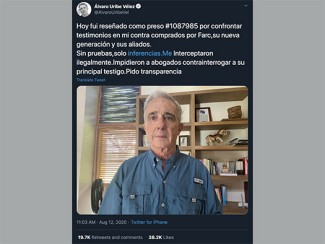
On August 4th, former President Alvaro Uribe surprised the country with a tweet announcing that he would be placed under house arrest for suspected witness tampering and obstruction of justice by the Special Instruction Chamber of the Supreme Court of Justice as part of an investigation that has been underway since 2018. According to the court, this decision was made out of a concern for possible obstruction of justice, which appears to be consistent with the ongoing investigation into these same charges. This is undoubtedly an unprecedented situation.

As the refugee crisis deepens, does action on transitional justice issues have to wait for peace? A new paper explores what sort of consultation and documentation work can be done now, while conflict is ongoing, to shape outcomes moving forward.

Why pursue transitional justice in the aftermath of massive human rights violations? This video provides a window into the debate about the relevance of transitional justice in today’s world.

Why pursue transitional justice in the aftermath of massive human rights violations? “The Case for Justice” provides a window into the debate about the relevance of transitional justice in today’s world.

This paper considers the efforts of Timor-Leste’s Commission for Reception, Truth and Reconciliation to address the forced displacement that occurred during the period of Indonesian occupation and in the post-Popular Consultation violence of 1999. It examines linkages between the work...

This paper compares and contrasts peace negotiations in Sierra Leone and Liberia. It delineates lessons in peacemaking that emerge from this comparison. These include: considering all policy options, taking a nation's recent history into account, reinterpreting and challenging questio...

The Special Court for Sierra Leone-which began with the hope that it would be accessible to millions of Sierra Leoneans- has fallen short of its domestic goals. The decision to try Taylor in The Hague, rather than in Freetown, and the lack of adequate outreach activities made the cour...

This briefing paper examines how transitional justice approaches can guide the discussion around dismantling systemic racism in the United States to focus on root causes of violence and racial injustice. Drawing from relevant experiences internationally and within the United States, i...

Dominic Ongwen's ICC trial will determine whether the former child-soldier-turned-LRA-commander is guilty or innocent. However, for those of us supporting justice globally, discussion must extend beyond simple dichotomies: the reality of Ongwen’s actions and the context in which they occurred is much more complex than whether he is guilty or innocent. Moreover, the calls for justice by victims in Uganda extend far beyond the trial of a single man, and demand a multifaceted response.

This report is the result of research conducted by consultant Olga Lucía Gaitán for the International Center for International Justice (ICTJ) to analyze the rulings handed down by the Justice and Peace Chambers and the Criminal Chamber of the Supreme Court of Justice in Colombia. The ...

This study examines the development of restitution and reparations in international law and practice over the last century. It aims to provide recommendations on how restitution can best contribute to transitional justice by reviewing four case-studies: the Czech Republic, South Afric...

On October 6, the International Criminal Court (ICC) found former Janjaweed militia leader Ali Muhammad Ali Abd-Al-Rahman (also known as Ali Kushayb) guilty of 27 counts of crimes against humanity and war crimes committed in Darfur between August 2003 and March 2004. This landmark verdict counters cycles of impunity in Sudan and sends a powerful message that these crimes are not tolerated.

Justice and peace have been the highest aspirations of modern societies. Legislative bodies have enacted laws such as Law 975 of 2005, which ordered the State to provide instruments to resolve armed conflicts without neglecting fundamental social interests of truth, justice, and repar...

This is a compilation of cases from the Criminal Chamber of the Supreme Court of Colombia.

The International Center for Transitional Justice publishes a selection of excerpts from the Supreme Court's rulings and judgments regarding the Justice and Peace process.

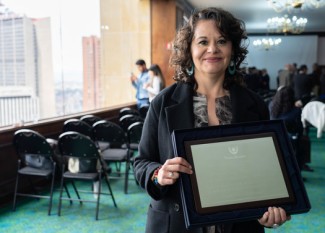
Fifteen years ago, a young nurse named Cristina Cobo was forcibly disappeared by members of the paramilitary group United Self-Defense Forces of Colombia. Paulina Mahecha, her mother, preserves her memory and that of over 20 other disappeared women from the departments of Meta...

Years have lapsed since the Democratic Republic of Congo (DRC) ratified the Rome Statute of the International Criminal Court (ICC) in March 2002, but the DRC government has yet to meet its legal obligation to incorporate the statute into national law. Adopting such legislation is esse...

This report canvasses 31 countries to see how the crime of enforced disappearance affects women as both the disappeared and the female relatives of the disappeared. It finds that across cultures, women face serious barriers to seeking relief due to discriminatory laws and practices. I...

This briefing paper is the summary of “The Disappeared and the Invisible: Revealing the Enduring Impact of Enforced Disappearances on Women,” a comprehensive study by ICTJ that identifies the impacts and government responses to enforced disappearances as they relate to women in 31 cou...