1519 results

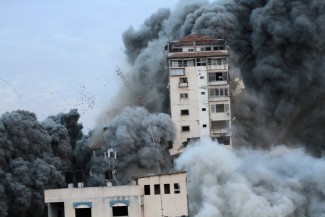
On October 7, the world watched in horror as members of the militant group Hamas slaughtered over 1,400 Israelis, most of whom were civilians including children and the elderly, in a premeditated and sophisticated attack. Israel’s response has so far been no less horrific. Incessant waves of indiscriminate airstrikes on Gaza have hit residential buildings, medical facilities, and other critical civilian infrastructure, besieging the entire enclave and leaving more than 5,000 people dead including 2,000 children. Unfortunately, these unspeakable atrocities—the condemnation and rejection for which we have run out of words—are not isolated events happening in a vacuum. They are, in fact, just the latest episodes in a 75-yearlong cycle of violence.

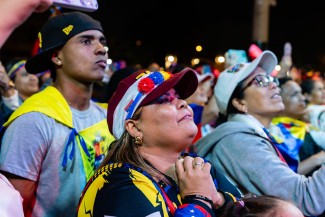
In the wake of the recent contentious presidential elections, Venezuelans from all walks of life took to the streets to express their collective distrust of the official results, outrage over their country's dire economic and political crisis, and demand for transformative change. For a brief moment, their sheer numbers and the of unity of their voices gave hope that a window of opportunity had opened for real change. In countries grappling with massive human rights violations, from time to time, a window of opportunity does in fact open for society to come together and a forge path toward peace and justice. Unfortunately, such windows do not remain open indefinitely.

Hybrid courts have ranged from the ad hoc international Criminal Tribunals for the former Yugoslavia and Rwanda (ICTY and ICTR respectively), to the treaty-based Special Court for Sierra Leone (SCSL) and Extraordinary Chambers in the Courts of Cambodia (ECCC), to international assista...

Background on the 2004 ICC arrest warrant for Bosco Ntaganda, wanted for war crimes allegedly committed in the DRC including civilian massacres and the recruitment of child soldiers. In 2009, the Congolese government decided not to arrest Bosco, and instead appointed him a deputy comm...

This report focuses on “indirect victims” of human rights violations in Tunisia, namely, the wives, sisters, and children of political prisoners in Tunisia, who suffered discrimination, social exclusion, police violence, and harassment during the dictatorship. Presenting documentation...

A short biography of Hebert Veloza Garcia aka "H.H."

In the wake of the mass demonstrations in the United States, activists in European cities similarly took the streets to protest against racism and police violence. In Belgium, mostly young activists have defaced statues of King Leopold II with red paint, insisting public spaces be "decolonized" that commemorate the monarch who personally owned the Congo for more than two decades before relinquishing it to the Belgian government which then controlled it for half a century. Are Belgian and other societies in Europe ready to reckon with the truth of their colonial legacies?

In our work providing assistance to societies around the world, we draw continual inspiration from individuals and communities who refuse to ignore the abuses of the past, and who often face great obstacles to expose it. To honor their courage, we invite you to read a selection of perspectives on truth and dignity from those who have used their words to convey a powerful idea: truth is the foundation of justice.

During a thematic hearing December 13–14, Kenya's Truth, Justice and Reconciliation Commission (TJRC) heard testimonies from children on their own experiences as part of the commission's investigation into gross human rights violations and historical injustices in the country between 1963 and 2008.

With a special court that has yet to open a trial and a truth commission that is not up and running, international attention on victims in the Central African Republic is waning. Since 2015, the unfulfilled promises of justice made to these victims have failed to address their daily realities and needs for immediate moral, physical, and material reparations, writes Rim El Gantri, one of the authors of a recent study by ICTJ and Cordaid.

As the world marks the third anniversary of the brutal war in Sudan, it is a moment to reflect on a conflict that rarely receives the media attention it deserves and to consider the millions of Sudanese caught in cycles of violence.

This report presents the findings from research on the needs and expectations of women survivors of sexual and gender-based violence in Nepal. Based on in-depth interviews, it explores what happened to these survivors during the country’s decade-long war (1996-2006), what they need no...

A cartoon illustration of a group of people

The Syrian Constitutional Committee has finally been agreed upon. The 150-member committee — made up of representatives of the Syrian regime, the opposition, and civil society members — is tasked with writing a new constitution for Syria. In an ideal world, this new constitution could be the first step to bringing an end to the deadly conflict that has left the country, and the lives of countless Syrian people, in ruins.

Lebanon’s ongoing “October Revolution” represents the largest decentralized, anti-government protest the country has seen at least since the end of the civil war in 1990. The demonstrations have brought thousands of Lebanese to the streets to condemn widespread corruption among the political class, paralyzing the country for weeks.

The brazen abduction and brutal murder of human rights lawyer Willie Kimani, his client, Josephat Mwenda, and their taxi driver, Joseph Muiruri, underlines once more the urgent need for police reform in Kenya says ICTJ's Christopher Gitari.

Last week, El Salvador’s Supreme Court overturned the country’s General Amnesty Law enacted in 1993, which served as a blanket amnesty for all crimes committed by the parties during the country’s 12-year civil war. Now, prosecutors must work with victims to seek justice for these crimes.

Nearly two years after the conflict erupted in Ethiopia’s Tigray Region in the north, the Ethiopian federal government and the Tigray People’s Liberation Front signed an African Union-brokered cessation of hostilities agreement on November 2, followed by an implementation deal 10 days later. The breakthrough agreement offers a glimmer of hope after a brutal war. It charts a path toward peace and lays the foundations for addressing the legacy of the serious human rights violations and preventing their recurrence by providing for the implementation of a transitional justice policy centered on accountability, truth seeking, redress for victims, and reconciliation and healing.

On March 31, 2021, the Appeals Chamber of the International Criminal Court upheld the Trial Chamber I’s acquittal of former Ivorian President Laurent Gbagbo and Charles Blé Goudé of all charges relating to crimes against humanity they allegedly committed during Côte d’Ivoire’s 2010-2011 post-election crisis. While the acquittal may be frustrating to many pursuing justice and accountability in Côte d’Ivoire, a silver lining is that it could mean tangible benefits for victims.

More than 1,000 people remain unaccounted for in Nepal following a decade of violence that concluded in 2006, and a new official body aims to shed light on these abductions. To support this critical mandate, ICTJ hosted an intensive three-week course for the commission, providing the technical and operational support necessary to finally tell the truth about Nepal’s disappeared.

On September 18 and 19, world leaders gathered in New York for the UN Sustainable Development Goals Summit to take stock of the progress that the global community has made toward achieving the 2030 Sustainable Development Agenda and the challenges it still faces. At the summit, the UN General Assembly adopted a political declaration, which asserts that the achievement of the SDGs is “in peril,” describing progress toward them as moving too slowly and even regressing in some countries as a result of multiple, overlapping crises, such as persistent armed conflict. The international community must go further in specifying the obstacles that societies affected by conflict and widespread abuses face and the role that human rights can play in overcoming them.

In what UN Women describes as the “shadow pandemic,” rates of violence against women have soared since the public health and economic crises brought about by COVID-19. With stay-at-home orders in place in countries around the world, women are more susceptible than ever to domestic violence. In countries affected by conflict or repressive rule, all forms of sexual and gender-based violence are on the rise. The ICTJ Gender Modules offer a timely tool to raise awareness about these issues and help develop gender-sensitive responses to them.

On International Women's Day, ICTJ Gender Justice Senior Associate Amrita Kapur highlights how insecurity affects women and is key to overcoming inequality across all dimensions of empowerment. "Without including institutional reform, we are condemning women to another century of inequality," she writes in this op-ed.

Since the Gambia's Truth, Reconciliation, and Reparation Commission (TRRC) began public hearings in January 2019, an important part of the country’s narrative has not yet come to light or been publicly acknowledged: the experiences of women. This report brings forward the voices of wo...

One of the major challenges facing parliamentary democracy can be the restriction of people's participation in democratic processes, especially the opportunity to vote in periodic elections.

For 112 years, International Women’s Day has marked a time to celebrate the achievement of women and raise awareness about gender inequality. On March 8th, this year’s campaign of #EmbraceEquity will shine a spotlight on women’s contribution to various fields, while highlighting the challenges they face in other industries. Eliminating the barriers to women’s access to economic, political, and social resources is fundamental to creating and maintaining a stable democratic society. Often at the core of repressive regimes is a systematic effort to exercise control over the lives of women. Similarly, an erosion of the rights of women in “stable” democracies is often a harbinger of a broader attack on the rights of citizens.