1519 results

TUNIS/NEW YORK, April 12, 2011—The proceedings at the ‘Addressing the Past, Building the Future: Justice in Times of Transition’ conference, which is to be held in Tunis April 14-15, will be reported on a conference blog set up by the International Center for Transitional Justice (ICTJ). The...

March 21, 2013, New York, NY- The International Center for Transitional Justice (ICTJ) is launching a global awareness campaign for the International Day for the Right to the Truth, March 24, to affirm the right of victims to know the truth about human rights violations. Under the slogan, “Truth is the foundation of justice,” ICTJ’s campaign will highlight the important role that truth commissions can play in societies dealing with a legacy of violence and repression.

The International Center for Transitional Justice (ICTJ) signed a cooperation agreement with the Tunisian government on January 16 to provide further technical assistance in establishing transitional justice mechanisms in the country. The development comes two years after protests forced President Zine El Abidine Ben Ali to step down and flee the country in January 2011.

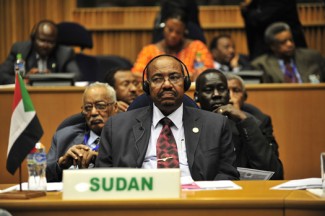
The actions of the South African government, in allowing Bashir to depart, have dealt a grave blow to the rights of victims of atrocities in Darfur and to the prospects of establishing a credible system of international criminal justice through the ICC.

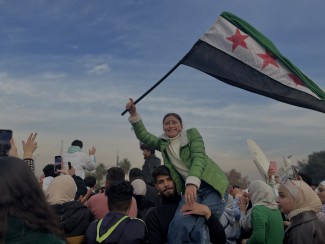
The fall of Bashar al-Assad’s regime after 53 years of authoritarian rule marks a significant moment in the pursuit of justice, peace, and human rights. While this transition opens the door to new possibilities, it also underscores the immense obstacles and responsibilities that lie ahead.

ICTJ is outraged by the recent massacre in Syria, where over 1,000 civilians were brutally killed in yet another wave of violence. This appalling crime underscores the urgent and undeniable need to protect civilians and provide justice and accountability.

These are especially challenging times for those of us who work to assist societies in dealing with a legacy of atrocities and massive human rights violations. Violent armed conflicts have increased in number, duration, and ferocity around the globe. Immense displacement and waves of ...

A new study from the International Center for Transitional Justice (ICTJ) shows that the Kenyan government has not effectively addressed the harms suffered by victims of sexual crimes committed during the violence that followed Kenya's disputed 2007 elections or ensured the accountability of perpetrators.

ICTJ President David Tolbert will be a featured speaker at this year’s Al Jazeera Forum in Doha, Qatar. Al Jazeera Forum is the flagship event of Al Jazeera Media Network, at which Al Jazeera showcases its contribution to the world of media and politics.

ICTJ’s president David Tolbert will be one of the featured speakers at this year’s Al Jazeera Forum in Doha, Qatar, which aims to explore the complex transformation of the socio-political and media landscapes of the Middle East and North Africa.

ICTJ calls on the Prime Minister of the Solomon Islands to make the report of the Solomon Islands Truth and Reconciliation Commission public without delay. Almost one year since the TRC handed its final report to the prime minister, it has still not been publicly released, contrary to the law that established the commission.

As Nepal’s Parliament discussed key proposal to establish truth-seeking bodies, the ICTJ expresses deep concern that the bill retains flaws already rejected by the country’s Supreme Court in January.

Zambia should reaffirm its membership in the International Criminal Court to best advance justice for victims of atrocities, a group of African organizations and international nongovernmental organizations with a presence in Africa said today.

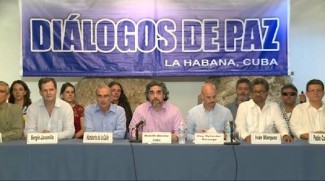
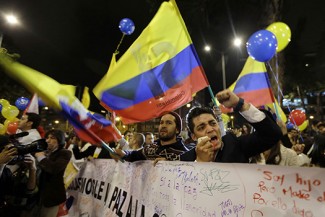
ICTJ welcomes the recent agreement announced by the Government of Colombia and the Revolutionary Armed Forces of Colombia (FARC) to commit to immediately implement measures to search for, locate, and identify those who have disappeared during the 50-year armed conflict and – if a final peace agreement is reached – to create a special unit dedicated to these tasks.

ICTJ welcomes the recent agreement announced by the Colombian Government and the Revolutionary Armed Forces of Colombia (FARC) to address issues of truth, justice, reparations and non-recurrence and hopes that it will pave the way for the successful completion of the negotiations to end the decades-long armed conflict in Colombia.

ICTJ enthusiastically welcomes today’s decision of the United Nations Human Rights Council to establish a mandate for a special rapporteur on the promotion of truth, justice, reparation and guarantees of non-recurrence of serious crimes and gross violations of human rights.

ICTJ welcomes the formation of two new independent institutions in Syria: the National Commission for Transitional Justice and the National Commission for the Missing. Established by presidential decree, these commissions represent a historic step forward in acknowledging the demands of victims and their families and formally responding to the widespread violations committed in Syria over the last decades.

ICTJ welcomes the agreement reached between the Colombian government and the Revolutionary Armed Forces of Colombia (FARC) guerrilla group to create a truth commission, after a peace agreement is signed.

The agreement represents "an historic opportunity for Colombian society to build a peaceful future on foundations of respect for human rights and the rule of law,” said David Tolbert, president of ICTJ. “We have for years worked in support of victims’ rights in Colombia and will continue to do so with renewed energy and hope.”

The International Center for Transitional Justice ICTJ welcomes the release of the Truth, Justice and Reconciliation Commission (TJRC) Report, which is the result of an official truth-seeking process undertaken by Kenya following the 2007/2008 post-election violence. The report shares the TJRC’s findings on gross violations of human rights, economic crimes, illegal acquisition of public land, marginalization of communities, and ethnic violence between 1963 and 2008.

ICTJ welcomes the launch of Tunisia’s Truth and Dignity Commission (TDC), a momentous step in the country’s effort to establish the truth about past human rights violations.

NEW YORK, Dec. 14, 2011—ICTJ welcomes the election of Fatou Bensouda of Gambia as the next prosecutor of the International Criminal Court (ICC). Ms. Bensouda was unanimously elected December 12 by the Assembly of States Parties (ASP) during its 10th session in New York City, and will be the court's second prosecutor, commencing in June 2012.

ICTJ welcomes the release of the final report of Brazil’s National Truth Commission after two and a half years of work to unveil the truth about serious human rights violations that took place in the country between 1946 and 1988, especially during the military dictatorship of 1964 to 1985. The final report is a historic contribution to truth and justice in a country where serious crimes have remained unaddressed for decades and calls on the Brazilian judiciary to disregard the Amnesty Law and act in cases of crimes against humanity.

ICTJ welcomes the historic peace agreement signed today between the Colombian government and the Revolutionary Armed Forces of Colombia (FARC) – an essential step toward building lasting peace in the country.

ICTJ is pleased to announce the addition of three new members to its Board of Directors: Ms. Nina Lahoud, Ms. Rajakumari Jandhyala, and Mr. Max Gleischman. “These three individuals bring a wealth of expertise in law, economics, diplomacy, and strategic communication to ICTJ. Their diverse perspectives and proven leadership will help steer ICTJ as it continues to support victims, strengthen institutions, and foster inclusive societies in the aftermath of conflict and repression,” said Chairperson Robert Cusumano.

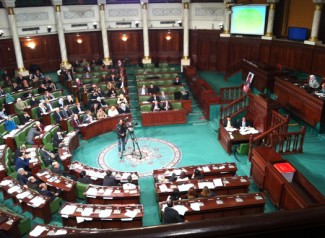
ICTJ welcomes the historic passage of the Draft Organic Law on the Organization of Transitional Justice Foundations and Area of Competence by the Tunisian National Constituent Assembly (NCA). In a nearly unanimous vote on Sunday, 125 of 126 deputies voted in favor of the law.

NEW YORK, August 19, 2019—The International Center for Transitional Justice announces the addition of two distinguished members to its Board of Directors. Ellen Taus and Brad Smith bring to ICTJ decades of experience in leadership roles at major global institutions.

ICTJ is pleased to announce the “Overseas: Writing Contest,” an open call for young migrants originally from or currently residing in Lebanon, Libya, or Tunisia to share their personal experiences of migration in the form of a short, written testimony.

In this amicus brief to the Indonesian Constitutional Court, ICTJ submits that the legislation establishing the Indonesian Truth and Reconciliation Commission ("TRC law") contravenes international law. ICTJ contests the provisions of the TRC law that allow for the granting of amnesty ...

As we prepare to welcome the New Year, we hope all practitioners will find this special edition of the World Report of particular interest, as it provides a unique overview of the most significant developments in transitional justice in 2012. As part of the 2012 ICTJ Year in Review, our website presents a multimedia gallery which highlights ICTJ’s work in 2012, and includes stories spanning from Colombia to Canada to Cote d’Ivoire. We also invite you to listen to this month's ICTJ Forum, in which ICTJ President David Tolbert reflects on significant events of the past year in the field of transitional justice.

On December 2 to 6, 2024, the International Criminal Court’s (ICC) Assembly of States Parties—the court’s management oversight and legislative body—held its 23rd session in The Hague. As in previous years, ICTJ took an active part, and its experts joined many of the discussions sharing their knowledge and insight. ICTJ organized two side events, one focusing on Syrian victims and another on reparations for victims in Northern Uganda.

ICTJ, in collaboration with the Dutch Ministry of Foreign Affairs, recently convened the first international dialogue in Geneva in support of Syria’s two new justice commissions. From July 10 to 11, members of the National Commissions for Transitional Justice and for the Missing joined representatives of Syrian victim groups and experts and practitioners from around the world to discuss the present opportunities and challenges for peace and justice in Syria and how best to support the nascent institutions in fulfilling their mandates and advancing acknowledgment, truth, accountability, and repair.

On January 21, ICTJ and UNICEF held a special event to launch an important new report on the links between education and transitional justice. The launch was accompanied by a panel discussion moderated by ICTJ President David Tolbert.

In many societies, histories of exclusion, racism, and nationalist violence often create divisions so deep that finding a way to deal with the atrocities of the past seems nearly impossible. These societies face difficult practical questions about how to devise new state and civil soc...

This report provides guidance to policymakers and practitioners on the ways in which transitional justice initiatives may function better in divided societies. If transitional justice can find ways to act as a means of political learning across communities, foster trust and recognitio...

To encourage public engagement in truth-telling and memorialization in Colombia, ICTJ and the Center for Historic Memory (Centro de Memoria Histórica) are pleased to announce a photography contest for non-professionals.

The Extraordinary Chambers of the Courts of Cambodia's reparations mandate may seem narrow and restrictive. Yet there are several potential ways in which the Court can make the right to reparations meaningful for civil parties and for many other Cambodians. It has the ability to inf...

View the live broadcast of tonight's panel discussion with Richard Goldstone, David Tolbert, Hassan Jallow and Diane Orentlicher from 6:30pm–8:30pm.

ICTJ and the Center for Global Affairs of New York University (NYU) co-hosted a panel discussion on the impact of international ad hoc tribunals in the former Yugoslavia and Rwanda, and the possible lessons these courts’ experiences hold for the International Criminal Court (ICC). In a discussion...

Ten years have passed since Tunisians took the streets to demand “Employment, Freedom, and National Dignity.” The revolution’s loud, courageous voice against corruption, extreme inequality, and repression echoed around the globe and inspired the “Arab Spring.” Today, Tunisians are still proud of their revolution. However, they continue to strive for goals, yet unattained, that the political class does not even seem to understand. It was thus not surprising to see large protests on the 10th anniversary, demanding concrete action and new public policies to advance social justice and better integrate marginalized regions and populations.

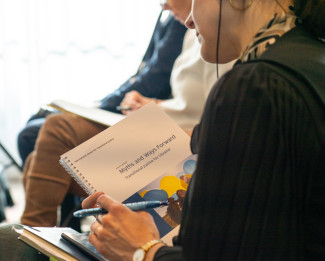
In August 2006 the Security Council created the UN Serious Crimes Investigation Team, as an extension of the previous investigation under the UN Integrated Mission Timor-Leste.

In their debate hosted by the Economist, Richard Dicker and Jack Snyder have touched on critical issues that frame the peace and justice debate. In my view, however, the peace and justice debate should focus more concretely on the central issues that will affect the lives of victims and affected societies, rather than solely seeking to resolve geopolitical or national power dynamics.

After 33 years in the relentless pursuit of truth and accountability the family of anti-apartheid activist Nokuthula Simelane will finally see justice done. On 8 February 2016, the National Prosecuting Authority announced that it will charge four former apartheid security policemen with...

The military rulers of Burma (also known as Myanmar) convened a National Convention to draft a new constitution. After many delays, the convention completed the draft on September 3, 2007. An analysis of the constitution’s provisions suggests that instead of being a true catalyst for ...

The Burmese government cannot change in a meaningful way until it eliminates the culture of impunity for human rights violations that has developed during the past 48 years. The international community can help this effort by establishing a commission of inquiry into the violations. R...

In August 2006 the United Nations Security Council mandated the establishment of the Serious Crimes Investigation Team (SCIT) as an extension of the previous “serious crimes” process, under the UN Integrated Mission in Timor-Leste (UNMIT). Early in 2008, the team began assisting the c...

In situations of large scale violence and repression, reparations are best conceptualized as rights-based political projects aimed at giving victims due recognition and at enhancing civic trust both among citizens and between citizens and state institutions. This paper explores, in th...

In seeking to establish accountability for past atrocity, many transitional justice mandates have also sought to redress crimes against indigenous populations. To further explore this relationship, ICTJ and our partners in Canada and Colombia are holding two side events to the UN Permanent Forum on Indigenous Issues.

Thirteen years after the fall of Soeharto, victims in Indonesia continue to suffer from the negative effects of gross human rights violations and from ongoing discrimination. Although efforts by the president and the National Human Rights Commission (Komnas HAM) to create a reparation...

JAKARTA, Dec. 12, 2011—A report released today by the International Center for Transitional Justice (ICTJ), together with the Indonesian Association for Families of the Disappeared (IKOHI) and the Coalition for Justice and Truth (KKPK), calls on the government of Indonesia to fulfill its obligation to provide reparations to thousands of victims of gross violations of human rights.