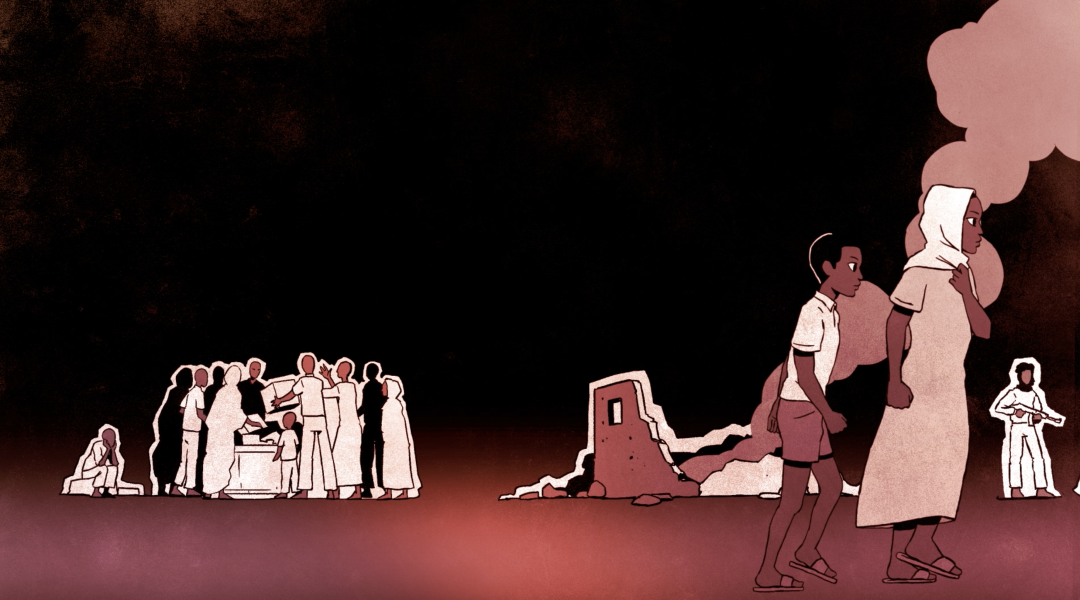
The Hague, September 16, 2026—As Sudan’s devastating conflict enters its fourth year, the priorities of victims and Sudanese civilians must be central to efforts to end the violence and build sustainable peace. Against this backdrop, the International Center for Transitional Justice (ICTJ) and the Government of the Netherlands are convening a policy roundtable today in The Hauge on advancing victim-centered justice for durable peace in Sudan.
Sudan is facing the world’s largest humanitarian and displacement crises. Since fighting between the Sudanese Armed Forces and the Rapid Support Forces began on April 15, 2023, mass atrocities have been committed across the country. Famine has been declared in parts of Sudan, while sexual violence is being systematically used as a weapon of war. The United Nations Independent International Fact-Finding Mission has assessed that the mass atrocities committed in El-Fasher in October 2025 are indicators of genocidal path.
As international efforts toward a ceasefire and political settlement continue, justice must not be sidelined. Transitional justice can help address decades of violations and unresolved grievances through truth seeking, accountability, reparations, and institutional reform, while restoring public trust in state institutions. Integrating transitional justice into peace and political processes is therefore critical to breaking cycles of violence and building a just, inclusive, and sustainable peace in Sudan.
The roundtable will bring together Sudanese civil society leaders, victim representatives, members of the diaspora, policymakers, diplomats, and transitional justice experts. Drawing on years of consultation and collective work with ICTJ, Sudanese participants will present their shared transitional justice priorities and key conditions for peace in Sudan, which are reflected in a position paper they prepared.
“Transitional justice must be integrated from the beginning of mediation processes, not treated as an issue for later,” said Kelli Muddell, ICTJ’s deputy programs director. “Our Sudanese partners came to this work with deep knowledge of their communities and years of experience advancing justice and human rights. Through our partnership over the past six years, they have also developed a strong grounding in transitional justice. They have brought this combined expertise to sustained engagement with communities across Sudan. They are well positioned to bring these perspectives into future peace and mediation efforts.”
Ilaria Martorelli, head of ICTJ’s Sudan Program, stressed that “the first priority should be Sudanese civilian preparedness. This means investing in sustained training and strategic dialogue among victims and civil society across Sudan and the diaspora. This work should help develop shared Sudanese positions on transitional justice. That is why this work must begin now, even amid the conflict. So that when a political opening will emerge, they will be ready.”
________
PHOTO: Ahead of the panel discussion, the ICTJ team screened the forthcoming animated short film, "Justice Begins with Us: Stories from Sudan." Based on true testimonies, the film tells the story of a girl and her younger brother who are forced to flee their home when the war erupts in Sudan. (ICTJ)