
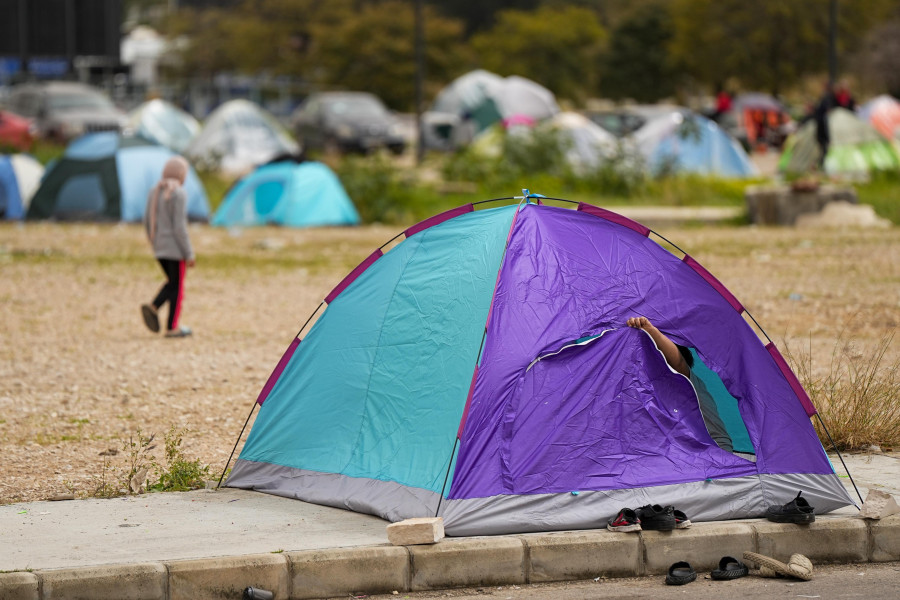

For many people in Lebanon, being uprooted from home is no longer an exceptional event. Forced displacement has become a recurring, seemingly inevitable, condition of life. Since the war with Israel escalated in March 2026, more than 1.3 million people have had to flee their homes, and over 3,300 have been killed. Families and whole communities are trapped in a painful loop: War breaks out, homes are destroyed, a fragile ceasefire takes hold, people try to return, and then violence erupts once more.
Today, a fragile ceasefire is in effect, and some displaced families have begun cautiously returning home. But for many, what followed the 2024 ceasefire is a stark reminder of the chronic risks. For 15 months, Israel repeatedly conducted deadly airstrikes in Lebanon that violated the truce. In early March 2026, Hezbollah responded by launching rockets into northern Israel. This experience has deepened skepticism about whether any ceasefire can truly hold.
For numerous Lebanese families, this violent cycle spans across generations. Many of those fleeing today carry memories and inherited trauma from the 1975–1990 civil war, the Israeli invasions in 1978 and 1982, the July 2006 war, and subsequent continuous clashes.
These cycles of violence are the result of a political order that has deliberately avoided pursuing accountability. For decades, those in charge have never had to answer for the consequences of their abuses and mismanagement, which has hollowed out the state and enabled a range of political and armed groups, including Hezbollah, to consolidate power.
Impunity was the choice made in order to put an end to the civil war. The 1991 amnesty law effectively exonerated those responsible for the violence and atrocities, allowing many of them to transition directly into official positions. Rather than serving as a temporary compromise, the amnesty entrenched a system in which justice was deferred indefinitely.
As Nour El Bejjani Noureddine, who leads ICTJ’s work in Lebanon and Yemen, puts it, this whole setup was “dead at the root.” From the beginning, it was built on ignoring the truth and refusing to hold anyone accountable. For many, that has meant old wounds could never fully heal.
This absence of accountability has shaped Lebanon’s political landscape, weakening state institutions and undermining their ability to govern effectively and provide security. In the absence of a strong and trusted state, political, sectarian, and armed actors, including Hezbollah, increasingly gained control over territory and communities as the sole provider of security, services, and protection. Following the civil war, many former militia leaders entered politics and took influential positions in government, while Hezbollah maintained both an armed and political role. Over time, reliance on these actors further diminished state institutions, blurring the line between state and non-state authority.
The result is a fragmented state, unable to assert sovereignty, protect its citizens, or uphold their rights. Lebanon’s legacy of impunity has not only denied justice to victims but also redistributed power to non-state actors.
But the crisis in Lebanon is not only the result of internal dysfunction. Broader regional dynamics also play a significant role, including Israel's wider strategic and military objectives and Hezbollah's position as an armed group backed by Iran.
The human toll of the Israeli attacks, beginning in 2024 and intensifying in 2026, has been staggering. Much of southern Lebanon has been rendered uninhabitable, with many villages demolished and entire communities displaced, raising urgent questions about whether reconstruction and return are even possible.
Caught between external pressures and internal failures, ordinary Lebanese people bear the brunt of both ongoing attacks and deepening political fragmentation. Even as negotiations continue under a fragile ceasefire, civilians keep paying the price for the violence and the state’s dysfunction.
To break this cycle, meaningful steps must be taken to end impunity and ensure that both domestic and external actors are held accountable for past and present violations. Internally, this requires confronting a system that has undermined state institutions, entrenched fragmented and sectarian forms of governance, and denied justice to victims. Externally, it requires credible measures to hold the Israeli state accountable for violations committed on Lebanese territory, and broader international efforts to prevent conflict. Without accountability on all sides, Lebanon will remain trapped in recurring violence, and impunity will continue to define political and everyday life.
__________
PHOTO: Displaced Lebanese families shelter in tents along Beirut’s waterfront following Israeli airstrikes in March 2026. (Mohamad Salman)

