104 results

Throughout 2023, ICTJ’s experts have offered their unique perspective on breaking news around the globe as part of the World Report. Their insightful commentaries have brought into focus the impact these events have on victims of human right violations as well as larger struggles for peace and justice. In this edition, we look back on the past year through the Expert’s Choice column.

The role of victim participation in international criminal proceedings, whether in international, hybrid, or national courts, has long been a matter of public deliberation among criminal justice practitioners and human rights activists. In the aftermath of mass atrocities and repression, the...

This comparative study examines strategies used by local actors to help operationalize reparations for victims of widespread human rights violations, while highlighting the synergies between these efforts and sustainable development. It is based on the fieldwork of ICTJ and its partne...

A women in colorful African dress holds a megaphone to her mouth

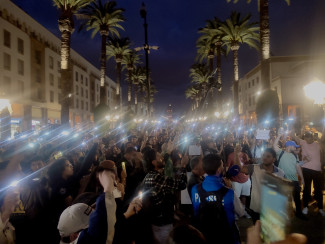
The death of eight women in childbirth at a hospital in Agadir this past August sent shockwaves through Morocco. The news crystallized national anger over deteriorating public services as well as persistent high unemployment and corruption. Years of frustration erupted into the streets as thousands of mostly young Moroccans gathered in cities and towns across the nation to protest and to demand accountability and institutional reform.

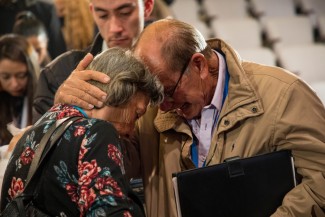
The photography exhibition “All Our Tears” weaves together the stories of victims from the wars in the Western Balkan region in the 1990s. It consists of photographs taken by four photographers in various locations in Kosovo, North Macedonia, and Serbia, and was part of a three-year project funded by the European Union that brought together civil society organizations and victims’ groups in Kosovo, North Macedonia, and Serbia, along with the international organizations ICTJ and PAX to develop meaningful, victim-led peacebuilding and reconciliation initiatives in the region.

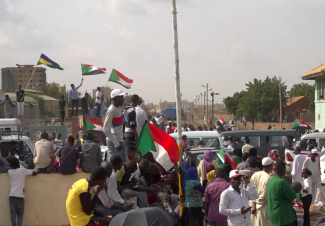
This April, Sudan marked a double anniversary: one of the 2019 revolution that toppled President Omar al Bashir’s decades-long repressive regime, the other of the 2023 outbreak of the ongoing civil war that has devastated the country. These contrasting occasions bring with them great hopes and deep pain. They also raise pressing questions: How long will Sudan have to suffer while the world’s attention seems turned the other way? How long will the voices of Sudanese who yearn for peace and justice continue to be sidelined?

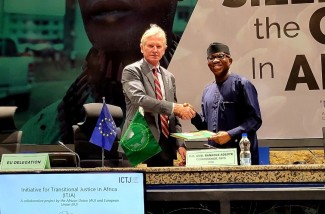
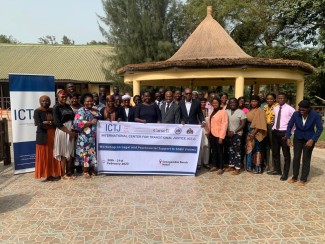
Abuja, June 19, 2025—The African Union (AU) and the European Union (EU), in collaboration with the Consortium implementing the Initiative for Transitional Justice in Africa (ITJA), led by the International Center for Transitional Justice (ICTJ) and co-implemented by the Africa Transitional Justice...

The African Union and the European Union have officially launched a three-year project to support AU member states as they incorporate the African Union Transitional Justice Policy and undertake transitional justice processes at the national level. The project, named the Initiative for Transitional Justice in Africa, will be implemented by a consortium of three organizations led by the International Center for Transitional Justice, the African Transitional Justice Legacy Fund, and the Centre for the Study of Violence and Reconciliation.

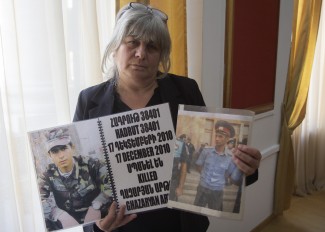
Five years ago, in August 2018, to mark his 100 days in office, Armenian Prime Minister Pashinyan addressed a large rally in Yerevan’s Republic Square to officially announce his government’s intentions to incorporate transitional justice mechanisms into Armenian post-revolution reform agenda. Since then, Armenia has been pursuing a range of transitional justice initiatives alongside other democratic reforms, and it has made some limited headway, despite setbacks and major challenges including renewed conflict with Azerbaijan.

Eight years into a brutal war, the people of Yemen are still suffering through the worst humanitarian crisis on earth. The war has resulted in over 370,000 deaths, more than half of which are linked to indirect causes such as hunger and preventable diseases. Around 4 million people have been...

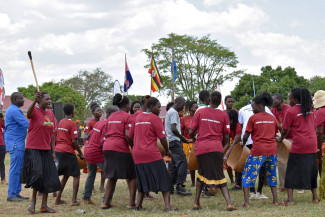
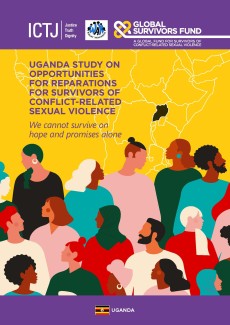
This report presents findings from a study conducted by ICTJ, the Women’s Advocacy Network, and the Global Survivors Fund to assess the reparative justice needs of victims of conflict-related sexual violence (CRSV) in Uganda. The study is based on interviews and focus group discussion...

graphically designed report cover

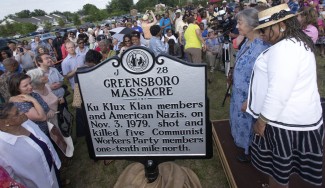
At a time when truth-seeking and reparations initiatives are taking hold across the United States, this report offers reflections from various civil society-led truth-seeking processes. Drawing on case studies from the United States, Colombia, Scotland, and West Papua, the report iden...

People gather around a plaque marking the Greenboro Massacre outside during an inaugural ceremony

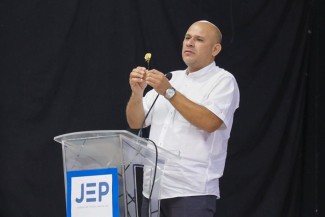
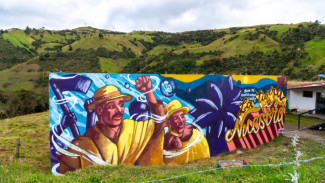
To commemorate the 20th anniversary of the Justice and Peace Law—which created Colombia's first transitional justice system—media outlet Verdad Abierta, the Friedrich Ebert Stiftung, and ICTJ partnered to produce an investigative four-part series in Spanish that critically assesses its legacy. ICTJ has now translated the first two installments into English.

This year, Colombia commemorates the 20th anniversary of Law 975, which established the country’s first transitional justice process, called Justicia y Paz (or Justice and Peace). With this anniversary top on mind, and as the current government engages with eight of the remaining armed groups in pursuit of its “Total Peace” strategy, ICTJ recently teamed up with podcast producers Sillón Estudios to create a four-part series that delves into the peace process with the AUC and considers key lessons learned.

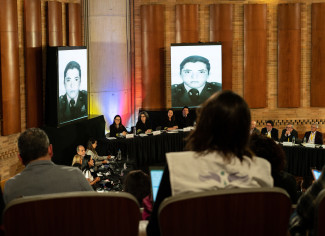
International Center for Transitional Justice The Final Peace Agreement signed in 2016 between the Revolutionary Armed Forces of Colombia (FARC-EP) guerrillas and the Colombian government created an ambitious and innovative transitional justice system called the Comprehensive System of Truth...

Colombia’s new president Gustavo Petro was elected to office on a progressive campaign to strengthen democracy, implement social reforms, and bring “total peace” to the country. His approach to peace encompasses political negotiations with all remaining insurgent groups and simultaneous dialogues with criminal organizations geared toward their voluntary submission to justice in exchange for punitive leniency. But eight months into his administration, Petro’s efforts to deliver on his campaign promise are facing numerous challenges.

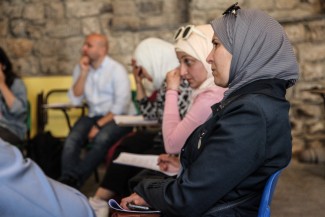
At the end of April in Syria, dozens of local residents in several cities and towns sat down together for the first time to finally speak about their experiences during the 14-year conflict that tore society apart and resulted in countless human rights violations. These community dialogues, organized by ICTJ in partnership with the Bridges of Truth project, provided a safe space for participants to share their stories and hardships, discuss their needs, and express their hopes for justice and reconciliation.

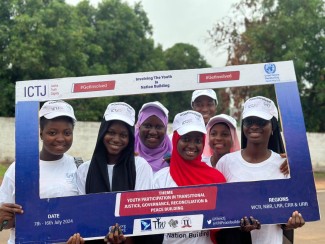
Almost eight years since The Gambia's former President Yahya Jammeh left power, the country is still seeking justice for the human rights abuses committed during his 22-year dictatorship. In May 2023, the Ministry of Justice released a plan to implement the recommendations of the country's Truth, Reconciliation and Reparations Commission. While the plan promises to deliver justice and repair harms, for it to have its intended impact, it requires broad public participation in the process, especially that of young people. With that in mind, ICTJ has partnered with the UN Peacebuilding Fund on a project to encourage Gambian youth to take a leading role in this process and the country's future.

“Despite laws already in place, the number of sexual and gender-based violence [SGBV] cases is still rising, including cases of rape, female genital mutilation, sexual assault, and harassment. This means there is the need for enforcement of such laws,” asserted Didier Gbery, ICTJ’s head of program for The Gambia, at the opening of a workshop this past March on increasing SGBV victims’ access to justice. The workshop was one of two that ICTJ organized in early 2023 to strengthen the capacity of stakeholders in The Gambia to defend SGBV victims and provide them with vital gender-sensitive support.

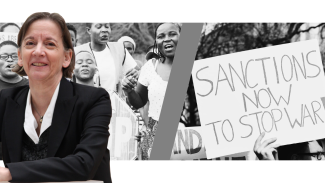
In recent years, states have increasingly imposed sanctions in relation to the commission of human rights violations, which has expanded their potential to advance transitional justice goals. In this context, ICTJ recently published a new report offering an analysis of international sanctions from a transitional justice perspective. In this interview, the report's author, ICTJ Senior Expert Elena Naughton, discusses how sanctions may advance or hinder efforts to deliver accountability, acknowledge and redress victims, and prevent recurrence in response to massive human rights abuses.

Fourteen members of Syrian civil society recently gathered for a five-day workshop on community facilitation and transitional justice organized by ICTJ and its partners in the Bridges of Truth project. The workshop marked a major step in the preparation for extensive community dialogues that will take place across Syria in the months ahead.

More than 20 years after the end of the Yugoslav Wars of the 1990s, Kosovo is still contending with unresolved ethnic tensions. Formerly an autonomous region of Serbia within the former Yugoslavia, Kosovo declared independence in 2008. Ethnic tensions were a root cause of the violent conflicts, during which an estimated 140,000 died and numerous atrocities were committed. ICTJ recently sat down with ICTJ's Anna Myriam Roccatello and Kelli Muddell to learn more about ICTJ's work and the present challenges to truth and justice in the country.

On August 8, Armenia and Azerbaijan signed the Joint Declaration on Future Relations. Hailed by some as a “historic peace deal,” it neither is a treaty nor ends the 37-year Nagorno-Karabakh conflict. Rather, it is a political framework that requires international support and attention.

Colombia currently faces a transformed, fragmented form of violence centered on territorial and social control rather than the traditional insurgency. This briefing paper argues that state security strategies remain misaligned, relying on outdated military approaches and metrics. To a...

Image of first page of the briefing paper "From Combat to Territorial Control"

Colombia currently faces a transformed, fragmented form of violence centered on territorial and social control rather than the traditional insurgency. This report argues that state security strategies remain misaligned, relying on outdated military approaches and metrics. To avoid lon...

An aerial view of a group of soldiers interacting with a large civilian crowd in a rural setting