136 results

Despite earlier efforts to envision a national transitional justice policy, Ukraine remains overly cautious about establishing one. This report provides a robust substantiation of why Ukraine should revive its holistic transitional justice policymaking. In the first part, it debunks t...

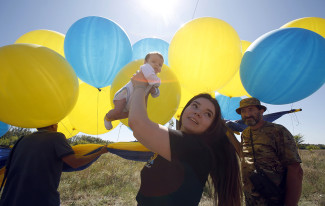
A women holds up an infant in the air on sunny day outdoors, surrounded by yellow and blue balloons

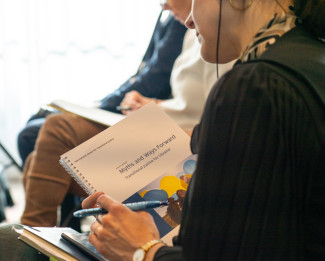
A new ICTJ report urges the revitalization of Ukraine’s holistic transitional justice policymaking. Debunking the most common myths about transitional justice in Ukraine, the report presents the key legal, policy, and victim-centered arguments in favor of advancing a comprehensive transitional justice framework.

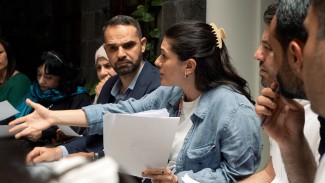
Fourteen members of Syrian civil society recently gathered for a five-day workshop on community facilitation and transitional justice organized by ICTJ and its partners in the Bridges of Truth project. The workshop marked a major step in the preparation for extensive community dialogues that will take place across Syria in the months ahead.

The outlet PassBlue recently interviewed ICTJ Executive Director Fernando Travesí-Sanz about the challenges and breakthroughs ICTJ has encountered while facilitating a victims-led path to transitional justice in post-Assad Syria. Travesí-Sanz compared the experience to the lessons learned from Colombia’s post-conflict transition, revealing the nuanced, fragile nature of both retroactive justice and long-term peacebuilding.

Throughout 2025, ICTJ’s experts offered thoughtful analysis on conflicts and major political developments in more than 10 countries as part of the World Report newsletter. Their insightful commentaries shed light on the obstacles that victims, civil society, and their partners must navigate as they pursue sustainable peace and justice. In this edition, we look back on the past year through the Expert’s Choice column.

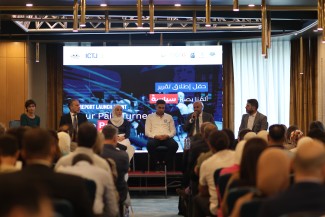
ICTJ and its partners in the Bridges of Truth project presented in Damascus the findings from their recent report on the first community dialogues held in Syria since the fall of the al-Assad regime in December 2024. On October 7, victims and family members, civil society actors, representatives from the country’s nascent transitional justice commissions, government officials, and international partners gathered to reflect on the lessons learned from the dialogues and the path forward for truth, justice, and accountability in Syria.

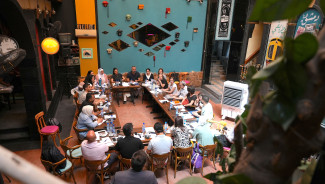
ICTJ and its partners in the Bridges of Truth project hosted an event in Damascus on October 7 to present findings from their recent report on the community dialogues held in April in Syria and to commemorate the project’s eighth anniversary.

On August 8, Armenia and Azerbaijan signed the Joint Declaration on Future Relations. Hailed by some as a “historic peace deal,” it neither is a treaty nor ends the 37-year Nagorno-Karabakh conflict. Rather, it is a political framework that requires international support and attention.

The numerous atrocities committed by Russia in Ukraine have been part of the former's aggression since its initial invasion of the Crimea and Donbas regions in 2014, though they have skyrocketed in number and severity since the full-scale invasion in 2022. Among these crimes are enforced disappearances, which serve as the means by which the Kremlin more broadly intends to subjugate Ukrainians and eliminate any traces of the Ukrainian national identity.

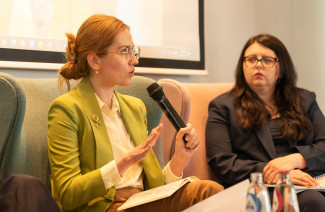
ICTJ, in collaboration with the Dutch Ministry of Foreign Affairs, recently convened the first international dialogue in Geneva in support of Syria’s two new justice commissions. From July 10 to 11, members of the National Commissions for Transitional Justice and for the Missing joined representatives of Syrian victim groups and experts and practitioners from around the world to discuss the present opportunities and challenges for peace and justice in Syria and how best to support the nascent institutions in fulfilling their mandates and advancing acknowledgment, truth, accountability, and repair.