



609 results

This report describes the Supreme Iraqi Criminal Tribunal. It discusses the court's establishment and organization, jurisdiction, individual criminal responsibility, rules of procedure and evidence, and general principles of criminal law. It examines, in depth, the guidelines and fram...

Guatemalan lawyers for victims in the case against former dictator Efraín Ríos Mont filed a petition before the Inter-American Commission on Human Rights to condemn the state of Guatemala for the impunity for crimes of genocide and crimes against humanity committed against the Ixil people.

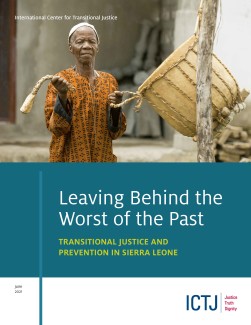
This study analyzes how transitional justice in Sierra Leone has contributed to prevention by responding to the grievances of those harmed by violations, reducing exclusion, addressing through institutional reforms the causes of past violence, and catalyzing long-term change. While tr...

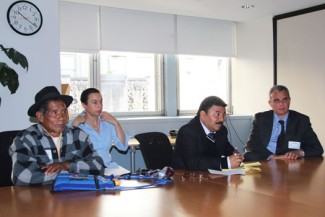
The three conference organizers stressed the importance of bringing the stakeholders of victim participation in the ECCC together to encourage a dialogue to identify and address the various opportunities and challenges presented by victim participation, particularly as Civil Parties, ...

For many people in Lebanon, being uprooted from home is no longer an exceptional event. In this Expert’s Choice, ICTJ's Firas BouZeineddine draws a connection between the dire situation many Lebanese are facing and the culture of impunity that prevails in the country. In particular, he calls on domestic and external actors to be held accountable for past and present violations.

For decades, Lebanese governments have made only partial and ineffective attempts to hold powerful individuals, groups, and foreign states accountable for violations committed on Lebanese soil, including against civilians. The consequences of their failure to act – for victims and Lebanese society – are grave. ICTJ's new report looks at the culture of impunity for serious violations of human rights continues to thrive in Lebanon.

In some contexts, the global community has resorted to international tribunals to prosecute the most serious past crimes, such as war crimes, crimes against of humanity, and genocide. While these international efforts contributed significantly to international justice, they were ...

This case study reviews and analyzes the deployment of international judges and prosecutors in Kosovo. It is part of a series providing information on hybrid courts' policy and practical issues. Although the Kosovo system of international judges and prosecutors has made significant st...

As subscribers, you enjoy timely commentary on what’s happening in transitional justice around the world written by one of our experts exclusively for our monthly World Report newsletter. In this month’s edition, we bid farewell to 2019 by looking back on the experts’ choices of the past year.

The study of macro-criminality is critically important to transitional justice and specifically to efforts to pursue accountability for large-scale, systematic human rights violations. To help enliven debates concerning macro-criminality and broaden access to them, ICTJ has translated into Spanish for the first time ever the seminal essay "Can Politics Be Criminalized?" written by German criminologist Herbert Jäger.