


179 results

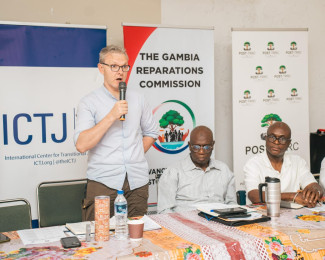
The establishment of the Reparations Commission in April 2025 and the recent appointment of British barrister Martin Hackett in April 2026 as The Gambia’s first special prosecutor represent crucial and long-awaited steps in the country’s transitional justice process. But to succeed, both require sustained public, political, and financial support.

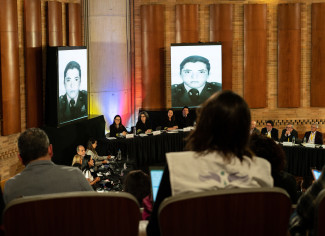
In an interview first published in "El Espectador," ICTJ’s María Camila Moreno discusses the first rulings of Colombia’s Special Jurisdiction for Peace, the state’s obligations to implement them, and why restorative justice is vital to lasting peace.

The AU–EU 2025 Experts’ Seminar on Transitional Justice convened African and European practitioners to advance reparations as a central pillar of transitional justice. Discussions highlighted legal obligations, victim-centered and transformative approaches, and persistent challenges i...

Cover featuring an abstract design for the report "Approaches to Reparations from Africa and Europe: The AU–EU Experts’ Seminar on Transitional Justice, Abuja, Nigeria, June 2025"

Colombia currently faces a transformed, fragmented form of violence centered on territorial and social control rather than the traditional insurgency. This briefing paper argues that state security strategies remain misaligned, relying on outdated military approaches and metrics. To a...

Image of first page of the briefing paper "From Combat to Territorial Control"

Colombia currently faces a transformed, fragmented form of violence centered on territorial and social control rather than the traditional insurgency. This report argues that state security strategies remain misaligned, relying on outdated military approaches and metrics. To avoid lon...

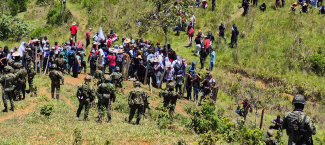
An aerial view of a group of soldiers interacting with a large civilian crowd in a rural setting

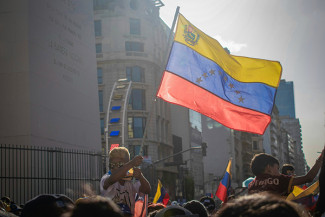
On February 19, 2026, Venezuela’s National Assembly passed the Amnesty Law for Democratic Coexistence, which seeks to extinguish criminal liability for certain acts committed in the country over the past 26 years. While the law has sparked debate, it undeniably represents a significant development in the country's political landscape.

Throughout 2025, ICTJ’s experts offered thoughtful analysis on conflicts and major political developments in more than 10 countries as part of the World Report newsletter. Their insightful commentaries shed light on the obstacles that victims, civil society, and their partners must navigate as they pursue sustainable peace and justice. In this edition, we look back on the past year through the Expert’s Choice column.

The death of eight women in childbirth at a hospital in Agadir this past August sent shockwaves through Morocco. The news crystallized national anger over deteriorating public services as well as persistent high unemployment and corruption. Years of frustration erupted into the streets as thousands of mostly young Moroccans gathered in cities and towns across the nation to protest and to demand accountability and institutional reform.

This report assesses the gender sensitivity of the African Union Transitional Justice Policy (AUTJP). Drawing on continental practice and scholarship, it identifies opportunities for AU member states, civil society, and donors to strengthen the policy’s implementation and its responsi...

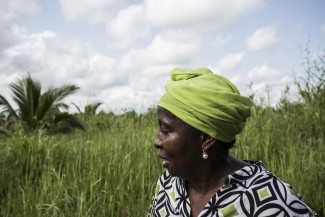
A woman stands in the profile position in a field of green plants on a sunny day with a clear blue sky

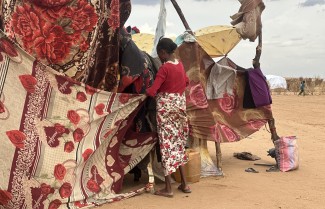
Despite the enormous challenges, Sudanese civil society and other stakeholders are prioritizing transitional justice, acknowledging the need to address past injustices to end the cycle of conflict in their country. ICTJ continues to support them as they envision and design victim-centered, gender-sensitive, and inclusive strategies. Leading these efforts is ICTJ's Ilaria Martorelli. In this interview, she discusses the prospects for lasting peace, accountability, and repair in Sudan.