


39 results

Throughout 2025, ICTJ’s experts offered thoughtful analysis on conflicts and major political developments in more than 10 countries as part of the World Report newsletter. Their insightful commentaries shed light on the obstacles that victims, civil society, and their partners must navigate as they pursue sustainable peace and justice. In this edition, we look back on the past year through the Expert’s Choice column.

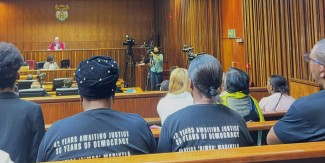
On April 14, 2025, the Johannesburg High Court handed down a landmark judgment. From his bench in courtroom 4D, Judge Dario Dosio dismissed the defense team’s objections to the inclusion of murder and apartheid as crimes against humanity charges in the indictment against two individuals accused of a deadly 1982 attack on anti-apartheid student activists. In so doing, the court cleared the way for crimes against humanity charges to be pursued in a South African domestic court for the first time. It also opened the door to the first ever prosecution of apartheid as a crime against humanity anywhere in the world.

ICTJ is pleased to announce the winners of its “Overseas” writing contest. In it, young people originally from or currently residing in Lebanon, Libya, or Tunisia who have left their home countries for political or socioeconomic reasons were asked to share their personal experiences of migration in the form of a short, written testimony.

ICTJ is pleased to announce the “Overseas: Writing Contest,” an open call for young migrants originally from or currently residing in Lebanon, Libya, or Tunisia to share their personal experiences of migration in the form of a short, written testimony.

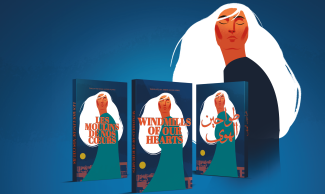
The International Center for Transitional Justice (ICTJ) and the Committee of the Families of the Kidnapped and Disappeared in Lebanon (CFKDL) will release Windmills of Our Hearts, a new book of short stories by 15 women relatives of missing and forcibly disappeared persons in Lebanon. On June 1, ICTJ and CFKDL will host a public launch and book signing event at Dar el Wardieh in Hamra, Beirut.

For many years now, the International Center for Transitional Justice and other organizations have supported young activists and artists as they harness the power of art, culture, and new media to advance truth, justice, reform, and redress, not only where they live, but across borders and in collaboration with others. This innovative and inspiring work offers lessons about how to increase civic engagement and help societies know the truth about their country’s past and actively shape the national narrative.

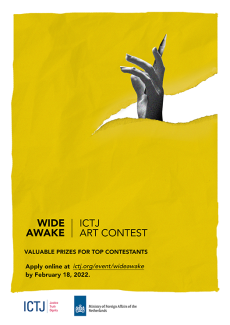
New York, January 18, 2022— The International Center for Transitional Justice (ICTJ) is pleased to announce the “Wide Awake Art Contest,” an open call to Lebanese and Tunisian artists as well as artists living in Lebanon or Tunisia to explore the theme “the Sound of Dissent.” The contest will showcase works by those who are documenting and memorializing their communities’ stories in times of instability, resistance, and change.

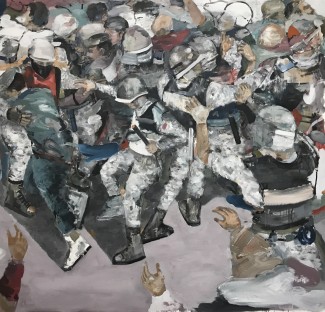
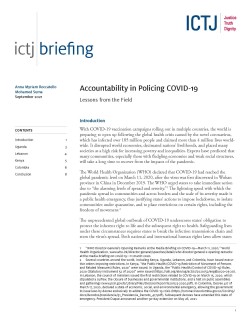
The global COVID-19 pandemic forced many countries to impose emergency measures, such as curfews and community lockdowns, to stem the spread of the virus. To enforce these measures, some societies have given regular police forces increased power to enforce the measures, while others h...

As part of its ongoing support of the Committee of the Families of the Kidnapped and Disappeared in Lebanon, ICTJ organized a three-day virtual workshop on transitional justice for university students on July 12-14, 2021. The students all served as volunteers on a project to establish an archive of the committee’s work and activism over the past four decades and participated in a previous workshop in February 2020 that introduced them to transitional justice concepts.

On February 4, 2021, the prominent activist, intellectual, writer, and filmmaker Lokman Slim joined the long list of victims of violence and impunity in Lebanon. The courageous human rights and political activist was found shot to death in his car in southern Lebanon.