420 results

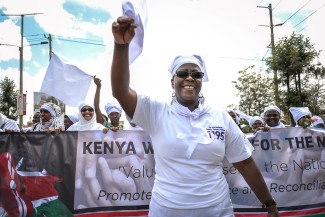
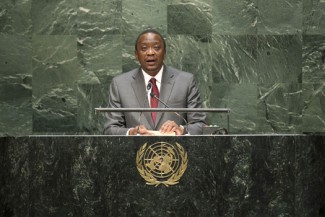
In this op/ed, the head of ICTJ's Kenya Program, Christopher Gitari, argues that President Kenyatta's recent apology to victims—though commendable—must be supported by solid reforms and initiatives for rebuilding the lives of those who have suffered the most.

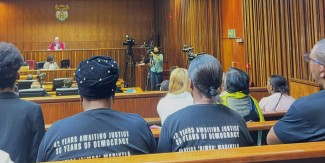
On April 14, 2025, the Johannesburg High Court handed down a landmark judgment. From his bench in courtroom 4D, Judge Dario Dosio dismissed the defense team’s objections to the inclusion of murder and apartheid as crimes against humanity charges in the indictment against two individuals accused of a deadly 1982 attack on anti-apartheid student activists. In so doing, the court cleared the way for crimes against humanity charges to be pursued in a South African domestic court for the first time. It also opened the door to the first ever prosecution of apartheid as a crime against humanity anywhere in the world.

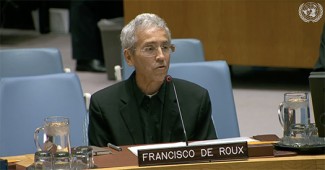
The United Nations Security Council has considered transitional justice on several occasions in the past and included many of its components in country-specific resolutions, and also stressed the links between transitional justice and the other items on its thematic agenda including women, peace and security, and children and armed conflict, and it has made explicit reference to transitional justice as a key part of efforts to sustain peace. Yet, on February 13, the Security Council held its first open debate focusing solely on transitional justice.

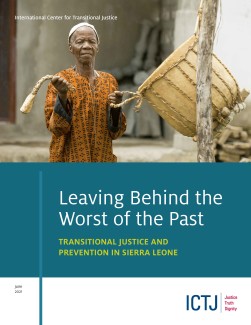
This study analyzes how transitional justice in Sierra Leone has contributed to prevention by responding to the grievances of those harmed by violations, reducing exclusion, addressing through institutional reforms the causes of past violence, and catalyzing long-term change. While tr...

On November 12, 2018, Lebanon finally passed the long-awaited, landmark Law for Missing and Forcibly Disappeared Persons in Lebanon. This breakthrough development is a result of the steadfast commitment of mobilized families and years of joint advocacy efforts, lobbying, and initiatives by local and international organizations aimed at advancing the families’ cause.

ICTJ held a two-day workshop on transitional justice for a group of university students in Beirut on February 14 and 15 as part of its ongoing support to the Committee of the Families of the Kidnapped and Disappeared in Lebanon. The students are currently serving as volunteers on a project to create an archive of the committee’s decades-long struggle and activism.

For decades, Lebanese governments have made only partial and ineffective attempts to hold powerful individuals, groups, and foreign states accountable for violations committed on Lebanese soil, including against civilians. The consequences of their failure to act – for victims and Lebanese society – are grave. ICTJ's new report looks at the culture of impunity for serious violations of human rights continues to thrive in Lebanon.

Reparations play a unique role within the transitional justice framework in providing justice for victims.

As Kenya continues to address its 2007-08 postelection violence, greater emphasis should be placed on victims’ reparative justice demands, according to a new ICTJ report. The report, “To Live as Other Kenyans Do”: A Study of the Reparative Demands of Kenyan Victims of Human Rights Violations, is a...

This paper documents the opinions of victims of human rights violations in Kenya about the country’s unfolding transitional justice process. The first section gives background into the human rights violations; the second section presents victims ideas about reparative justice. The rep...