9 results

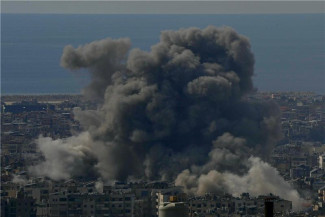
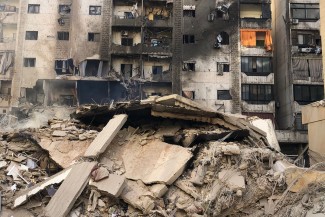
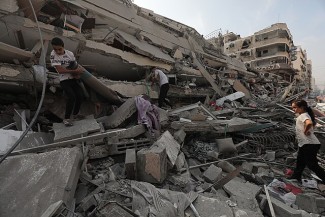
Recent Israeli strikes in Beirut and other populated areas in Lebanon, among the conflict's most intense so far, have destroyed critical infrastructure and devastated civilian communities. ICTJ stands unequivocally with the Lebanese people and all victims across the region and calls for an immediate end to all attacks on and threats to civilian communities and infrastructure.

ICTJ is watching with grave concern the unfolding war launched by the United States and Israel against Iran and its devastating ripple effects across the wider region. Over a month into the conflict, the human cost is staggering. We at ICTJ reaffirm the international principles that govern our shared world and stand unequivocally with all victims across the region.

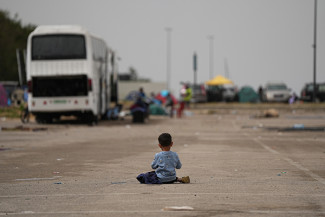
The ongoing war in the Middle East is not an isolated event; it represents a 75-year cycle of violence marked by historical grievances, geopolitical struggles, and humanitarian crises. In the latest episode of this tragic story, Lebanon has become the newest battlefield. So far, the conflict has caused widespread destruction, killed or injured thousands, and displaced over a million in Lebanon. The country now faces many daunting questions about reconstruction, reparations for victims, and the type of society that will emerge in the war’s aftermath.

Throughout 2023, ICTJ’s experts have offered their unique perspective on breaking news around the globe as part of the World Report. Their insightful commentaries have brought into focus the impact these events have on victims of human right violations as well as larger struggles for peace and justice. In this edition, we look back on the past year through the Expert’s Choice column.

On October 15, the UN Secretary-General made two strong humanitarian appeals: for Hamas to release the hostages immediately and without conditions, and for Israel to allow humanitarian aid to enter into Gaza unimpeded so it can reach the civilians desperately in need of it. The UN Security Council has heard but not listened to his words, while governments with power to persuade the actors engaged in the hostilities to respect the rule of law have failed to do so. Yet, the moral imperative is clear and simple.

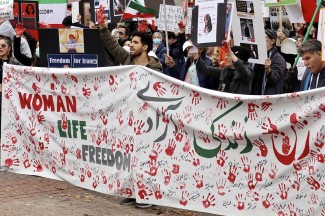
For 112 years, International Women’s Day has marked a time to celebrate the achievement of women and raise awareness about gender inequality. On March 8th, this year’s campaign of #EmbraceEquity will shine a spotlight on women’s contribution to various fields, while highlighting the challenges they face in other industries. Eliminating the barriers to women’s access to economic, political, and social resources is fundamental to creating and maintaining a stable democratic society. Often at the core of repressive regimes is a systematic effort to exercise control over the lives of women. Similarly, an erosion of the rights of women in “stable” democracies is often a harbinger of a broader attack on the rights of citizens.

On February 6, 2022, President Kaies Saied announced that he would dissolve Tunisia’s Supreme Judicial Council. While his supporters welcomed the declaration with satisfaction, many more across broad segments of society greeted it with outrage and resentment. That the president made this unilateral announcement on the premises of the Ministry of Interior—responsible for public security—stung all the more, as if to send a message that he would not hesitate to use executive power to counter perceived disobedience, judicial or otherwise.

Hailed as one of the only success stories to emerge out of the Arab Spring, Tunisia is now facing a significant challenge to its democratic progress. On July 25, Tunisia’s president, Kais Saied, enacted Article 80 of the Tunisia Constitution giving him emergency powers to protect the country from imminent threats. He then used these powers to suspend parliament, lift parliamentary immunity, and fire the prime minister as well as the ministers of justice and defense.

Ten years have passed since Tunisians took the streets to demand “Employment, Freedom, and National Dignity.” The revolution’s loud, courageous voice against corruption, extreme inequality, and repression echoed around the globe and inspired the “Arab Spring.” Today, Tunisians are still proud of their revolution. However, they continue to strive for goals, yet unattained, that the political class does not even seem to understand. It was thus not surprising to see large protests on the 10th anniversary, demanding concrete action and new public policies to advance social justice and better integrate marginalized regions and populations.