28 results

Long before ICTJ existed, societies everywhere wrestled with the justice-related dilemmas caused by violent conflict, and victims, communities, and courageous leaders found answers of their own. What was missing was a place where people who took part in those different experiences could meet, share knowledge and lessons, and build a community to respond together to the evolving challenges to justice and peace. In 2001, ICTJ was created to be that place and to catalyze a collective effort to address massive human rights violations and build a peaceful, inclusive, and just future.

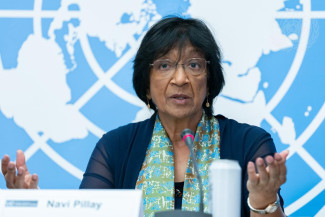
ICTJ welcomes the recognition of Navi Pillay as the 2026 Nobel Peace Prize Laureate and expresses its deep appreciation for her lifelong commitment to human rights, international law, and justice for victims of international crimes.

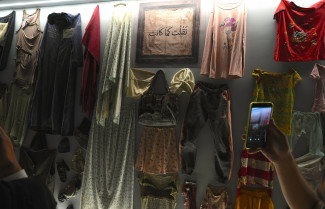
On August 30, the International Day of the Victims of Enforced Disappearances, I sat beside the president of Syria’s National Commission for Missing Persons at its headquarters in Damascus for a historic moment: the launch of a platform through which families will be able to report their missing loved ones. For Syrian families, August 30 has long been a day to remember those they lost to the unknown and renew their demand for truth. This year, marking it inside a Syrian institution created to search for them had a very different significance.

Throughout 2025, ICTJ’s experts offered thoughtful analysis on conflicts and major political developments in more than 10 countries as part of the World Report newsletter. Their insightful commentaries shed light on the obstacles that victims, civil society, and their partners must navigate as they pursue sustainable peace and justice. In this edition, we look back on the past year through the Expert’s Choice column.

On November 20 — on the 80th anniversary of the opening of the main Nuremberg trial, which prosecuted Nazi leadership for aggression and mass atrocities of World War II — details of the allegedly proposed new “peace” plan for Ukraine emerged. The initiative has surfaced one of the Kremlin’s recurrent demands: full amnesty for wartime atrocities — the very acts Nuremberg sought to punish and prevent.

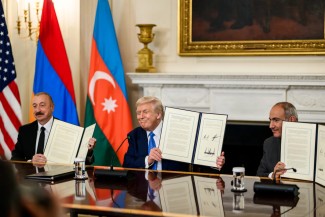
On August 8, Armenia and Azerbaijan signed the Joint Declaration on Future Relations. Hailed by some as a “historic peace deal,” it neither is a treaty nor ends the 37-year Nagorno-Karabakh conflict. Rather, it is a political framework that requires international support and attention.

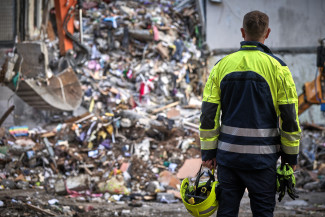
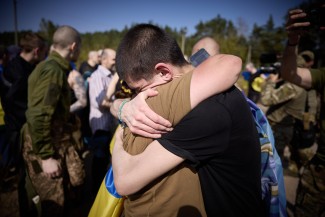
The numerous atrocities committed by Russia in Ukraine have been part of the former's aggression since its initial invasion of the Crimea and Donbas regions in 2014, though they have skyrocketed in number and severity since the full-scale invasion in 2022. Among these crimes are enforced disappearances, which serve as the means by which the Kremlin more broadly intends to subjugate Ukrainians and eliminate any traces of the Ukrainian national identity.

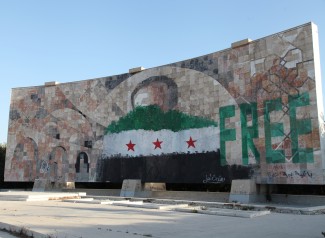
Across Syria today, we continue to witness human rights violations and abuses that run counter to the very principles upon which the revolution was built. In particular, recent violence in the coast and Sweida has deepened the sense of fear and mistrust already felt by many communities. Meanwhile, Syria's new transitional justice commissions have been working hard to lay the foundations of their mandates. Now, at this critical juncture, they must show that they are ready to lead and first and foremost to serve victims.

ICTJ welcomes the formation of two new independent institutions in Syria: the National Commission for Transitional Justice and the National Commission for the Missing. Established by presidential decree, these commissions represent a historic step forward in acknowledging the demands of victims and their families and formally responding to the widespread violations committed in Syria over the last decades.

Since long before Russia’s full-scale invasion of Ukraine in 2022, Moscow has spread disinformation to justify its aggression, disguising their longstanding premises that Ukraine is, allegedly, not a sovereign nation, and its statehood is conditioned upon an alliance with Russia. Countering these narratives is not only valuable for Ukrainians, but also for buoying any democratic transformations in Russia and for establishing a more nuanced understanding of the history of Central and Eastern Europe.