

42 results

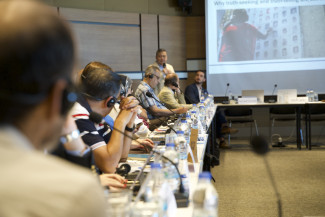
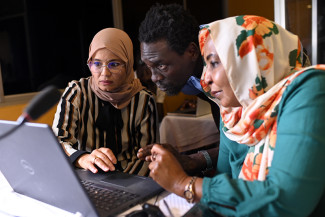
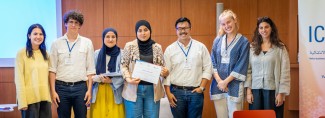
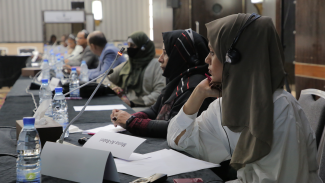
ICTJ recently convened human rights defenders, journalists, and lawyers from Libya, Sudan, Syria, Tunisia, and Yemen for a workshop on digital, open-source investigations. Held on November 3-8 in Kampala, Uganda, the course trained participants on open-source tools with a view to strengthening their work investigating, documenting, and monitoring human rights violations.

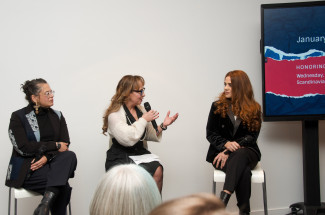
On January 28, 2026, ICTJ held its annual January for Justice Leaders benefit dinner in New York City, an event celebrating leaders advancing justice around the world. This edition also marked the beginning of ICTJ’s 25th anniversary year and served as an opportunity to look back on a quarter century spent standing alongside victims, civil society, and institutions in the pursuit of truth, accountability, and lasting peace after mass atrocities.

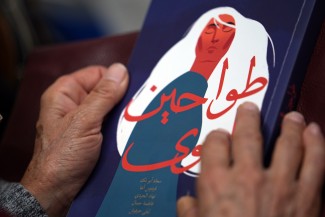
In an article first published in El Periodico, journalist Andrea López-Tomas paints an intimate portrait of the Lebanese women who against the odds continue to search for their missing loved ones half a century after the civil war began.

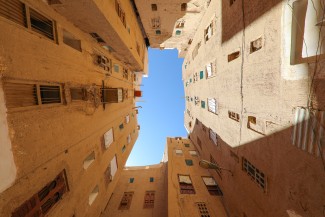
Since 2014, conflict in Yemen has caused hundreds of thousands of deaths, displaced millions, destroyed the economy, and exacerbated systemic marginalization, creating one of the world’s worst humanitarian catastrophes. Yet currently, transitional justice and reconciliation take up little space in the Yemeni political arena. In this context, ICTJ has released a new report that explores pathways to a just and sustainable peace in Yemen.

In this era of technological transformation, it is critically important to develop digital strategies for documenting human rights violations, analyzing data for accountability or reparations purposes, and safely advocating for human rights online. This is particularly true in contexts where victims, human rights actors, and members of the media live in fear. To this end, ICTJ has recently led trainings for human rights activists in conflict-affected countries on open-source investigation tools to help them do their work more effectively.

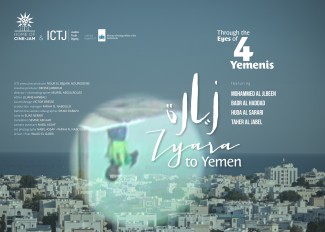
The Arabic word “Zyara” means “visit” in English. The Zyara documentary series takes an innovative, deeply personal approach to storytelling with a view to nurturing collective social and emotional healing. Through candid encounters, it paints poetic portraits of four Yemenis refugees living in Oman, including a human rights lawyer and activist, a restaurant worker, a martial arts champion, and a businessman. By telling their stories and celebrating the resilient spirit of the Yemeni people, the Zyara project seeks to raise awareness and preserve truth and memory.

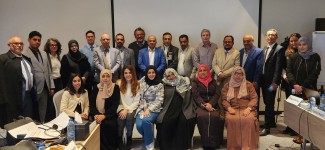
In 2016, the Yemeni National Commission to Investigate Alleged Violations to Human Rights began documenting violations committed since the 2011 uprising and during the subsequent brutal civil war, which continues today. To date, the commission has documented more than 23,000 human rights abuses and referred over 2,000 cases to Yemen’s Public Prosecutor for prosecution. However, no verdict has been issued in any of these cases. To help the commissioners and members of Yemen’s judiciary advance accountability, ICTJ organized a workshop for them on transitional justice mechanisms. However, to deliver a justice that meets all the reparative needs of victims, these efforts must be an integral part of a broader, multifaceted transitional justice process.

Even as the parties to the war in Yemen fail to extend the UN-brokered ceasefire, field monitors of the National Commission to Investigate Alleged Violations to Human Rights (NCIAVHR) continue to document and investigate human rights violations despite enormous challenges and serious risks to their...

In Lebanon, in the absence of an overarching curriculum, young people are growing up with scant knowledge of the country’s history. Young people want to understand the war so that they can address its legacy of violence and divisions and face the continuing violence and ever-present danger of...

For many years now, the International Center for Transitional Justice and other organizations have supported young activists and artists as they harness the power of art, culture, and new media to advance truth, justice, reform, and redress, not only where they live, but across borders and in collaboration with others. This innovative and inspiring work offers lessons about how to increase civic engagement and help societies know the truth about their country’s past and actively shape the national narrative.