1519 results

On December 12, ICTJ’s head of office for Colombia María Camila Moreno received the Alfonso López Michelsen Award for her dedicated work to advance peace and uphold international human rights and humanitarian law.

Tunis, March 22, 2022­—The International Center for Transitional Justice (ICTJ) will hold a series of cultural activities from March 21 through March 26, 2022, as part of its Wide Awake Art Contest. The contest, launched in January, invited Lebanese and Tunisian artists, as well as expat artists...

Sixteen practitioners participated in the Intensive Course on Transitional Justice and Peace Processes held in New York from March 5 to March 9, 2018. Participants included leaders in their respective fields, including human rights law, community justice and legal services, peacebuilding, education, and humanitarian affairs. Selected course presentations, led by ICTJ experts and other specialists in the field, delved into cases of current, recent, and paradigmatic peace processes and questions of justice within a comparative context.

Even as the parties to the war in Yemen fail to extend the UN-brokered ceasefire, field monitors of the National Commission to Investigate Alleged Violations to Human Rights (NCIAVHR) continue to document and investigate human rights violations despite enormous challenges and serious risks to their...

From February 22 to March 1, ICTJ held its annual retreat in Litchfield Hills, Connecticut. Staff members convened at the Wisdom House—an interfaith conference center that seeks to provide an environment conducive to introspection and teambuilding.

In January 2012, Guatemalan General Ríos Montt was formally charged with genocide for ordering massacres during the genocide in Guatemala. Only a year later, justice for victims has come under threat: Guatemalans and the international community are gravely concerned that the Constitutional Court could be pressured into granting amnesty. On Thursday, December 20, ICTJ joined colleagues and partners in the field to send a strong message to Guatemala: architects of atrocity must be held to account.

In response to the recent tragic explosion in Beirut on August 4, 2020, ICTJ and 14 prominent nongovernmental organizations recently issued a joint statement, demanding immediate action to promote accountability and a new non-sectarian political system in Lebanon. The likely preventable explosion represents another appalling consequence of a dysfunctional sectarian political system that has been in place since the end of the country’s 15-yearlong civil war in 1990 and that has afforded impunity to perpetrators of human rights abuses for decades and entrenched a culture of cronyism and corruption in the country.

In a legal brief submitted yesterday to Kenya’s High Court, the International Center for Transitional Justice (ICTJ) warns that striking down parts of the final report of the Truth, Justice and Reconciliation Commission of Kenya (TJRC) would amount to censorship and obstruct the right of victims to an effective remedy for past violations.

We are pleased to announce the launch of ICTJ's new Arabic website at ictj.org/ar. The website’s redesign comes as part of ICTJ’s effort to make our expertise and knowledge readily available to audiences in the Middle East, North Africa and other Arabic-speaking countries. David Tolbert, ICTJ...

On January 22, 2025, ICTJ launched its digital campaign, “Reparations Build Justice”, aiming to raise awareness about reparations and their vital contribution to sustainable peace and justice, particularly in countries grappling with legacies of mass atrocities.

ICTJ is deeply saddened by the death of Guatemalan Supreme Court Justice Doctor Cesar Barrientos Pellecer, this past March 2. Guatemala has lost one of its greatest crusaders against impunity in the country.

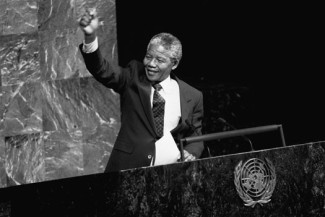
ICTJ mourns the passing today of Nelson Mandela, a luminary in the struggle for equal rights in South Africa and around the world. “Nelson Mandela’s courage in the face of oppression, his steadfast commitment to his principles and his magnanimous leadership during a difficult period of transition have long been an inspiration to me personally as well as to millions around the world. As we mourn our loss today, we celebrate a life of true greatness, dedicated to justice, without rancor or bitterness,” said David Tolbert, president of ICTJ.

ICTJ deeply mourns jurist and professor Theo van Boven, an eminence and true innovator in the field of international law, as well as a fearless defender of victims globally, who sadly passed away on May 9th. We extend our condolences to his family, friends, and colleagues.

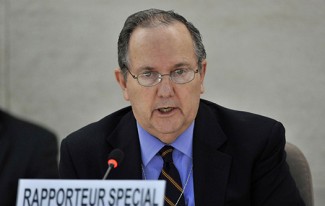
ICTJ has named the globally recognized jurist and human rights expert Juan E. Méndez as its delegate to the Colombian Selection Committee created by the 2016 peace agreement signed between the Colombian government and the Revolutionary Armed Forces of Colombia (FARC).

As part of its ongoing efforts to support Syrian civil society organizations seeking to end enforced disappearances in Syria, ICTJ organized a visit to the United States for members of two prominent family associations: Families for Freedom and the Caesar Families Association. The trip, which was planned in coordination with longtime partner Dawlaty, comes at a time when Syrian civil society and victims’ groups have been intensifying their calls for an international mechanism to uncover the fate of those who have gone missing in Syria since the start of the uprising in March 2011.

A new paper by ICTJ identifies several factors impeding Uganda's efforts to acknowledge violations and hold perpetrators accountable.

Tunisia continues to take steps to fulfill its commitments under its ground-breaking Transitional Justice Law and realize the goals of the 2011 revolution. But a rocky start to the country’s new truth commission and proposed reconciliation-cum-amnesty legislation could undermine these efforts, according to a new paper by ICTJ.

With hopes running high after the National League for Democracy’s landslide victory in November, a new ICTJ paper calls on the soon-to-be-established Burmese government to seriously consider taking steps to deal with Myanmar’s troubled past as a way to help end the cycle of violence and human rights violations in the conflict-torn country.

ICTJ joins more than 100 countries and over 900 experts for the Global Summit to End Sexual Violence in Conflict, held this week in London.

Civil society leaders, members of victims' groups and state officials throughout the Great Lakes region will convene in Kampala, Uganda next week at a conference hosted by ICTJ. Attendees will share their experiences working for redress in their communities and discuss what strategies have proven effective at the local level.

ICTJ is pleased to present the KickStarter campaign to launch the Iriba Center for Multimedia Heritage in Kigali, Rwanda. The Iriba Center, whose name means “the source,” is a project to make accessible an audiovisual history of Rwanda, to “keep the country’s history alive.”

Granito: How to Nail a Dictator, a recent documentary from Skylight Pictures, shows the international effort that has worked tirelessly to bring Montt to account for his crimes. ICTJ is pleased to announce that Granito will be aired on Thursday, June 28 at 10pm on the PBS series P.O.V.

Taking a Stand: the Evolution of Human Rights, a book by former ICTJ president Juan E. Méndez, provides an eye-opening firsthand account of the fight against violations of human rights and impunity. Taking a Stand offers tangible policy recommendations to be undertaken by the international community to uncover the atrocities of the past and prevent further abuse.

ICTJ is pleased to announce two films premiering at the Human Rights Watch International Film Festival (HRWIFF) in June. IMPUNITY (New York premiere) + Q&A with filmmakers What is the cost of truth for families immobilized by Colombia’s violent past? In 2005, Colombia started gathering evidence...

The latest ICTJ Program Report presents ICTJ’s work in Africa. In a deeply insightful interview, Suliman Baldo, director of ICTJ’s Africa program and one of the world’s leading experts on transitional justice in Africa, discusses transitional justice processes in Ivory Coast, Kenya, Democratic Republic of Congo, and Uganda.