



1519 results

“I hesitated a lot before giving this testimony. But after much debate I decided to. History is not to be written in the palaces." That’s how Bechir Laabidi opened testimony on day two of public hearings at Tunisia’s Truth and Dignity Commission, where Tunisians continued to write the history of the country from the victims’ perspective. This final day of testimony focused on torture perpetrated by the dictatorship, with eight victims sharing their stories into the early hours of the morning.

This paper evaluates the Dujail trial, the first of fourteen trials in Iraq against persons accused of crimes against humanity. Although the trial was potentially a new attempt at Iraqi justice, it fell short in many ways. Ultimately, it was rendered ineffective due to political inter...

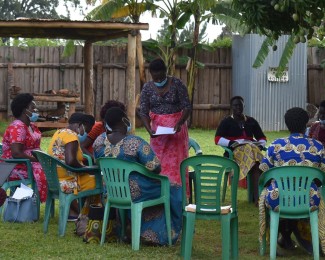
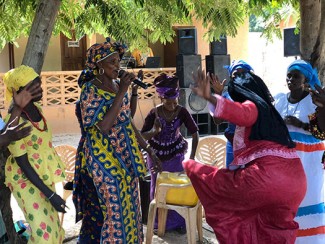
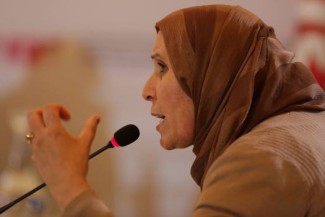
For decades, veiled women in Tunisia were deprived of their rights and discriminated against because of their religious beliefs. Now, they’re joining together to tell their stories and seek justice from the Tunisian government.

On the 39th anniversary of Tunisia's "Black Thursday," the Truth and Dignity Commission continues its public hearings.

ICTJ is pleased to announce the opening of an innovative site-specific theater performance in Beirut to mark the 39th anniversary of the Lebanese Civil War.

In a fast-changing world, ICTJ regularly reexamines and adapts its methodology to develop innovative solutions to emerging problems, advance its mission, and achieve justice for victims of human rights violations. In that spirit, ICTJ recently launched an exciting new website and newsletter design. After over a year of research, planning, surveying stakeholders, designing, and testing, we unveiled a site that better aligns with what ICTJ and transitional justice are today.

ICTJ talked to Kenyan youth leader Carine Umutoniwase to know how learning from a violent past inspires youth in countries recovering from conflict and repression to avoid past mistakes and to come up with solutions that contribute towards a more just and accountable society.

On September 14, the former Revolutionary Armed Forces of Colombia (FARC) publicly apologized to the victims of the kidnappings they perpetrated during the armed conflict. This unprecedented public declaration from a non-state armed group merits reflection from both the perspective of the transitional justice field as a whole and its implications for Colombia.

Afghanistan is a tragic example of how a country in transition can dramatically reverse course on the arduous path toward peace and democracy and return to an abyss of violence and repression at breakneck speed. In the span of a few short weeks, the Taliban regained control over the country. When they finally entered Kabul, the internationally backed Afghan government collapsed. Now in charge, the Taliban has lost no time in demonstrating their goal to re-impose the same extremist and oppressive rule, despite initial declarations affirming a commitment to peace and human rights.

ICTJ's Virginie Ladisch explores the consequences of social stigmatization and other problems facing children born of war in Uganda, Nigeria and beyond in this new op-ed.

Women face a double marginalization under authoritarian regimes and during and after violent conflicts. Nonetheless, reparations programs are rarely designed to address the needs of women victims. What Happened to the Women? Gender and Reparations for Human Rights Violations, arg...

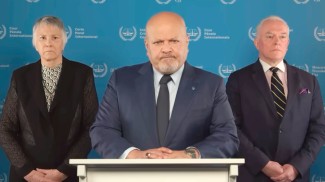
On February 27, 2026, the International Criminal Court concluded its confirmation of charges hearing in the case against former Philippines President Rodrigo Duterte, who stands accused of committing crimes against humanity. ICTJ Senior Expert Ruben Carranza, who is Filipino-American, reflects on this case in connection with his recent lecture on transitional justice and Duterte's war on drugs at Georgetown University.

What makes a public apology for human rights abuses meaningful? How best can a public apology recognize the dignity of victims, while paving the way for a more just and peaceful future? According to a new report released today by ICTJ, the best apologies clearly acknowledge responsibility for the violations, recognize the continuing pain of survivors and victims’ families, and are linked with efforts to compensate and assist victims materially and through other justice measures.

Background on the ICC's record in pursuing prosecutions as a response to massive human rights abuses and discusses hybrid court tribunals as a developing judicial strategy. ICTJ offers insight into trends for states to balance international and domestic pressures to combat impunity fo...

“Vetoes and excuses get in the way of what is right and just.” With those words, Amina Khoulani, Cofounder of Families for Freedom, spelled out the failings of the United Nations Security Council, as she described in lurid detail the harsh realities facing families of the disappeared in Syria. Actors with the power to stop the killing of detainees and to free those still imprisoned are forsaking their responsibilities.

As grassroots efforts to confront the legacy of racial injustice in the United States take hold from New Orleans to Maine and beyond, how can transitional justice experiences around the world inform their work? That was a major focus of a recent conference ICTJ co-convened, hosted by Kean University.

In the latest ICTJ podcast, Heidy Rombouts, Kenya project leader with the German development agency GIZ, discusses how understanding the links between development, security, and transitional justice will help inform and strengthen policies for implementing complementarity on the ground. [Download](/sites/default/files/Rombouts_ICTJ_Podcast_03052012.mp3) | Duration: 11:42mins | File size: 6.69MB

In the wake of the agreement between Colombia and FARC to form a truth commission, ICTJ's Fernando Travesí and Félix Reátegui discuss the role such a body should be expected to fulfill.

A newly adopted UN Security Council resolution calls on the Syrian government to cooperate in destroying its chemical weapons arsenal, stressing that “those responsible for any use of chemical weapons must be held accountable.” Yet, it does not provide a framework for pursuing accountability, in the short or long term. What role might transitional justice play in a post-conflict Syria? Should Syria rush to prosecute war criminals once the fighting draws to a close? These are some of the pressing questions explored in ICTJ’s newest briefing paper.

The African Union, the Kofi Annan Foundation and ICTJ opened a high-level conference examining the role of truth commissions in peace processes. The two-day conference, titled “Truth Commissions and Peace Processes in Africa,” has gathered senior staff from the African Union and member states as well as international and national experts to reflect on lessons learned from truth commissions that have emerged from peace processes in Africa and other continents.

Transitional justice is a response to systematic or widespread violations of human rights. It seeks recognition for victims and promotion of possibilities for peace, reconciliation and democracy. Transitional justice is not a special form of justice but justice adapted to societies tr...

Human rights violations as well as any official response to them affect women’s lives in distinct, profound, and often unseen and unspoken ways. For a society grappling with mass atrocities, it is crucial to shed light on these diverse experiences, if they are ever to be acknowledged and repaired. Space must therefore be created for women victims to share their experiences. Libya is one such country. To help raise the voices of women victims and human rights defenders there, ICTJ has been collaborating with diverse women-led civil society organizations since 2019, bringing them together and helping them build their capacities.

Sexual violence against men and boys in times of conflict or repression is alarmingly common— and takes a markedly consistent form across contexts in terms of how it affects victims and societies as a human rights violation that is taboo to talk about. It has been committed in all cul...

Sexual violence against men and boys is alarmingly common amidst conflict or repression, but these crimes are often mishandled. A new ICTJ report examines how transitional justice efforts in South Africa, Kenya, Cambodia, and beyond have responded to the needs of male victims of sexual violence. What lessons can be drawn from these approaches?

This report compares findings from two population-based surveys (in 2005 and 2007) in districts of northern Uganda most affected by 21 years of conflict, including the Acholi districts. The studies capture attitudes about peace, justice, and social reconstruction. Developing a deeper...