Don’t miss out on ICTJ's latest news. Subscribe to our newsletter.
Toward a Reparative Approach: Reflections for Municipal Reparations Efforts in the United States
In the United States, reparations efforts at the municipal level have demonstrated momentum, innovation, and progress in recent years. However, for many of these initiatives, how to make them sustainable and impactful remains a challenge. Drawing on domestic and international experience supporting reparations efforts, this report addresses common questions raised by advocates and takes a reflective step back to consider a reimagined approach that is reparative in and of itself.
Imagen
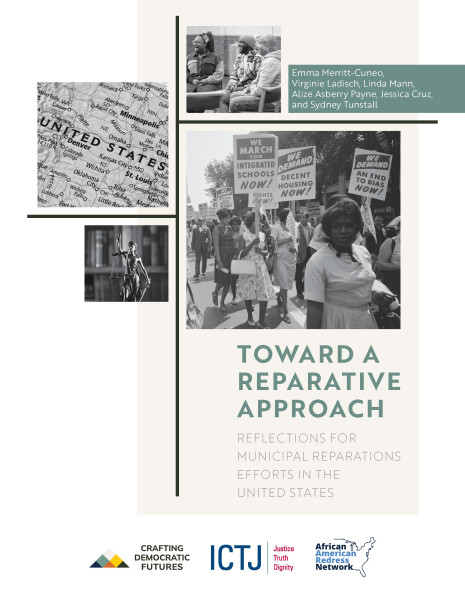
While the call for reparations for slavery in the United States goes back centuries, momentum for reparations and new approaches to deliver them has grown in the past few years at the state and municipal levels. With the proliferation of city- and county-level reparations initiatives, the path to repair in the United States is being built from the bottom up, as local governments can more nimbly respond to calls for redress. This progress has demonstrated to the nation that reparation for generations of harm is possible. Local governments across the country are replicating a similar approach to respond to calls for reparations. Within this common approach, local advocates and those tasked to develop reparations recommendations for municipal governments are being overwhelmed with similar challenges leading to stifling pressure and frustration rather than a sense of justice.
A collaboration among ICTJ, African American Redress Network, Washtenaw County Racial Equity Office, and the University of Michigan, this report is written for frontline reparations advocates and community leaders. It takes a step back to reflect on current reparations efforts across the country with an eye toward long-term sustainability and impact. Drawing on comparative domestic and international reparations efforts, the report reflects on what it means to seek repair, without doing additional harm, within a system of ongoing structural discrimination. It calls for a reimagined approach to increase reparative impact and sustainability. The report focuses on the major themes and dilemmas that have come up at different points in the process of advancing municipal reparations. The authors apply lessons from their experience supporting or directly participating in reparations initiatives around the world to provide accessible guidance and insights to address common questions and roadblocks as well as contribute to the already innovative discussion around reparations in the United States.