


28 results

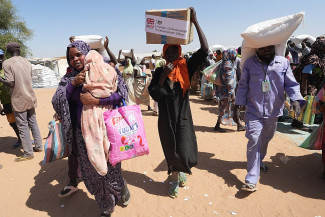
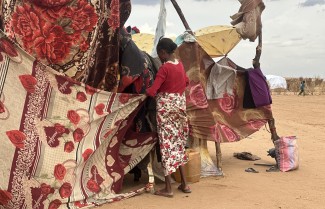
As the world marks the third anniversary of the brutal war in Sudan, it is a moment to reflect on a conflict that rarely receives the media attention it deserves and to consider the millions of Sudanese caught in cycles of violence.

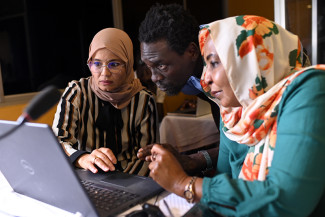
ICTJ recently convened human rights defenders, journalists, and lawyers from Libya, Sudan, Syria, Tunisia, and Yemen for a workshop on digital, open-source investigations. Held on November 3-8 in Kampala, Uganda, the course trained participants on open-source tools with a view to strengthening their work investigating, documenting, and monitoring human rights violations.

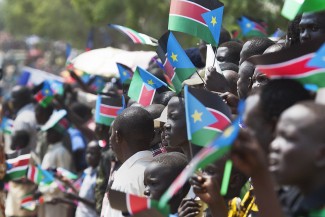
South Sudanese refugees and displaced persons currently comprise 40 percent of the country’s total population. Yet, these groups have been largely excluded from ongoing policy discussions related to South Sudan's transitional justice process in South Sudan. A new ICTJ report aims to amplify the perspectives and expectations of these groups and ensure they are included in the process's design and implementation.

This study aims to communicate the perspectives, expectations, and needs of South Sudanese displaced persons to relevant policymakers and thereby inform the ongoing transitional justice efforts emanating from South Sudan’s 2018 revitalized peace agreement. It also provides lessons lea...

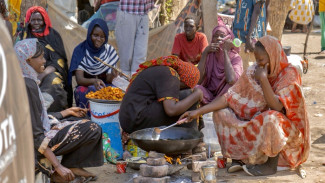
several women in colorful dresses crouch around an open fire pit, cooking food in a large pan.

Throughout 2025, ICTJ’s experts offered thoughtful analysis on conflicts and major political developments in more than 10 countries as part of the World Report newsletter. Their insightful commentaries shed light on the obstacles that victims, civil society, and their partners must navigate as they pursue sustainable peace and justice. In this edition, we look back on the past year through the Expert’s Choice column.

This report assesses the gender sensitivity of the African Union Transitional Justice Policy (AUTJP). Drawing on continental practice and scholarship, it identifies opportunities for AU member states, civil society, and donors to strengthen the policy’s implementation and its responsi...

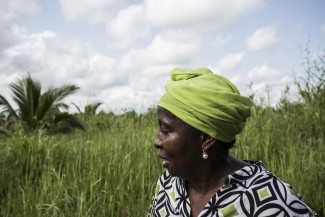
A woman stands in the profile position in a field of green plants on a sunny day with a clear blue sky

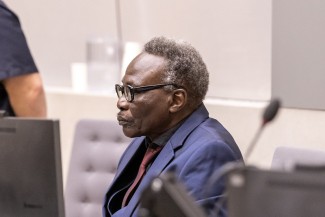
On October 6, the International Criminal Court (ICC) found former Janjaweed militia leader Ali Muhammad Ali Abd-Al-Rahman (also known as Ali Kushayb) guilty of 27 counts of crimes against humanity and war crimes committed in Darfur between August 2003 and March 2004. This landmark verdict counters cycles of impunity in Sudan and sends a powerful message that these crimes are not tolerated.

Despite the enormous challenges, Sudanese civil society and other stakeholders are prioritizing transitional justice, acknowledging the need to address past injustices to end the cycle of conflict in their country. ICTJ continues to support them as they envision and design victim-centered, gender-sensitive, and inclusive strategies. Leading these efforts is ICTJ's Ilaria Martorelli. In this interview, she discusses the prospects for lasting peace, accountability, and repair in Sudan.

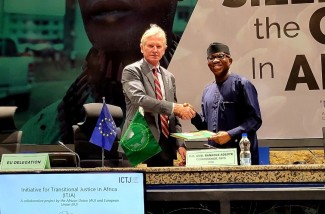
Abuja, June 19, 2025—The African Union (AU) and the European Union (EU), in collaboration with the Consortium implementing the Initiative for Transitional Justice in Africa (ITJA), led by the International Center for Transitional Justice (ICTJ) and co-implemented by the Africa Transitional Justice...

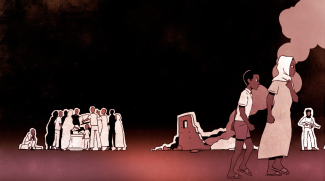
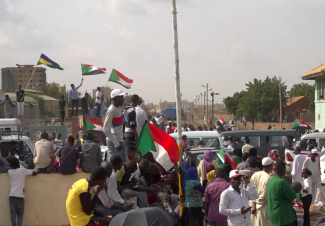
This April, Sudan marked a double anniversary: one of the 2019 revolution that toppled President Omar al Bashir’s decades-long repressive regime, the other of the 2023 outbreak of the ongoing civil war that has devastated the country. These contrasting occasions bring with them great hopes and deep pain. They also raise pressing questions: How long will Sudan have to suffer while the world’s attention seems turned the other way? How long will the voices of Sudanese who yearn for peace and justice continue to be sidelined?

South Sudan’s transition to democratic governance through a highly anticipated, first-ever post-independence general election has to wait once again for another two years. Despite this latest extension, the country has achieved notable milestones in its transitional justice process.

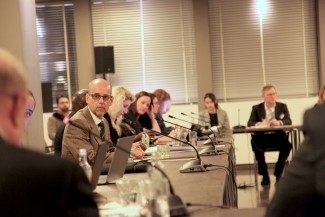
On December 2 to 6, 2024, the International Criminal Court’s (ICC) Assembly of States Parties—the court’s management oversight and legislative body—held its 23rd session in The Hague. As in previous years, ICTJ took an active part, and its experts joined many of the discussions sharing their knowledge and insight. ICTJ organized two side events, one focusing on Syrian victims and another on reparations for victims in Northern Uganda.

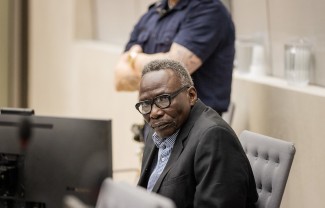
ICTJ accompanied more than 10 Sudanese victim stakeholders to the International Criminal Court (ICC) in The Hague to attend the closing statements in the case of The Prosecutor v. Ali Muhammad Ali Abd-Al-Rahman ("Ali Kushayb"). The statements took place on December 11 to 13. ICTJ supported the ICC in the selection of the stakeholders, who were chosen for their strong ties with affected communities.

Customary justice is the primary way in which most communities in South Sudan resolve disputes. Its ability, however, to deal with massive human rights violations is limited due to the complexity of intercommunal violence and a lack of clarity on its proper role. This report contends ...

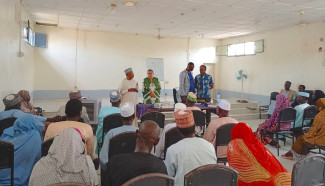
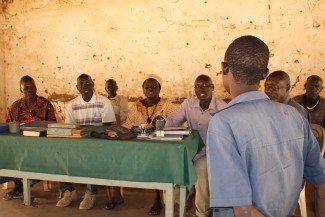
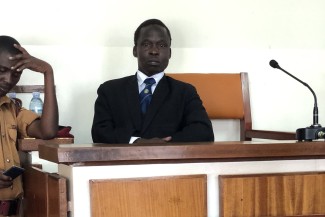
A man stands facing a table around which several men are seated.

In countries where state institutions have limited reach, customary and informal justice is often the most common way in which people resolve disputes and seek justice. Given its prominence, it is considered to be an important element of a people-centered approach to building peaceful, just, and inclusive societies. An understanding of the relationship between customary justice and transitional justice, however, remains underdeveloped. A new ICTJ report provides valuable empirical, qualitative research on the topic, in the context of South Sudan.

On August 13, 2024, the International Crimes Division of the High Court of Uganda delivered its long-awaited verdict in the case of Uganda versus Thomas Kwoyelo, a former commander and colonel in the rebel group the Lord’s Resistance Army. Mr. Kwoyelo was convicted on 44 counts of crimes against humanity, war crimes, and other serious crimes committed during the decades-long armed conflict in Northern Uganda between the LRA and the Ugandan government. This judgment represents a significant milestone in the pursuit of justice and accountability and a crucial step toward acknowledging the suffering of the victims of these horrific mass atrocities.

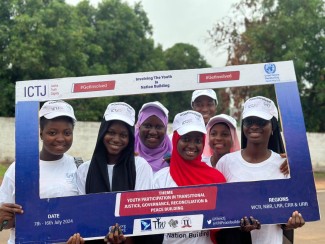
Almost eight years since The Gambia's former President Yahya Jammeh left power, the country is still seeking justice for the human rights abuses committed during his 22-year dictatorship. In May 2023, the Ministry of Justice released a plan to implement the recommendations of the country's Truth, Reconciliation and Reparations Commission. While the plan promises to deliver justice and repair harms, for it to have its intended impact, it requires broad public participation in the process, especially that of young people. With that in mind, ICTJ has partnered with the UN Peacebuilding Fund on a project to encourage Gambian youth to take a leading role in this process and the country's future.

Throughout 2023, ICTJ’s experts have offered their unique perspective on breaking news around the globe as part of the World Report. Their insightful commentaries have brought into focus the impact these events have on victims of human right violations as well as larger struggles for peace and justice. In this edition, we look back on the past year through the Expert’s Choice column.

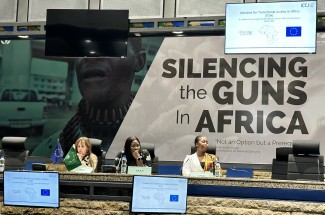
On October 25, the African Union (AU) and European Union officially launched their joint Initiative for Transitional Justice in Africa (ITJA) in Addis Ababa. The project will take place over a three-year period and will promote national transitional justice processes in Africa, in line with the AU Transitional Justice Policy and its roadmap. The ITJA has several unique features that, if embraced and advanced by all actors, have the potential to trailblaze a new and inspiring path to peace, justice, and sustainable development on the African continent.

The African Union and the European Union have officially launched a three-year project to support AU member states as they incorporate the African Union Transitional Justice Policy and undertake transitional justice processes at the national level. The project, named the Initiative for Transitional Justice in Africa, will be implemented by a consortium of three organizations led by the International Center for Transitional Justice, the African Transitional Justice Legacy Fund, and the Centre for the Study of Violence and Reconciliation.

In a fast-changing world, ICTJ regularly reexamines and adapts its methodology to develop innovative solutions to emerging problems, advance its mission, and achieve justice for victims of human rights violations. In that spirit, ICTJ recently launched an exciting new website and newsletter design. After over a year of research, planning, surveying stakeholders, designing, and testing, we unveiled a site that better aligns with what ICTJ and transitional justice are today.

ICTJ is more than two decades old. At the time it was established, many of those who contributed to transitions in Argentina, Chile, Guatemala, South Africa, and the former Yugoslavia saw the value of a specialized organization that could draw from diverse national experiences to prov...

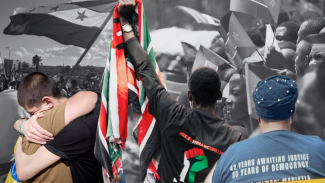
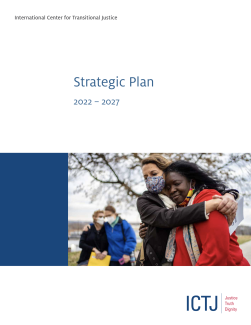
The cover of a report with the text, "2022-2027, Strategic Plan," with an image of people embracing underneath.

Throughout 2022, ICTJ’s experts weighed in on breaking news in more than 10 countries, offering incisive analyses of the political dynamics behind the coverage and the implications for justice, peace, and the rights of victims. In this December edition of the World Report, we look back at the year that was through our Expert’s Choice commentaries, bringing you all of our team’s valuable insights together in one place.

Nearly two years after the conflict erupted in Ethiopia’s Tigray Region in the north, the Ethiopian federal government and the Tigray People’s Liberation Front signed an African Union-brokered cessation of hostilities agreement on November 2, followed by an implementation deal 10 days later. The breakthrough agreement offers a glimmer of hope after a brutal war. It charts a path toward peace and lays the foundations for addressing the legacy of the serious human rights violations and preventing their recurrence by providing for the implementation of a transitional justice policy centered on accountability, truth seeking, redress for victims, and reconciliation and healing.

The recent move by the signatories to the Revitalized Agreement on the Resolution of Conflict in South Sudan (R-ARCSS) to extend the peace agreement’s life for another 24 months has not come as a surprise. While there have been some positive, though sporadic steps toward fulfilling the R-ARCSS, its...

The role of victim participation in international criminal proceedings, whether in international, hybrid, or national courts, has long been a matter of public deliberation among criminal justice practitioners and human rights activists. In the aftermath of mass atrocities and repression, the...

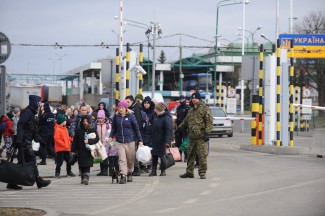
In the latest round of negotiations between Ukraine and Russia, the Turkish president called on both delegations to act responsibly and agree to a ceasefire. He reminded them of their historical mission to achieve a "just peace." While we may not know how and when this conflict will end, we already know some of what Ukrainian society will be grappling with in the near future. Significant portions of country’s civilian infrastructure have been destroyed. More than 4 million Ukrainians are now refugees; another 10 million are internally displaced; and a rising but still undetermined number have been killed, are missing, or are wounded. The real question is what does a just peace mean for Ukrainians.

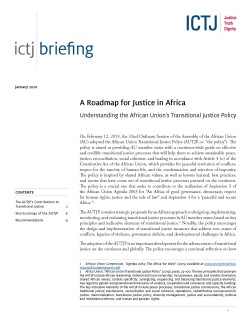
On February 12, 2019, the Assembly of the African Union adopted the African Union Transitional Justice Policy. The policy serves as a guide for member states on effective and credible transitional justice processes to achieve sustainable peace, justice, reconciliation, social cohesion...

PDF of the first page of the briefing paper "A Roadmap for Justice in Africa"