629 results

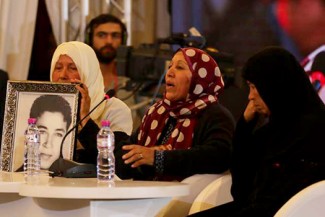
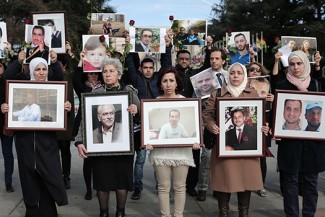
Beirut, June 23, 2020 — Almost a year and a half after passing Law 105 for the missing and disappeared, the Lebanese government has finally appointed the members of the National Commission for the Missing and Forcibly Disappeared. ICTJ welcomes this action, which is another step closer to uncovering the fate of thousands of victims. However, the appointment of the commissioners will be meaningless, unless the government demonstrates greater commitment to addressing the families’ right to the truth and takes the necessary action to create a commission that is credible and effective.

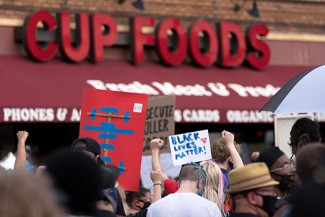
It happened again. George Floyd’s name is now added to the tragic list—already far too long—of other people of color whose lives have been cut short as a direct result of the United States’ long history of racism and white supremacy. We at ICTJ are outraged by the cruel and senseless murder of an unarmed Black man by police officers in Minneapolis, Minnesota. As we try to process this horrific act and grieve the tragic loss of another human life, we must also grapple with the hard truth that it is frankly unsurprising that this list of names continues to grow.

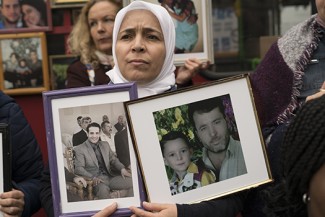
New York, May 29, 2020 — Time is of the essence for breaking the deadlock over the release of detainees, abductees, and the forcibly disappeared in Syria, says a policy paper released today by ICTJ and the New York University’s Center on International Cooperation (CIC). Coordinated action by the Syrian regime and other parties to the conflict, as well as the international community, must begin now, particularly as the spread of the coronavirus accelerates in Syria. The consequences of delay and a failure to act — for the detainees and their families — are likely to be calamitous.

In most cases, to be imprisoned in Syria is to disappear. Tens of thousands of people, if not more, have been unlawfully taken prisoner or held incommunicado in the context of the Syrian conflict. This policy paper examines the dark reality of detentions in Syria, its impact...

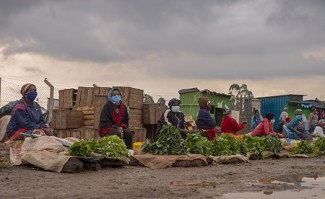
Sparing almost no corner of the world from its wrath, the COVID-19 pandemic has now spread to every country. In an effort to slow the contagion, governments in most countries have been taking drastic measures requiring all residents other than essential workers to confine themselves in their homes, and shutting down vast sectors of their economies. The impact has been crushing. COVID-19 has profoundly affected every country where ICTJ currently works: Armenia, Colombia, Cote d’Ivoire, Ethiopia, Gambia, Kenya, Lebanon, Libya, Sudan, Syria, Tunisia, and Uganda. We recently caught up with ICTJ’s heads of country programs to learn more about the impact the pandemic is having on transitional justice and society more broadly.

For the past few months, ICTJ, along with our partners at the Center on International Cooperation at New York University, has been working on a comprehensive new policy paper on the situation of the many thousands of Syrians detained somewhere in the country’s vast network of prisons. The depravity that goes on inside these detention sites is already so appalling that it would have been hard to imagine when we started the project that the situation for the prisoners could get any worse. And then the COVID-19 pandemic hit, upending all of our preconceptions, and our lives, in ways none of us ever expected.

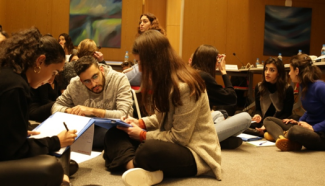
ICTJ held a two-day workshop on transitional justice for a group of university students in Beirut on February 14 and 15 as part of its ongoing support to the Committee of the Families of the Kidnapped and Disappeared in Lebanon. The students are currently serving as volunteers on a project to create an archive of the committee’s decades-long struggle and activism.

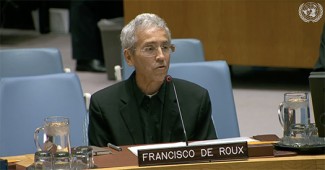
The United Nations Security Council has considered transitional justice on several occasions in the past and included many of its components in country-specific resolutions, and also stressed the links between transitional justice and the other items on its thematic agenda including women, peace and security, and children and armed conflict, and it has made explicit reference to transitional justice as a key part of efforts to sustain peace. Yet, on February 13, the Security Council held its first open debate focusing solely on transitional justice.

Building on its work in Tunisia since 2012, ICTJ met with representatives of youth-led civil society organizations and social movements and state institutions involved in pursuing accountability for Ben Ali-era corruption. This paper focuses on the strategies and i...

Youth activists in Tunisia have played a vital role in keeping corruption at the center of public debate since the country's revolution in 2011. Through decentralized, nationwide protest movements, young Tunisians have been calling for measures that root out systems of endemic corruption. ICTJ sat down with one youth leader to discuss her activism and views on Tunisia's transitional justice process.

New York—On February 26, ICTJ and NYU Law’s Center for Human Rights and Global Justice will welcome former President of Colombia and Nobel Peace Prize Laureate Juan Manuel Santos for a conversation on the role of transitional justice in peace negotiations.

Eminent human rights defender José Zalaquett passed away on February 15. “Pepe,” as he was known by many, helped pioneer the field of transitional justice and inspired countless human rights defenders around the globe.

On February 12, 2019, the Assembly of the African Union adopted the African Union Transitional Justice Policy. The policy serves as a guide for member states on effective and credible transitional justice processes to achieve sustainable peace, justice, reconciliation, social cohesion...

PDF of the first page of the briefing paper "A Roadmap for Justice in Africa"

In its primary findings, Kenya's Truth, Justice and Reconciliation Commission noted that women and girls have been subject to systematic, state-sanctioned discrimination in all spheres of their lives, and that the state has failed to take measures to end the practices that r...

As subscribers, you enjoy timely commentary on what’s happening in transitional justice around the world written by one of our experts exclusively for our monthly World Report newsletter. In this month’s edition, we bid farewell to 2019 by looking back on the experts’ choices of the past year.

On December 12, ICTJ’s head of office for Colombia María Camila Moreno received the Alfonso López Michelsen Award for her dedicated work to advance peace and uphold international human rights and humanitarian law.

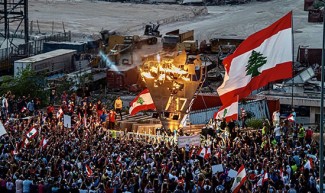
Lebanon’s ongoing “October Revolution” represents the largest decentralized, anti-government protest the country has seen at least since the end of the civil war in 1990. The demonstrations have brought thousands of Lebanese to the streets to condemn widespread corruption among the political class, paralyzing the country for weeks.

Since the Gambia's Truth, Reconciliation, and Reparation Commission (TRRC) began public hearings in January 2019, an important part of the country’s narrative has not yet come to light or been publicly acknowledged: the experiences of women. This report brings forward the voices of wo...

Banjul, The Gambia, December 11, 2019—Women from three rural areas of the Gambia will submit a report to the Truth, Reconciliation and Reparations Commission (TRRC) on December 16 that describes their experiences of sexual and gender-based violence during the dictatorship of former President Jammeh and the impact of the violations on their lives and families. In the report, the women join voices to offer recommendations to the TRRC and the Gambian government.

New York, December 4, 2019—"Get ready to speak up and be heard because your voice matters!”—that is the message a new guidebook released today on transitional justice sends to Syrian youth. Produced by ICTJ and Dawlaty, a Syrian human rights organization based in Beirut, the guidebook introduces the concepts of transitional justice to young audiences in an engaging and interactive way while capturing the challenges of applying them in difficult contexts.

This guide is designed to engage young people who are interested in or are working on transitional justice issues in their communities. Intended to serve primarily as a training tool, it provides basic information about transitional justice and related principles and offers tips and s...

For over a month now, Lebanese people have been in the streets peacefully calling for an end to corruption, economic disenfranchisement, and government mismanagement, calling instead for accountability and reform of the systems that have allowed these things to occur. The protests are historic for several reasons: their scope and magnitude, as well as the way they have unified a country that has for so long had division baked into nearly every aspect of life, down to its system of governance.

In its report, the Kenya Truth, Justice and Reconciliation Commission concluded that “corruption is endemic in Kenya” and that “there is a direct link between corruption and gross violation of human rights.” This paper considers the extent of impunity for corruption in Kenya, how corr...

In 1998, Colombian filmmaker Sergio Cabrera released “Time Out,” a fictional comedy in which guerrilla members and soldiers — usually mortal enemies — call a momentary truce to watch the national soccer team play in the qualifiers for the 1994 World Cup. Twenty years later, former combatants of both sides, members of the security forces, and victims of the conflict came together at Llano Grande in the region of Dabeiba to watch Cabrera’s film and play a game of soccer.

The political crisis in Venezuela seems to have reached a stalemate. In September, the Norway-mediated negotiations between the Maduro government and the opposition came to a halt, leaving both sides struggling for the upper hand. But since it remains difficult for either party to prevail, it is likely that this impasse is a momentary setback rather than an indication that the negotiations are defunct.