605 results

NAIROBI/NEW YORK, March 10, 2011—As a signatory to the Rome Statute, Kenya should continue to meet all of its obligations to cooperate with the International Criminal Court (ICC), the International Center for Transitional Justice (ICTJ) said after the ICC issued summonses for the appearance of six...

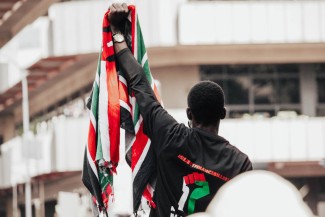
The police response to the peaceful anti-government protests in Kenya over the past year has been deadly and brutal. Their actions have rocked the country and reaffirmed the 2013 findings of the Kenyan Truth, Justice and Reconciliation Commission (KTJRC) that state security agencies, particularly the police, have historically used excessive and disproportionate force and “been the main perpetrators of bodily integrity violations of human rights in Kenya including massacres, enforced disappearances, torture and ill-treatment, and sexual violence.”

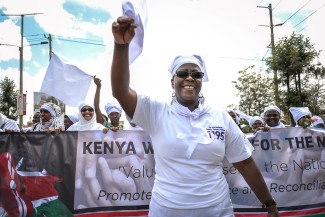
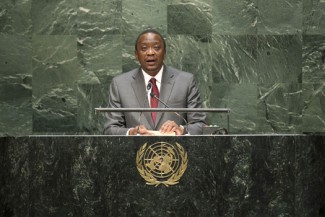
In this op/ed, the head of ICTJ's Kenya Program, Christopher Gitari, argues that President Kenyatta's recent apology to victims—though commendable—must be supported by solid reforms and initiatives for rebuilding the lives of those who have suffered the most.

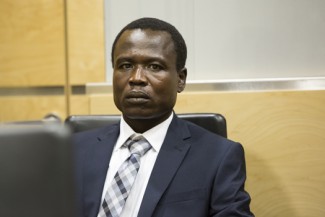
The long-awaited trials of two LRA leaders, Dominic Ongwen and Thomas Kwoyelo, will proceed in two different settings - but why? ICTJ's Sarah Kasande explains the significance of Ongwen's trial before the International Criminal Court and Kwoyelo's prosecution by the International Crimes Division of the High Court in Gulu, Uganda.

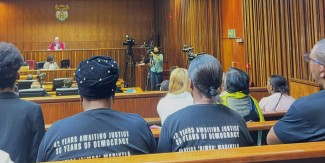
On April 14, 2025, the Johannesburg High Court handed down a landmark judgment. From his bench in courtroom 4D, Judge Dario Dosio dismissed the defense team’s objections to the inclusion of murder and apartheid as crimes against humanity charges in the indictment against two individuals accused of a deadly 1982 attack on anti-apartheid student activists. In so doing, the court cleared the way for crimes against humanity charges to be pursued in a South African domestic court for the first time. It also opened the door to the first ever prosecution of apartheid as a crime against humanity anywhere in the world.

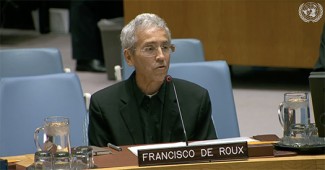
The United Nations Security Council has considered transitional justice on several occasions in the past and included many of its components in country-specific resolutions, and also stressed the links between transitional justice and the other items on its thematic agenda including women, peace and security, and children and armed conflict, and it has made explicit reference to transitional justice as a key part of efforts to sustain peace. Yet, on February 13, the Security Council held its first open debate focusing solely on transitional justice.

On October 31, Armenian Prime Minister Nikol Pashinyan met with Russian President Vladimir Putin and Azerbaijani President Ilham Aliyev in Sochi to discuss steps to normalize relations between Yerevan and Baku and a longer-term peace deal that would finally end the decades-long, on-and-off conflict over Nagorno-Karabakh. This willingness on both sides to come to the negotiating table is without question welcome news. However, the two parties seem to want to talk about peace on different terms and without addressing core human rights issues in their respective countries in connection with the conflict.

This is the third time that the Tunisian government, supported by several Members of Parliament, has put debate of the National Reconciliation Law on the political agenda. Rearranged in form but with the same substantial faults, this law has mobilized the opposition — for the third time — of approximately 20 civil society organizations that met yesterday and plan to soon hold a press conference.

This report describes the Supreme Iraqi Criminal Tribunal. It discusses the court's establishment and organization, jurisdiction, individual criminal responsibility, rules of procedure and evidence, and general principles of criminal law. It examines, in depth, the guidelines and fram...

Guatemalan lawyers for victims in the case against former dictator Efraín Ríos Mont filed a petition before the Inter-American Commission on Human Rights to condemn the state of Guatemala for the impunity for crimes of genocide and crimes against humanity committed against the Ixil people.