



193 results

For many years now, the International Center for Transitional Justice and other organizations have supported young activists and artists as they harness the power of art, culture, and new media to advance truth, justice, reform, and redress, not only where they live, but across borders and in collaboration with others. This innovative and inspiring work offers lessons about how to increase civic engagement and help societies know the truth about their country’s past and actively shape the national narrative.

At a time when truth-seeking and reparations initiatives are taking hold across the United States, this report offers reflections from various civil society-led truth-seeking processes. Drawing on case studies from the United States, Colombia, Scotland, and West Papua, the report iden...

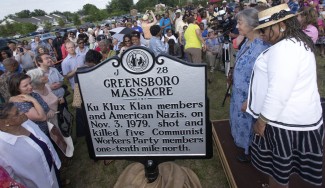
People gather around a plaque marking the Greenboro Massacre outside during an inaugural ceremony

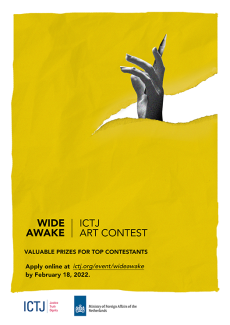
Tunis, March 22, 2022­—The International Center for Transitional Justice (ICTJ) will hold a series of cultural activities from March 21 through March 26, 2022, as part of its Wide Awake Art Contest. The contest, launched in January, invited Lebanese and Tunisian artists, as well as expat artists...

New York, March 1, 2022—“There can be no peace in Syria until the rights of the wrongfully detained, disappeared, and their families are fully restored,” warns a new publication released today by the Bridges of Truth, a collaborative of eight Syrian civil society organizations and ICTJ. A Guide to...

Enforced disappearance and arbitrary detention devastate victims and all those who love them. This guide takes an unsparing look at the harsh realities that Syrian victims of these crimes face and offers guidance on what they and others can do to help. It is the product of the Bridges...

A drawing of a woman holding a young child. In the background are numerous eyes of different colors watching them.

On Thursday, January 13, 2022, the Higher Regional Court in Koblenz, Germany, convicted Anwar Raslan, a senior official in the Syrian government, for crimes against humanity. The landmark trial, the first ever to prosecute a member of Bashar al-Assad’s regime for such crimes, highlights a crucial component without which Raslan would never have been convicted: the role of victims in achieving justice.

On January 27, 2022, the UN Human Rights Council's Universal Periodic Review (UPR) Working Group will examine Uganda’s human rights record. The UPR process presents an important opportunity to spotlight the human rights situation in the country, and recommend actions that the government of Uganda should take to fulfill its human rights obligations.

In 2021, there were significant developments, some hopeful and some devastating, in the struggle for truth, accountability, and redress in countries around the world. ICTJ experts covered these events in commentaries and feature stories published on our website and in our newsletters. While 2022 is already underway and we at ICTJ are hard at work, we would like to pause a moment to take stock and reflect on the year that was.

New York, January 21, 2022—ICTJ will host an online course, entitled “Prevention and Guarantees of Non-Recurrence: The Role of Transitional Justice,” from March 14 through 18, 2022. Prevention has emerged as a top priority on international policy agendas for sustainable peace and development and global governance, and understanding the preventive capacity of transitional justice is more imperative than ever.

New York, January 18, 2022— The International Center for Transitional Justice (ICTJ) is pleased to announce the “Wide Awake Art Contest,” an open call to Lebanese and Tunisian artists as well as artists living in Lebanon or Tunisia to explore the theme “the Sound of Dissent.” The contest will showcase works by those who are documenting and memorializing their communities’ stories in times of instability, resistance, and change.

On November 25, 2021, The Gambia’s Truth, Reconciliation and Reparations Commission (TRRC) presented its 17-volume final report and recommendations to President Adama Barrow, after multiple delays. The final report includes a record of serious human rights violations committed under Jammeh’s repressive regime and recommendations for pursuing justice. Despite the challenges, steps have already been taken that offer hope that the TRRC’s recommendations will take effect.

This study explores a transitional justice approach to the dilemma of foreign fighters in violent conflict. Such an approach can help center human rights in comprehensive responses to foreign fighters, and shift the current focus from security and punishment to justice and long-term p...

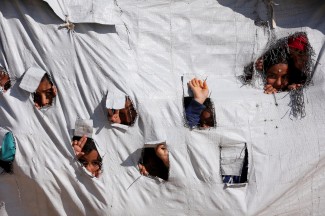
Image of Children looking through holes in a tent at al-Hol displacement camp in Hasaka governorate, Syria, on April 2, 2019.

New York, December 10, 2021—In contexts such as Afghanistan, Bosnia, Chechnya, Iraq, Somalia, and Syria, hundreds, sometimes thousands, of individuals have crossed national borders to engage in violent conflicts in which serious human rights violations and mass atrocities have been committed...

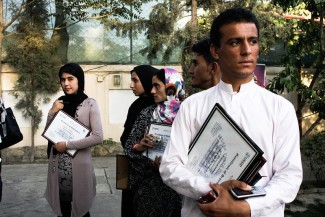
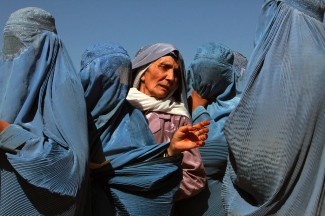
Afghanistan is a tragic example of how a country in transition can dramatically reverse course on the arduous path toward peace and democracy and return to an abyss of violence and repression at breakneck speed. In the span of a few short weeks, the Taliban regained control over the country. When they finally entered Kabul, the internationally backed Afghan government collapsed. Now in charge, the Taliban has lost no time in demonstrating their goal to re-impose the same extremist and oppressive rule, despite initial declarations affirming a commitment to peace and human rights.

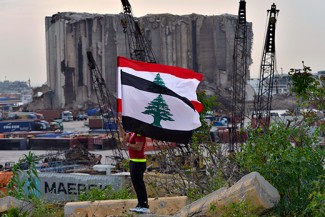
As part of its ongoing support of the Committee of the Families of the Kidnapped and Disappeared in Lebanon, ICTJ organized a three-day virtual workshop on transitional justice for university students on July 12-14, 2021. The students all served as volunteers on a project to establish an archive of the committee’s work and activism over the past four decades and participated in a previous workshop in February 2020 that introduced them to transitional justice concepts.

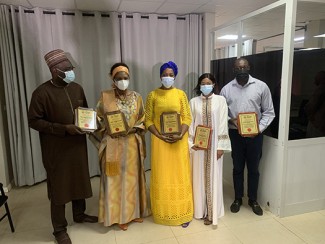
On July 13, 2021, the Gambia’s Truth, Reconciliation and Reparations Commission (TRRC) presented an award to ICTJ for its sustained support of the commission and its commitment to the country’s transitional justice process. The award comes as the TRRC concludes its work and prepares to submit its final report to the country’s president by September 30, 2021.

It only takes a quick skim of the daily news to see how the world has yet again failed Afghan civilians. Afghanistan has not had many good years in the past four decades of war, but the past 15 months have been decidedly fraught. The current chaos and spiking violence are proof that, despite what the US government has proclaimed, the “forever war” rages on. Peace and meaningful, victim-centered justice remain elusive.

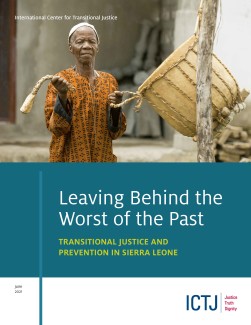
This study analyzes how transitional justice in Sierra Leone has contributed to prevention by responding to the grievances of those harmed by violations, reducing exclusion, addressing through institutional reforms the causes of past violence, and catalyzing long-term change. While tr...

After several years hiatus, ICTJ has recently resumed work in Afghanistan. Last month, ICTJ’s communication intern, Edward Mercado-Gumbs, sat down with expert and cohead of ICTJ’s program in Afghanistan Reem El Gantri to discuss ICTJ’s latest engagement in the country, as well as the prospects for justice and peace.

This briefing paper examines how transitional justice approaches can guide the discussion around dismantling systemic racism in the United States to focus on root causes of violence and racial injustice. Drawing from relevant experiences internationally and within the United States, i...

New York, March 10, 2021—“We want to turn the page, but not at the cost of justice”—that was a message repeated by victims of human rights abuses interviewed in a new report released today on transitional justice in the Central African Republic (CAR). Produced by the International Center for Transitional Justice and Cordaid, ‘A Drop of Water on a Hot Stone’: Justice for Victims in the Central African Republic presents findings from a study exploring victim-centered approaches to justice in CAR and their feasibility in a context of profound fragility and extreme poverty.

Providing justice to victims of human rights abuses in fragile contexts such as the Central African Republic (CAR) is challenging for reasons related not only to the state’s stability, capacity, and political will, but also socioeconomic inequality in the country. This research report...

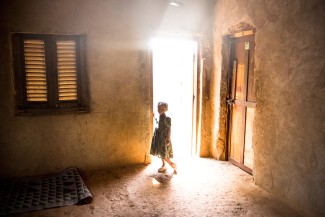
A young girl stands in the doorway to her house

Ten years have passed since Tunisians took the streets to demand “Employment, Freedom, and National Dignity.” The revolution’s loud, courageous voice against corruption, extreme inequality, and repression echoed around the globe and inspired the “Arab Spring.” Today, Tunisians are still proud of their revolution. However, they continue to strive for goals, yet unattained, that the political class does not even seem to understand. It was thus not surprising to see large protests on the 10th anniversary, demanding concrete action and new public policies to advance social justice and better integrate marginalized regions and populations.

On February 4, 2021, the International Criminal Court issued its judgment in the case of the Prosecutor v Dominic Ongwen. The ICC found Ongwen guilty of 61 counts of crimes against humanity and war crimes committed in Northern Uganda between July 1, 2002, and December 31, 2005. The verdict recognizes the enduring impact of the crimes on the victims, their families, and Ugandan society more generally.

New York, January 25, 2021—"You cannot deliver 500 kilograms of transitional justice,” explains a high-level UN official in a new ICTJ report released today that explores the theoretical and practical challenges of measuring the results of transitional justice processes. These processes are complex and politically contested and are thus notoriously difficult to evaluate. The report offers key insights related to and tools for evaluating and monitoring transitional justice processes and assessing their impact.