




274 results

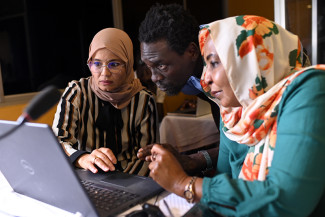
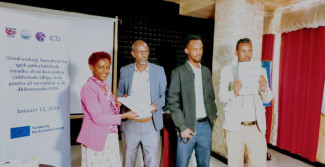
ICTJ recently convened human rights defenders, journalists, and lawyers from Libya, Sudan, Syria, Tunisia, and Yemen for a workshop on digital, open-source investigations. Held on November 3-8 in Kampala, Uganda, the course trained participants on open-source tools with a view to strengthening their work investigating, documenting, and monitoring human rights violations.

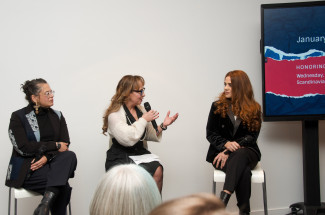
On January 28, 2026, ICTJ held its annual January for Justice Leaders benefit dinner in New York City, an event celebrating leaders advancing justice around the world. This edition also marked the beginning of ICTJ’s 25th anniversary year and served as an opportunity to look back on a quarter century spent standing alongside victims, civil society, and institutions in the pursuit of truth, accountability, and lasting peace after mass atrocities.

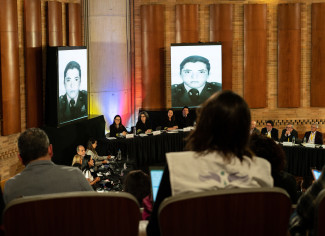
To commemorate the 20th anniversary of the Justice and Peace Law—which created Colombia's first transitional justice system—media outlet Verdad Abierta, the Friedrich Ebert Stiftung, and ICTJ partnered to produce an investigative four-part series in Spanish that critically assesses its legacy. Now translated into English, this second installment explores the unprecedented challenges the country faced as the process got underway.

To commemorate the 20th anniversary of the Justice and Peace Law—which created Colombia's first transitional justice system—media outlet Verdad Abierta, the Friedrich Ebert Stiftung, and ICTJ partnered to produce an investigative four-part series in Spanish that critically assesses its legacy. ICTJ has now translated the first two installments into English.

On July 28, 2025, the Somali Regional State Council passed a resolution designating April 6 as Victims’ Memorial Day, formally recognizing those who experienced violence and human rights violations across Ethiopia’s Somali Region. For years, victims and civil society actors, with support from ICTJ and other international partners, have persistently advocated for this acknowledgment, which marks a milestone in Ethiopia’s journey toward accountability and repair.

This year, Colombia commemorates the 20th anniversary of the Justice and Peace Law, which established the country’s first formal transitional justice mechanism. On this milestone anniversary, ICTJ reflects on the evolution that led to the groundbreaking law, the lessons that have been learned so far, and the challenges that lie ahead.

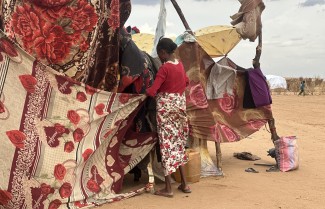
Despite the enormous challenges, Sudanese civil society and other stakeholders are prioritizing transitional justice, acknowledging the need to address past injustices to end the cycle of conflict in their country. ICTJ continues to support them as they envision and design victim-centered, gender-sensitive, and inclusive strategies. Leading these efforts is ICTJ's Ilaria Martorelli. In this interview, she discusses the prospects for lasting peace, accountability, and repair in Sudan.

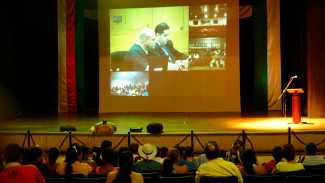
ICTJ, in collaboration with the Center for Media Integrity of the Americas, the Cyrus R. Vance Center for International Justice, and the New York City Bar Association, recently hosted a screening of the Colombian documentary Después del Frío ("After the Cold"). Coproduced by ICTJ and Colombian journalist María Jimena Duzán, with the support of the Embassies of Sweden and Norway in Colombia, the film paints an intimate portrait of a nation seeking healing and transformation, where the scars of the past give way to hope.

This year, Colombia commemorates the 20th anniversary of Law 975, which established the country’s first transitional justice process, called Justicia y Paz (or Justice and Peace). With this anniversary top on mind, and as the current government engages with eight of the remaining armed groups in pursuit of its “Total Peace” strategy, ICTJ recently teamed up with podcast producers Sillón Estudios to create a four-part series that delves into the peace process with the AUC and considers key lessons learned.

The African Union and the European Union successfully concluded the fifth AU-EU expert seminar on transitional justice, held from June 19 to 20, 2025, in Abuja, Nigeria. Hosted under the Initiative for Transitional Justice in Africa, the seminar brought together more than 50 experts, policymakers, researchers, and civil society representatives to discuss the critical role of reparations in fostering justice, reconciliation, and sustainable peace.